Musket holes from a nineteenth-century battle still scar the walls of this white timber chapel, the oldest standing witness to New Zealand's colonial birth.
About Christ Church
The church was a collaborative effort, with funds raised by both the Church Missionary Society and the unruly residents of the town. Charles Darwin even contributed a donation during the Beagle’s visit in 1835, though he famously disliked the town itself. The building survived the 1845 conflict largely because it was used as a neutral zone for the wounded. In the early 1900s, the church underwent minor restorations to preserve the original kauri timber, and it became a protected historic site in the mid-20th century, ensuring its role as a permanent landmark of the Bay of Islands.
What Christ Church is
Musket balls are still embedded in the weatherboards of Christ Church, a small white chapel that has survived the birth of a nation and several wars. From a hill overlooking the harbor of Russell, this is the oldest surviving church in New Zealand. It is a building of profound simplicity, reflecting the austere lives of the early 19th-century missionaries and the rowdy whaling community of Kororāreka. The churchyard is a library of stone, where the graves of Māori chiefs lie alongside British sailors. It is one of the few places in the country where the violence of the colonial frontier feels tangibly close, yet the atmosphere is one of absolute, sun-drenched peace.
“Musket balls are still embedded in the weatherboards of Christ Church, a small white chapel that has survived the birth of a nation and several wars.”
Christ Church, New Zealand
Completed, 1835
Completed in 1835, the church was built on land purchased from local Māori chiefs for a handful of blankets and some tobacco. For a decade, it was a spiritual refuge in what was then known as 'the hell-hole of the Pacific,' a town notorious for lawlessness and debauchery. During the 1845 Battle of Kororāreka, the church stood in the crossfire between British forces and the followers of Hōne Heke. While much of the town was burned to the ground, the church was spared by both sides out of respect for its sacred status. Today, the pews still show the marks of the conflict, and the building remains an active place of worship, its bell ringing out across the water just as it did nearly two centuries ago.
Walking up the gravel path,
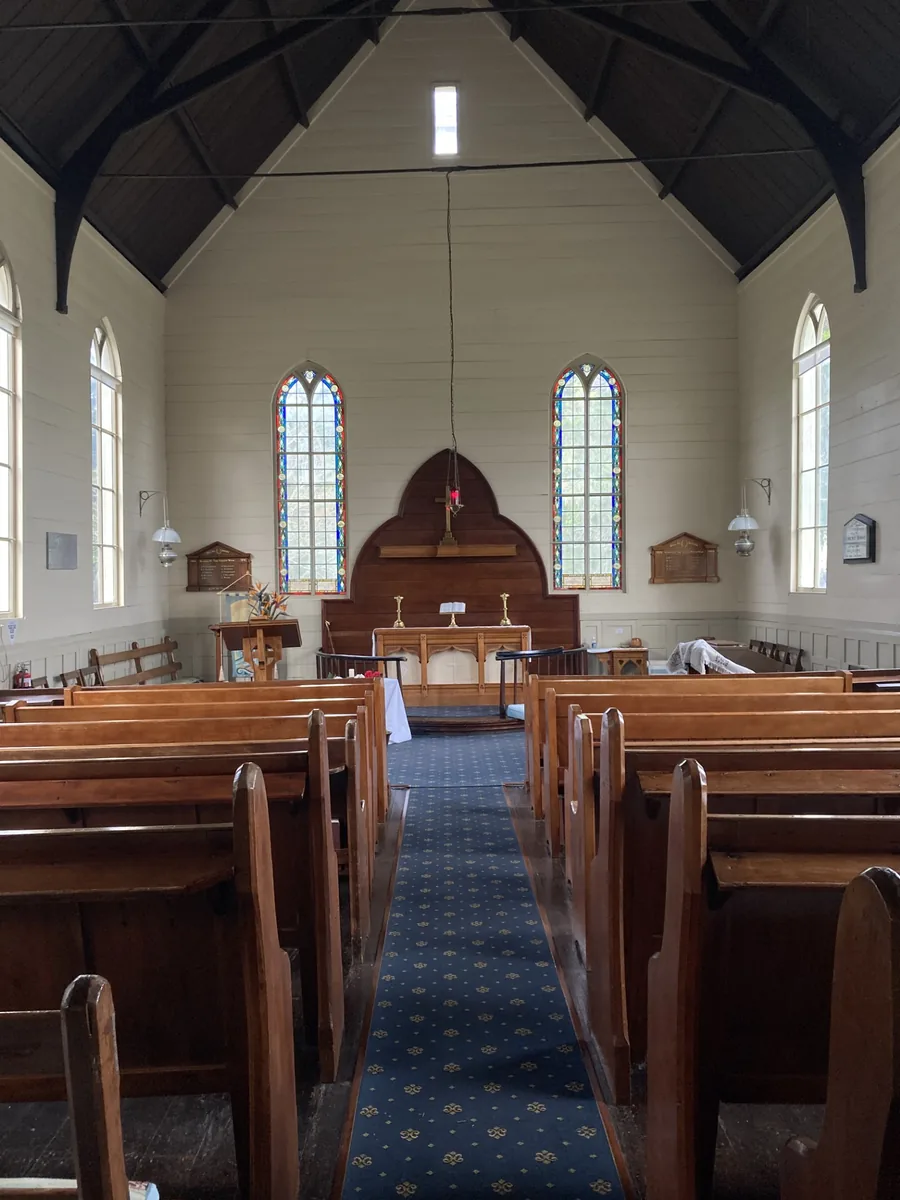
Walking up the gravel path, The heat of the Northland sun radiating from the white timber walls. Inside, the air is still and smells of old wood and beeswax. The sunlight filtering through the simple windows, illuminating the modest altar and the names of the early settlers carved into the pews. The graveyard is a fascinating, somber walk through history; The weight of the past as you read the inscriptions for young sailors who died thousands of miles from home. What registers is the bullet holes on the south-facing wall, small jagged scars that serve as a visceral reminder that this sanctuary was once a battlefield. The view from the churchyard across the Bay of Islands is unchanged, a serene blue expanse that belies the town's turbulent origins.
Russell is a short, scenic ferry ride
Russell is a short, scenic ferry ride from the town of Paihia. The church is a five-minute walk from the Russell wharf, situated just behind the main waterfront strip. Driving to Russell is possible via the car ferry from Opua, a route that winds through thick native bush and offers glimpses of the bay. Most visitors arrive in the afternoon, allowing for a quiet exploration of the grounds before finding a seat at one of the historic taverns along the shore.
“Russell is a short, scenic ferry ride from the town of Paihia.”
The Experience
Silence of the churchyard is often broken only by the call of a tui or the distant lap of the tide. The surface of the old kauri wood is smooth and cool to the touch, worn down by generations of hands. Something strange sense of continuity standing in the center aisle, where the same floorboards have supported the weight of both peacemakers and warriors. Most visitors miss the small monument to the Māori chiefs who supported the church, located in a quiet corner of the cemetery. The light in the late afternoon turns the white exterior into a brilliant, glowing beacon against the green hills of the peninsula.
Why It Matters
Christ Church is a rare survivor of the pre-Treaty era. It is a physical symbol of the complex, often bloody relationship between the early missionaries, the British Crown, and Māori iwi. As a site of conflict that was ultimately respected by all parties, it represents a rare moment of shared sanctuary in a divided history.
Why Visit
Visit Christ Church if you want to touch the actual surface of New Zealand’s history. Unlike a museum, this is a living relic that hasn't been moved or sanitized. It offers a quiet, unhurried space to reflect on the cost of building a nation, all while enjoying one of the most beautiful views in Northland.
Insider Tips
- 1
Bring a torch or use your phone light to see the musket balls still lodged deep within the timber on the exterior walls.
- 2
Look for the grave of Hannah King King, a child of the early mission who provides a window into the fragility of life in the 1830s.
- 3
The church is still an active parish, so check the schedule to avoid visiting during a wedding or Sunday service.
- 4
Walk the 'Flagstaff Hill' track immediately after your visit to see where the actual battle that scarred the church began.
- 5
The church interior is small, so visit early in the morning to have the quiet space to yourself.