Two hundred workmen spent fifteen years building a Scottish dream in the New Zealand hills, only for it to become a house of shadows and scandal.
About Larnach Castle
Larnach Castle was built during the peak of the Otago gold rush when Dunedin was the wealthiest city in New Zealand. William Larnach’s vision was to create a dynastic seat that would cement his legacy. The castle’s Ballroom was built as a 21st-birthday present for his favorite daughter, Katie, who tragically died of typhoid shortly after. After Larnach's death and the family's subsequent departure, the building changed hands multiple times, even being used as a sheep pen at one point. The Barker family’s purchase in 1967 is widely regarded as one of the most successful private heritage rescues in New Zealand history.
Perched on the highest point of the Otago
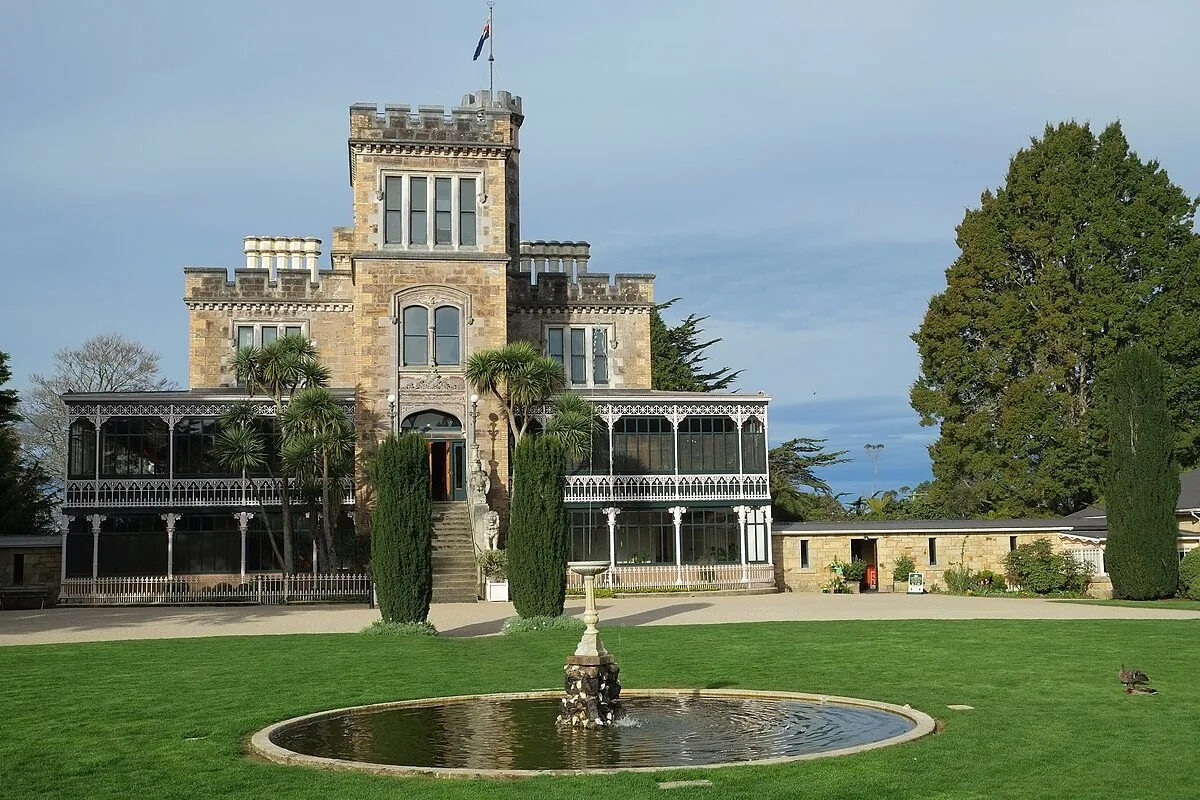
Perched on the highest point of the Otago Peninsula, Larnach Castle is a Gothic Revival fantasy that looks entirely out of place in the New Zealand bush. As the country's only castle, it is a monument to nineteenth-century ego, immense wealth, and a family history shadowed by scandal and tragedy. The stone walls, carved by European masters, overlook the deep blue of the Otago Harbour and the wild Pacific beyond. It is a house of dark timbers, stained glass, and meticulous gardens that feel like a slice of the Scottish Highlands transported to the edge of the world. While the exterior is imposing, the interior is a maze of craftsmanship that reveals the obsessive personality of its creator.
ambition, began construction, 1871
William Larnach, a merchant baron and politician of enormous ambition, began construction in 1871. He spared no expense, importing marble from Italy, slate from Wales, and glass from Venice. It took 200 workmen three years to build the shell and another twelve years for master carvers to finish the interior. However, the castle’s beauty was mirrored by the family's misfortune. Larnach suffered the loss of his beloved first wife, followed by financial ruin and a sensational family betrayal that led to his suicide in the Parliament buildings in 1898. The castle fell into a long period of decay, serving as a lunatic asylum and a hospital for soldiers, before being rescued by the Barker family in 1967. Their decades of restoration have turned a derelict ruin back into a premier architectural landmark.
Visiting Larnach Castle
Stepping into the main foyer, the air is cool and smells of lemon oil and old stone. The change in light moving from the bright, windy gardens into the moody, wood-paneled dining room. The craftsmanship is staggering; the ceiling of the ballroom alone required years of labor. First, the spiral staircase in the tower, so narrow and steep that it requires a hand on the cold stone wall for balance. At the top of the tower, you are hit by the full force of the Otago wind, but the view, a 360-degree panorama of the rugged peninsula, is the finest in the region. The gardens are equally evocative, featuring a 'labirynth' and a collection of native and exotic plants that bloom in defiance of the harsh coastal salt air.
The castle is a twenty-minute drive
The castle is a twenty-minute drive from Dunedin city center, following the winding coastal road of the Otago Peninsula. The drive is an experience in itself, with the road hugging the waterline before climbing steeply into the hills. Local tour buses run frequently from the Octagon in Dunedin, but driving yourself allows you to stop at the many viewpoints along Highcliff Road. Most visitors spend a full afternoon here, combining a tour of the house with high tea in the grand ballroom, which has been converted into a charming cafe.
The Experience
You notice the 'whir' of the wind through the castle's battlements, a sound that enhances the building's lonely, Gothic atmosphere. The surface of the embossed wallpaper and the weight of the heavy velvet curtains speak to a bygone era of formal, stiff-collared luxury. Crossing the gardens, you see the 'Alice in Wonderland' themed sculptures that add a touch of playfulness to the otherwise somber grounds. The history most strongly in the library, where Larnach’s original furniture still sits, and the light filters through heraldic glass. It is a place that feels inhabited by memories, where every creaking floorboard seems to tell a story of Victorian ambition.
Why It Matters
As New Zealand's only castle, the building holds a unique place in the national architectural landscape. It serves as a physical record of the Victorian settler dream, the attempt to recreate the grandeur of the old world in the raw, untamed nature of the new. It also is evidence of to the power of private conservation, showing how a dedicated family can save a piece of national history from the brink of collapse.
Why Visit
Visit Larnach Castle for the juxtaposition of high-Victorian craftsmanship and wild South Island scenery. It is the only place where you can experience the stifling elegance of a colonial mansion and then, five minutes later, be standing on a tower overlooking a penguin colony and a wild ocean. It’s a masterclass in atmosphere and architectural obsession.
✦ Photo Gallery
Best Season
🌤 October and November are the best months to visit the gardens, as the rhododendrons and azaleas for which the peninsula is famous erupt in a riot of color.
Quick Facts
Best time to visit
October and November are the best months to visit the gardens, as the rhododendrons and azaleas for which the peninsula is famous erupt in a riot of color.
Getting there
In Dunedin, New Zealand; reach Dunedin first, then continue to the site.
Location
Dunedin, New Zealand
Type
attraction
Coordinates
-45.8617°, 170.6272°
Insider Tips
- 1
Take the high tea in the Ballroom; it’s the best way to soak in the atmosphere of the castle's most famous room without feeling rushed.
- 2
The tower staircase is very narrow; if you are claustrophobic, the views from the garden terraces are almost as good without the tight squeeze.
- 3
Look for the 'scandal' boards in the upper rooms, which give a surprisingly candid and unpolished account of the family's dramatic downfall.
- 4
Stay in the 'Larnach Lodge' within the grounds to experience the castle gardens at night when the day-trippers have all gone.
- 5
The road to the castle is narrow and winding; take the low road along the harbor for the easiest drive, and the high road back for the best views.