Legend says if you cross the wooden Bridge of Sighs while holding your breath, your wish will come true in Lima’s most romantic and artistic enclave.
About Barranco
Barranco’s name comes from the Spanish word for 'ravine,' referring to the natural gorge that slices through the cliffs to the ocean. Its centerpiece, the Bridge of Sighs, was built in 1876 to connect the two sides of this ravine. After its destruction in the war, the reconstruction spurred a cultural renaissance that attracted luminaries like the poet Blanca Varela and the singer Chabuca Granda, whose statue now stands near the bridge. The district’s evolution from a seaside resort to an artistic hub was formalized in recent decades with the opening of world-class museums like the MATE (Mario Testino Museum) and the Museum of Contemporary Art (MAC), bridging the gap between historical nostalgia and modern creative prestige.
What Barranco actually is
Perched on the cliffs overlooking the Pacific, Barranco is the bohemian soul of Lima, a neighborhood where the grit of the city softens into art, music, and nostalgia. This district is defined by its colorful Republican-era mansions, hidden leafy courtyards, and a labyrinth of steep walkways that lead down to the sea. The air here feels lighter than in the commercial center, scented with flowering jasmine and the sea mist that rolls in from the 'Costa Verde.' Barranco is a place of slow afternoons in sun-drenched plazas and late nights in 'peñas,' the traditional taverns where the soulful sounds of Afro-Peruvian music fill the air. It is a neighborhood that prides itself on its poets, painters, and musicians, offering a romanticized version of Lima that feels both intimate and grandly faded.
“Perched on the cliffs overlooking the Pacific, Barranco is the bohemian soul of Lima, a neighborhood where the grit of the city softens into art, music, and nostalgia.”
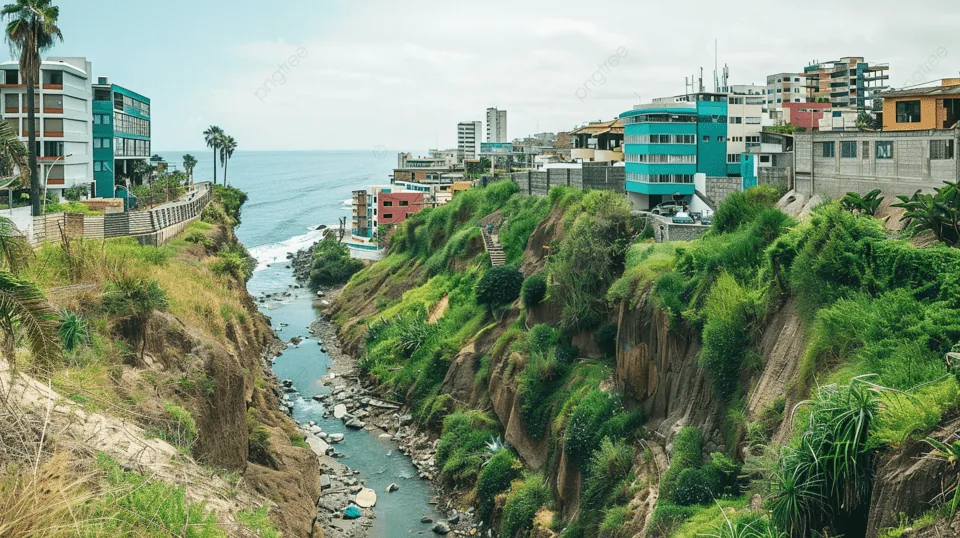
Barranco, Peru
Originally a quiet fishing village, Barranco
Originally a quiet fishing village, Barranco became the preferred summer retreat for Lima’s aristocracy in the late 19th and early 20th centuries. Wealthy families built grand wooden villas with ornate balconies to escape the heat of the city center. During the War of the Pacific in 1881, the district was tragically burned by Chilean troops, but the resilient residents rebuilt it in an even more elegant style. By the mid-20th century, the wealthy had moved on to San Isidro and Miraflores, leaving the grand mansions to be occupied by artists and intellectuals who sought lower rents and a scenic view. This shift cemented Barranco’s reputation as the cultural heart of Lima. Today, it is a protected historic zone where modern street art and contemporary galleries coexist with the crumbling splendor of the colonial and republican past.
Walking across the 'Puente de los
Walking across the 'Puente de los Suspiros' (Bridge of Sighs), The scent of old wood and the sound of street musicians playing the cajón in the park below. The light at dusk is particularly beautiful here, filtering through the massive ficus trees and turning the faded pastels of the mansions into a glowing, sepia-toned landscape. The intricate murals that cover the walls of the 'Bajada de los Baños,' a stone walkway that leads from the bridge down to the beach. The vibrant energy of the 'Peña del Carajo' on a Friday night, where the floorboards shake with the rhythm of the 'festejo.' Most visitors overlook the tiny, independent bookstores and artisan workshops tucked into the side streets, where Lima’s creative pulse is most audible. First, the spray of the ocean as you reach the bottom of the cliffs, a cool, salt-laden breeze that cleanses the city air.
Barranco is located just south
Barranco is located just south of Miraflores and is easily reached by a short taxi ride or a twenty-minute walk along the coastal 'Malecón.' The 'Metropolitano' bus system has several stops in Barranco, connecting it directly to the historic center of Lima. The neighborhood is best explored on foot, as its true charm lies in the small details of its architecture and the sudden views of the ocean from its cliffside parks. It is a very safe district for walking, especially during the day and early evening when the cafes and galleries are most active.
“' The 'Metropolitano' bus system has several stops in Barranco, connecting it directly to the historic center of Lima.”
The Experience
What gets you is is the way the humidity of the coast makes the paint on the old houses peel in a way that feels intentional and artistic. Audible: a distant piano or the strumming of a guitar often drifts out of the open windows of the mansions. There is a feeling of transition from the quiet, residential streets to the packed 'Plaza de Armas,' where families gather to eat picarones under the evening lights. Most visitors miss the small 'Pedro de Osma' museum, an opulent mansion filled with colonial art that feels like a private residence. The detail that stays with you is standing on the cliff edge at midnight, watching the surf break in white lines against the dark sand, while the music of a nearby bar provides the perfect, melancholy soundtrack.
Why It Matters
Barranco is the cultural anchor of Lima, preserving the architectural and musical traditions of the Republican era. It is the primary site for the celebration of 'Criollo' culture, a distinctive mix of Spanish, African, and indigenous influences. Its concentration of galleries and museums makes it the center of Peru's contemporary art scene, ensuring that the neighborhood remains as relevant today as it was a century ago.
Why Visit
Visit Barranco to see the side of Lima that doesn't feel like a metropolis. It is the best place to get lost in the city's history without the pressure of a checklist. Go for the architecture, stay for the music, and leave with a deeper understanding of the romantic, artistic spirit that defines the Peruvian character.
Insider Tips
- 1
Hold your breath when crossing the Puente de los Suspiros for the first time, local tradition says it brings luck and love.
- 2
Visit 'Ayahuasca' for a cocktail; it’s a bar set in a stunningly restored 19th-century mansion that showcases the best of Barranco’s architecture.
- 3
The street art in Barranco changes frequently; look for the murals along the Bajada de los Baños for some of the best contemporary work in the country.
- 4
Go to a 'Peña' on a weekend to experience genuine Afro-Peruvian music and dance; it is far more authentic than the staged shows in the city center.
- 5
Check out the 'Dedalo' artisan shop for high-quality Peruvian crafts that are more unique than the standard tourist market fare.