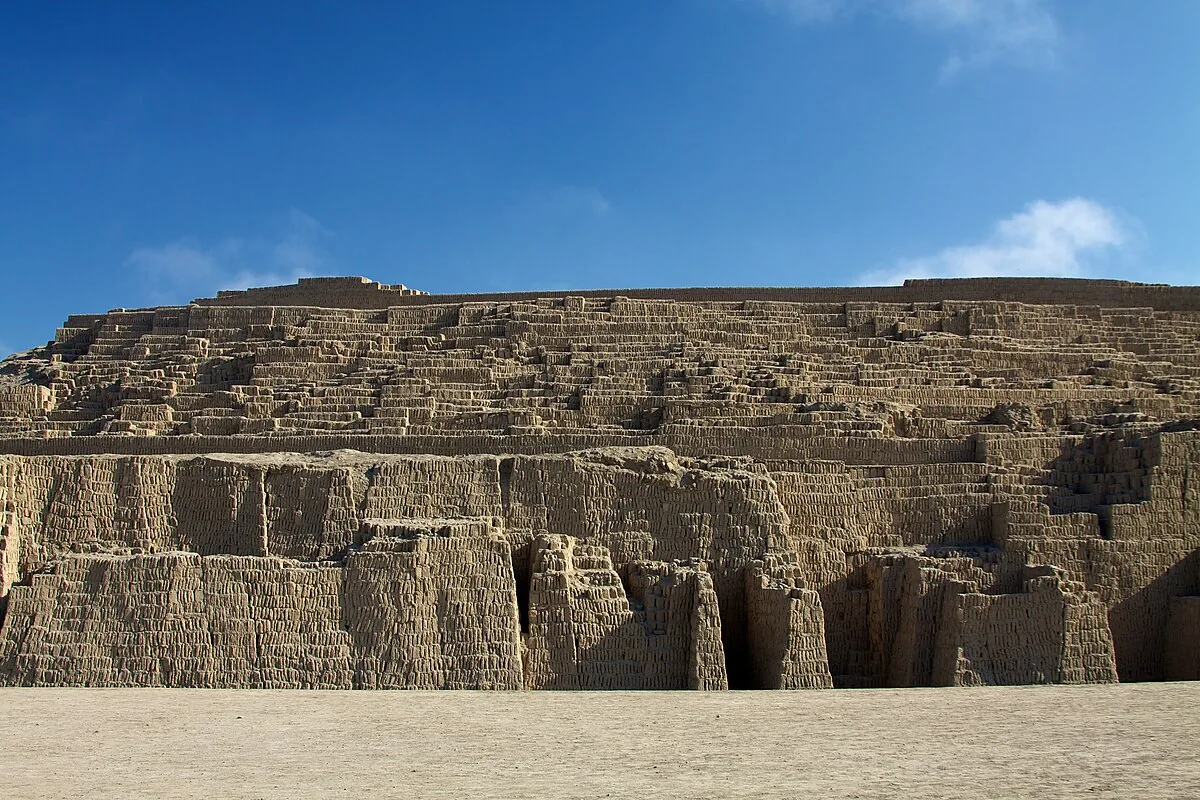
Surrounded by luxury condos and sushi bars, this 1,500-year-old pyramid made of millions of mud bricks still is the quiet, geometric soul of modern Lima.
About Huaca Pucllana
Huaca Pucllana was the focal point of the Lima Culture, a society that flourished in the river valleys of the central coast. The pyramid was not a tomb but a ceremonial stage where priests conducted rituals involving maritime offerings. After the decline of the Lima Culture around 700 AD, the site was occupied by the Wari people, who converted the upper levels into an elite cemetery. Excavations in 2008 and 2013 revealed remarkably well-preserved mummies, including the 'Lady of the Mask,' providing a wealth of information about pre-Inca funeral rites. The site’s transformation from a neglected dirt mound to a world-class archaeological park is one of Lima’s greatest cultural achievements.
What Huaca Pucllana actually is
In the middle of Lima’s most fashionable district, surrounded by glass-fronted apartment blocks and humming traffic, rises the massive adobe pyramid of Huaca Pucllana. This archaeological site is a startling temporal glitch in the urban landscape of Miraflores. Built by the Lima Culture between 200 and 700 AD, the pyramid is constructed from millions of small, hand-made adobe bricks arranged in a unique 'book-shelf' style designed to withstand earthquakes. The structure was a ceremonial and administrative heart for a society that pre-dated the Inca by nearly a millennium. Today, the site consists of a sprawling complex of plazas, ramps, and a seven-tiered pyramid that offers a panoramic view of the city’s skyline. The ancient and the modern exist in a jarring, beautiful proximity, reminding every passerby that the ground beneath Lima has been sacred for ages.
The Lima Culture, who built this
The Lima Culture, who built this site, were masters of the desert coast, developing sophisticated maritime trade and irrigation. They used the 'book-shelf' technique, leaving small gaps between the vertically placed bricks, to allow the structure to flex during tremors, a piece of engineering that has allowed the pyramid to survive for over 1,500 years. Later, the Wari and Ishma cultures used the site as a burial ground, leaving behind high-status mummies that were discovered in the late 20th century. For much of the colonial and republican eras, Huaca Pucllana was seen as a mere hill of dirt, used by locals for dirt biking or as a dump. It wasn't until 1981 that systematic excavation began, led by Dr. Isabel Flores, who fought to preserve the site from urban developers. Today, it is the most successful example of urban archaeology in Peru.
Walking through the archaeological park,
Walking through the archaeological park, The dusty, earthy smell of the adobe, a scent that persists even in the humid air of Lima. The sound of the city is a constant, low-frequency hum of buses and car horns, creating a surreal contrast to the silent, ancient walls. The texture of the bricks, each one bearing the fingerprints of the people who made them fifteen centuries ago. As you climb the ramps to the top of the pyramid, the coastal breeze that once cooled the Lima elite during their religious ceremonies. Most visitors miss the small garden in the back where native plants like corn, lima beans, and cotton are still grown to demonstrate ancient agricultural techniques. First, the resident hairless Peruvian dogs, a breed that has guarded these temples since ancient times, lounging in the sun. At night, the entire pyramid is illuminated by golden spotlights, making it look like a glowing mountain in the middle of the dark city.
Location and access
Huaca Pucllana is located in the centre of Miraflores and is easily accessible by foot, taxi, or the 'Metropolitano' bus system. Most visitors staying in Miraflores can walk to the site in 15 to 20 minutes. The site must be visited with a guide, and tours depart every few minutes in both Spanish and English. One of the most popular ways to experience the site is to book a table at the on-site restaurant, which sits right at the base of the illuminated ruins and serves high-end Peruvian cuisine.
The Experience
Start with the way the modern skyscrapers of San Isidro peek over the edge of the adobe ramps, a constant reminder of the passage of time. The light in the late afternoon turns the greyish mud of the bricks into a soft, warm tan, highlighting the precision of the 'bookshelf' masonry. The grit of the desert on your hands as you pass through the restored plazas. People often miss the 'sacrificial pits' where archaeologists found the remains of ceramic vessels smashed as part of ancient rituals. The bit that stays with you is standing at the very top of the pyramid as the city lights come on, feeling the ancient energy of the site holding its own against the neon of the 21st century.
Why It Matters
Huaca Pucllana is the most important archaeological site in Lima and a masterclass in pre-Inca seismic engineering. It proves that the central coast was a hub of complex social and religious activity long before the highland empires expanded. It also serves as a vital green and cultural space, protecting the city's pre-Columbian identity from total erasure by modern development.
Why Visit
Visit Huaca Pucllana to see the layers of time in a single glance. It is the best place to understand that Lima is not just a colonial or modern city, but an ancient one. Plus, it’s the only place in the world where you can enjoy a world-class dinner while sitting in the literal shadow of a 5th-century pyramid.
✦ Photo Gallery
Best Season
🌤 April through December avoids the most intense summer heat and offers the misty 'garúa' weather that gives the adobe ruins a mysterious, atmospheric glow.
Quick Facts
Best time to visit
April through December avoids the most intense summer heat and offers the misty 'garúa' weather that gives the adobe ruins a mysterious, atmospheric glow.
Getting there
In Lima, Peru; reach Lima first, then continue to the site.
Location
Lima, Peru
Type
attraction
Coordinates
-12.1111°, -77.0339°
Insider Tips
- 1
Book the on-site restaurant for dinner; the food is excellent, and the view of the lit-up pyramid is the best in the city.
- 2
The site is closed on Tuesdays, so plan your visit for a different day of the week.
- 3
Pay attention to the 'bookshelf' brickwork; it’s not just for looks, but is the reason the pyramid hasn't collapsed in an earthquake.
- 4
Bring a light jacket for the evening tours, as the coastal breeze in Miraflores can get surprisingly chilly.
- 5
Look for the 'Lady of the Mask' replica in the small site museum; it's a fascinating look at Wari burial customs.