In this world of vertical extremes, you can stand among 100-year-old flowers while gazing at glaciers that provide water for the entire Peruvian coast.
About Huascarán National Park
The Cordillera Blanca has been a magnet for explorers and scientists since the 19th century, drawn by its unique status as the world's highest tropical range. The establishment of the national park was a response to the growing threats of mining and overgrazing, aiming to preserve the 663 glaciers and 269 lakes that form the park's hydrological heart. In 1985, UNESCO recognized the park not only for its natural beauty but for its unique flora, including the Puya raimondii, which is found almost nowhere else. It remains one of the most important protected areas in South America, serving as a sanctuary for endangered Andean wildlife.
Huascarán National Park in short
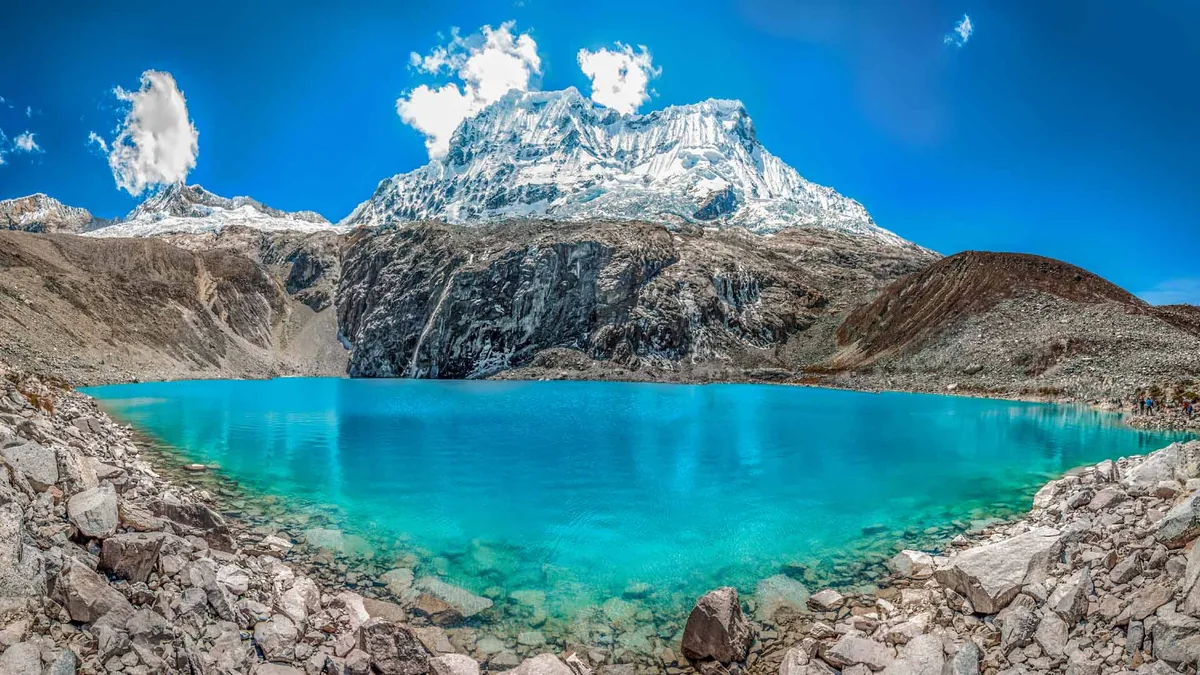
Dominating the Cordillera Blanca, the highest tropical mountain range in the world, Huascarán National Park is a realm of vertical extremes. The park is named after its highest peak, Nevado Huascarán, which pierces the sky at 6,768 meters. This is a landscape of jagged granite spires, blue-ice glaciers, and turquoise glacial lakes that look like jewels dropped into the mountain creases. The air is thin, cold, and incredibly pure, with a clarity of light that makes the peaks appear much closer than they are. It is a sanctuary for the Andean condor, the spectacled bear, and the rare Queen of the Andes, a giant bromeliad that grows for a century before blooming once and dying. For hikers and climbers, Huascarán is the ultimate Andean stage, offering everything from gentle valley walks to some of the most technical alpine ascents on the planet.
“Dominating the Cordillera Blanca, the highest tropical mountain range in the world, Huascarán National Park is a realm of vertical extremes.”
Huascarán National Park, Peru
Designated as a national park in 1975
Designated as a national park in 1975 and a UNESCO World Heritage site in 1985, Huascarán protects the heart of the Ancash region. The mountains have always been sacred to the local people, who believe the peaks are 'Apu' or mountain deities that control the water and the weather. The park's history is also marked by tragedy; in 1970, a massive earthquake triggered an avalanche from Nevado Huascarán that buried the city of Yungay, a somber reminder of the raw geological power that still shapes this range. Today, the park is a critical frontline for climate change research, as its glaciers, which provide water to much of northern Peru, are retreating at an alarming rate. Despite these challenges, the park remains a vibrant cultural landscape where Quechua-speaking communities still herd livestock in the high alpine pastures.
Standing on the shores of Lake Llanganuco, you
Standing on the shores of Lake Llanganuco, The water is a shade of turquoise so intense it looks artificial. The sound is a mixture of the constant, low-frequency roar of distant waterfalls and the occasional 'crack' of a glacier shifting on the heights. The smell of wild lupine and damp moss in the lower valleys, transitioning to the sterile, metallic scent of snow climbing higher. The sun’s bite on your skin, a paradoxical heat in an environment where the wind can freeze a damp cloth in minutes. Frequently skipped is the Puya raimondii stands in the Carpa sector, ancient plants that look like prehistoric spears rising from the puna. First, the flight of the condors, giant silhouettes circling the thermal currents with a grace that makes the mountains seem a little less forbidding.
The route into the park
The route into the park is the city of Huaraz, accessible by an eight-hour bus ride from Lima. From Huaraz, numerous local agencies offer transport to the various trailheads and lakes within the park. The most famous spots, like Laguna 69 or the Pastoruri Glacier, require a full-day excursion. Because most of the park lies above 4,000 meters, it is essential to spend at least two days in Huaraz acclimating before attempting any serious hiking. The park entrance fee can be paid at the various checkpoints, and multi-day permits are available for trekkers.
“The route into the park is the city of Huaraz, accessible by an eight-hour bus ride from Lima.”
The Experience
It begins with the way your breath hitches at the top of the Punta Union pass, a combination of the 4,750-meter altitude and the view of the Santa Cruz valley below. You hear the wind through the high-altitude 'ichu' grass is a lonely, haunting whistle. There is a weight of your pack increase with every step as the oxygen levels drop, a physical struggle rewarded by the sight of the Alpamayo peak, often called the most beautiful mountain in the world. Most visitors miss the small, pre-Inca ruins scattered along the ancient trade routes that cross the range. What lingers with you is the first light of dawn hitting the fluted ice walls of a peak, turning the blue shadows into a brilliant, blinding white.
Why It Matters
Huascarán National Park is one of the most important biological and hydrological reserves in the Andes. It contains almost all the world's tropical glaciers, making it a critical barometer for global warming. Culturally, it is a living landscape where traditional Andean land management practices continue to coexist with modern conservation and international tourism.
Why Visit
Visit Huascarán for the purest mountain experience in Peru. While the south has the ruins, the north has the peaks. It is the best place to witness the raw beauty of the high Andes without the crowds of the Inca Trail, offering a solitude and a scale that is truly life-altering.
Insider Tips
- 1
Do not skip the acclimation days in Huaraz; altitude sickness is the number one reason people fail to see the best parts of the park.
- 2
Bring a high-SPF sunscreen and lip balm; at this altitude, the sun is fierce even when the air temperature is near freezing.
- 3
Hire a local Quechua guide for multi-day treks; their knowledge of the weather patterns and hidden trails is invaluable.
- 4
The Pastoruri Glacier is one of the easiest ways to touch snow, but it is also a somber 'climate change tour' showing how much ice has been lost.
- 5
Carry all your trash out; the high-altitude ecosystem is incredibly fragile and takes decades to recover from human waste.