At nearly 4,000 meters in the clouds, the birthplace of the Inca is a sapphire sea where people still live on islands woven entirely from reeds.
About Lake Titicaca
The lake's geological history stretches back millions of years, a remnant of an ancient inland sea that once covered the Altiplano. For the Aymara-speaking people, the lake is 'Mamacocha,' a mother figure who provides life and sustenance. The Uros people originally built their floating islands as a defensive measure, allowing them to move away from threats on the mainland. Throughout the centuries, the lake has remained a cultural boundary and bridge, surviving the rise and fall of the Tiwanaku, the Inca expansion, and the Spanish conquest. Today, it faces modern challenges like pollution and climate change, yet remains the undisputed center of Andean identity.
Sitting at 3,812 meters above sea level, Lake
Sitting at 3,812 meters above sea level, Lake Titicaca is a vast, sapphire-colored inland sea that is the spiritual heart of the Altiplano. This is the highest navigable lake in the world, a body of water so large it creates its own microclimate, softening the harsh Andean cold for the communities along its shores. The landscape is dominated by the shimmering water, the golden reeds of the shallows, and the distant, snow-capped peaks of the Cordillera Real in Bolivia. Life here moves to the rhythm of the water and the seasonal harvests of potatoes and quinoa. From the floating islands of the Uros to the terraced hills of Taquile and Amantaní, the lake is a living museum of indigenous traditions that predate the Inca Empire. The light at this altitude is startlingly clear, making the colors of the traditional textiles worn by the locals appear vibrant against the deep blue of the horizon.
“Sitting at 3,812 meters above sea level, Lake Titicaca is a vast, sapphire-colored inland sea that is the spiritual heart of the Altiplano.”
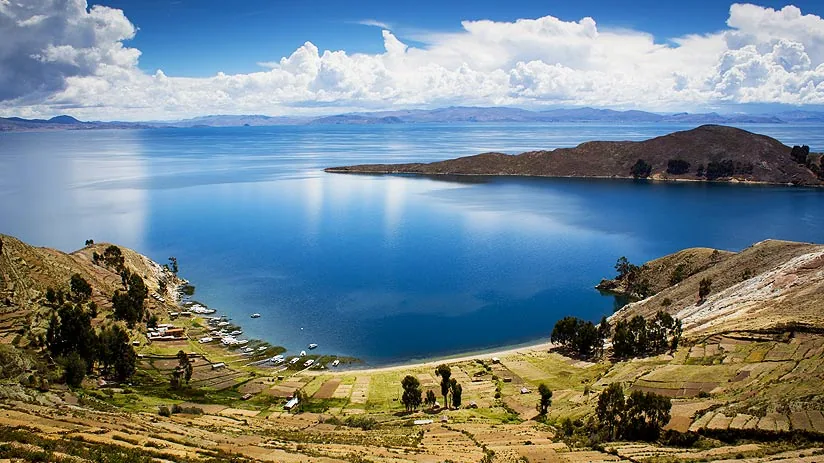
Lake Titicaca, Peru
Inca mythology holds that Lake Titicaca
Inca mythology holds that Lake Titicaca is the birthplace of the sun and the first Inca ancestors, Manco Cápac and Mama Ocllo, who emerged from its depths to found Cusco. Long before the Inca, the Tiwanaku and Pukara cultures flourished here, leaving behind stone temples and sophisticated raised-field agriculture. The lake has always been a contested and sacred territory, serving as a vital trade route between the high Andes and the Amazonian lowlands. During the colonial era, the Spanish built grand cathedrals in the lakeside towns, yet the underlying beliefs of the Aymara and Quechua people remained rooted in the lake's divine origins. Today, the lake is divided between Peru and Bolivia, continuing to serve as a vital resource for fishing and transportation for the hundreds of thousands of people who live in its basin.
Stepping onto the Uros floating islands,
Stepping onto the Uros floating islands, The strange, spongy texture of the 'totora' reeds beneath your feet, a sensation like walking on a thick mattress. The hum of the water lapping against the reed hulls is a constant, soothing backdrop to the quiet conversations of the islanders. The smell of dry grass and the smoke from small clay stoves used for cooking. On Taquile Island, the burn in your lungs climbing the steep stone stairs, noticing the men who sit in the plazas knitting intricate wool caps, a tradition recognized by UNESCO. The light at sunset is a transformative experience, turning the entire lake into a sheet of liquid gold before the temperature drops sharply with the arrival of the stars. People tend to miss the incredible clarity of the night sky, where the Milky Way appears close enough to touch. The bright, hand-woven patterns of the women's skirts, each color and motif telling a story of family and community.
The city of Puno is the main hub
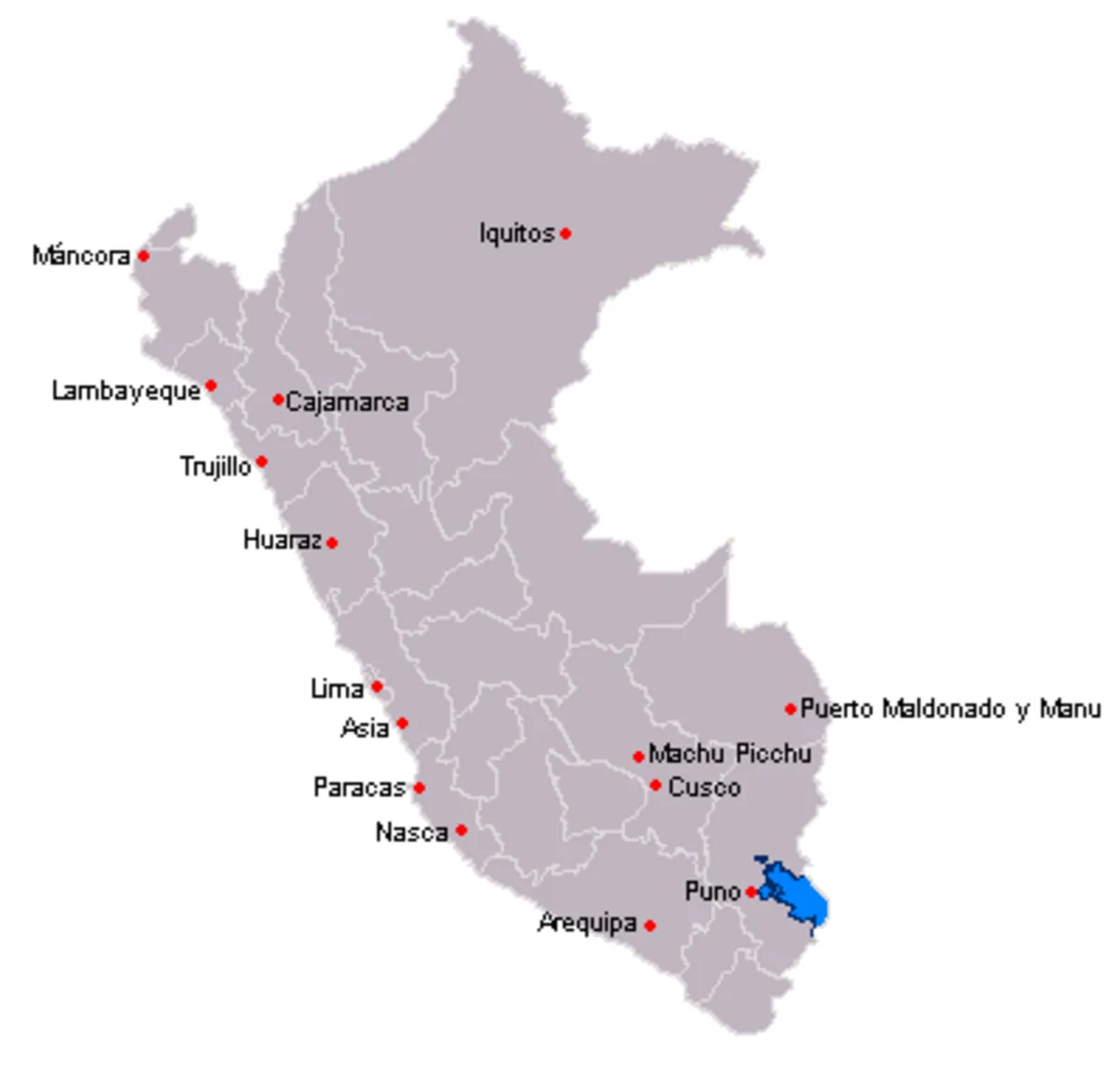
The city of Puno is the main hub for exploring the Peruvian side of the lake, accessible by bus from Cusco or Arequipa, or by a scenic train journey. Flights arrive at the nearby Juliaca airport, about an hour's drive from the lakefront. From the Puno harbor, boats depart daily for the various islands. While the Uros islands are a quick trip, reaching Taquile or Amantaní requires several hours on the water. For a involved experience, many travelers opt for a homestay on Amantaní, which involves living with a local family and participating in their daily activities.
“The city of Puno is the main hub for exploring the Peruvian side of the lake, accessible by bus from Cusco or Arequipa, or by a scenic train journey.”
The Experience
The way the air grows thin and cold as soon as the sun dips behind the mountains, requiring immediate layers of alpaca wool. Nearby, an outboard motor in the distance is often the only modern intrusion in a world that feels centuries old. A weight of the hand-woven blankets at night, heavy and warm against the highland chill. Most visitors miss the small, ancient 'chullpas' or burial towers that dot the hillsides overlooking the water. The element that stays with you is the hospitality of an Amantaní family, sharing a simple meal of quinoa soup by the light of a single candle, the vast silence of the lake stretching out into the dark.
Why It Matters
Lake Titicaca is a pillar of Andean mythology and history, serving as a site of uninterrupted indigenous occupation for millennia. It is a vital center for the preservation of the Aymara and Quechua languages and traditional weaving techniques. Ecologically, it is home to unique species like the Titicaca giant frog, and it remains a critical water source for the entire Altiplano region.
Why Visit
Visit Lake Titicaca to experience a world that exists above the clouds. It is the best place in Peru to see indigenous traditions being lived rather than performed, and to witness a landscape that is both harsh and incredibly beautiful. It is the only place where you can sleep on a floating island and wake up to the sun rising over the cradle of the Inca.
Insider Tips
- 1
Drink plenty of coca tea or 'muña' tea to help with the altitude; the lake sits significantly higher than Cusco.
- 2
Bring small bills of Soles to purchase textiles directly from the weavers on Taquile, as they prefer cash.
- 3
If staying overnight on an island, bring a high-quality headlamp, as electricity is often limited or non-existent.
- 4
Sun protection is non-negotiable; the UV radiation at this altitude is intense and the reflection off the water doubles the effect.
- 5
Choose a community-based tour operator to ensure that your visit directly benefits the families living on the islands.