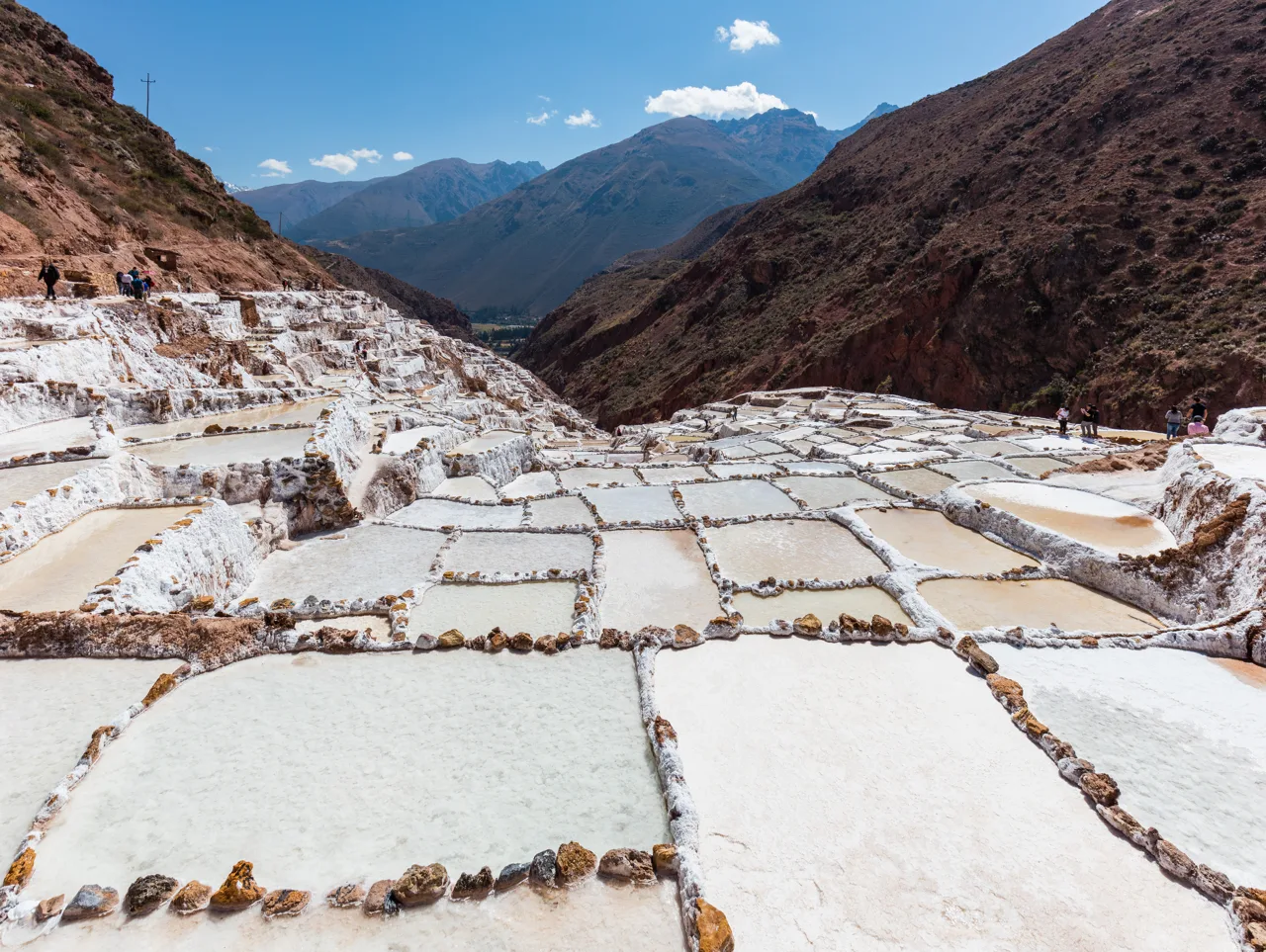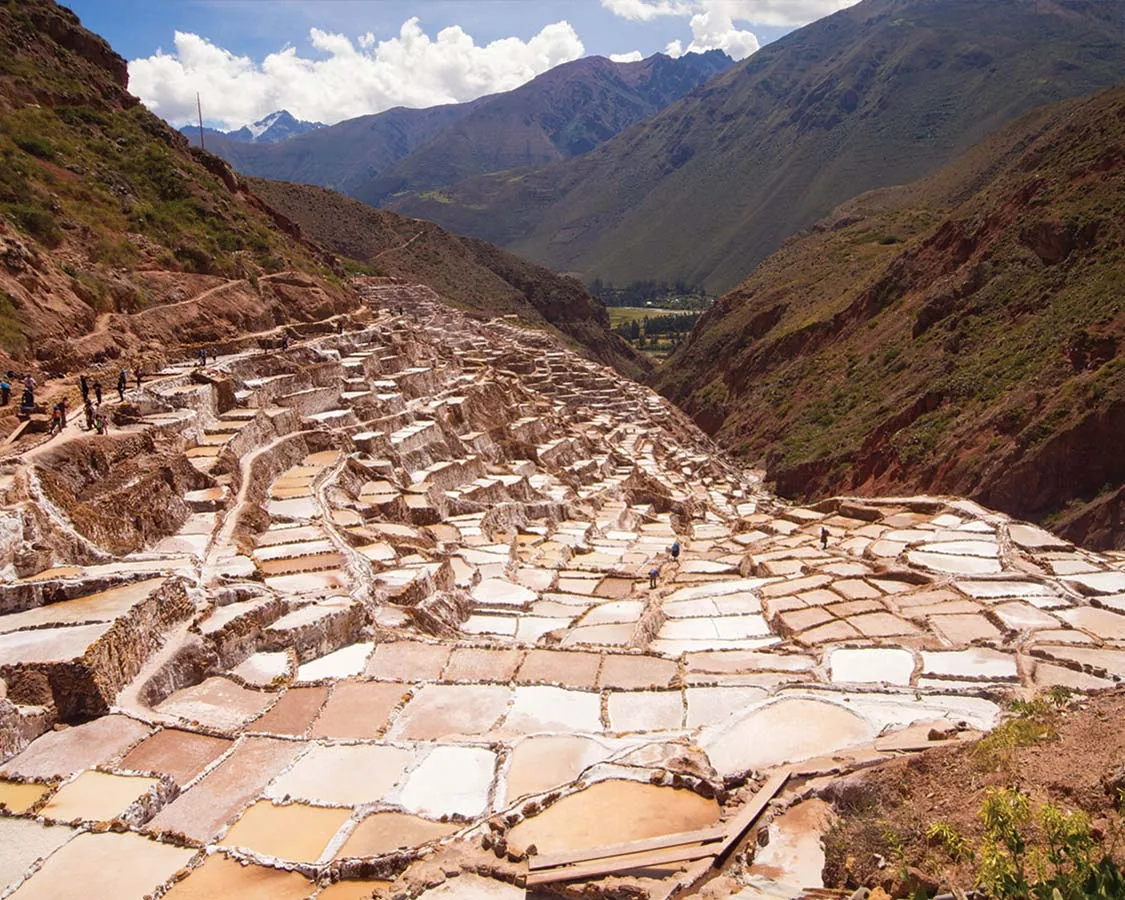
A single spring feeds 3,000 salt ponds that have been harvested by the same families since before the Inca empire.
About Sacred Valley (Maras)
The salt terraces predate the Inca and are attributed to the Wari culture. The Inca formalised the system and the Spanish colonial administration continued it. Local families have maintained their hereditary pond allocations through every political change since. The salt is still harvested and sold commercially.
What Sacred Valley (Maras) actually is
Maras is a complex of roughly 3,000 salt evaporation ponds terraced into a mountainside in Peru's Sacred Valley, about 50 kilometres from Cusco. The salt ponds are fed by a single hypersaline spring and have been in continuous use since before the Inca empire. They are still worked by local families today, making them one of the oldest continuously operated salt-harvesting sites in the world.
3,000 Ponds Fed by One Spring for a Thousand Years
The spring that feeds Maras produces water with a salt concentration high enough to be commercially harvested through evaporation alone. The Wari culture, predecessors of the Inca, first channelled this spring into shallow terraced ponds carved into the steep mountainside. Each family in the community is allocated a set of ponds, and the system of rights and maintenance has been passed down through generations. The process is simple: spring water flows through a network of channels into each pond, where it sits in the sun until the water evaporates and a crust of salt remains. The salt varies in colour from bright white in recently harvested ponds to deep ochre and pink in older ones, creating a patchwork of colour across the mountainside. Narrow stone paths run between the ponds, and the workers navigate them with a confidence that comes from a lifetime of practice.
The Experience
You approach along a mountain road and the ponds appear as a white-and-ochre patchwork carved into the slope below. Walking the narrow stone paths between them, you pass families raking salt crust from the shallow pools. The environment smells of mineral water and warm stone. The colour variation between ponds at different stages of evaporation creates a visual pattern that changes with the light.
Why It Matters
Maras is one of the oldest continuously operated salt-harvesting sites in the world and a remarkable example of pre-Columbian engineering that remains productive today. The community management system has survived every change of regime for over a thousand years.
Why Visit
3,000 pre-Inca salt ponds still worked by local families on a Sacred Valley mountainside, one of the oldest active salt-harvesting sites in the world.
✦ Photo Gallery
Best Season
🌤 Dry season (May to September) for the best conditions and most active harvesting. The ponds are brightest white after recent harvesting. Morning light is best for photographs.
Quick Facts
Best time to visit
Dry season (May to September) for the best conditions and most active harvesting. The ponds are brightest white after recent harvesting. Morning light is best for photographs.
Getting there
In Cusco, Peru; reach Cusco first, then continue to the site.
Location
Cusco, Peru
Type
attraction
Insider Tips
- 1
Go in the morning for the best light on the salt terraces.
- 2
Stay on the marked paths between the ponds.
- 3
Combine with nearby Moray circular terraces for a full Sacred Valley day.