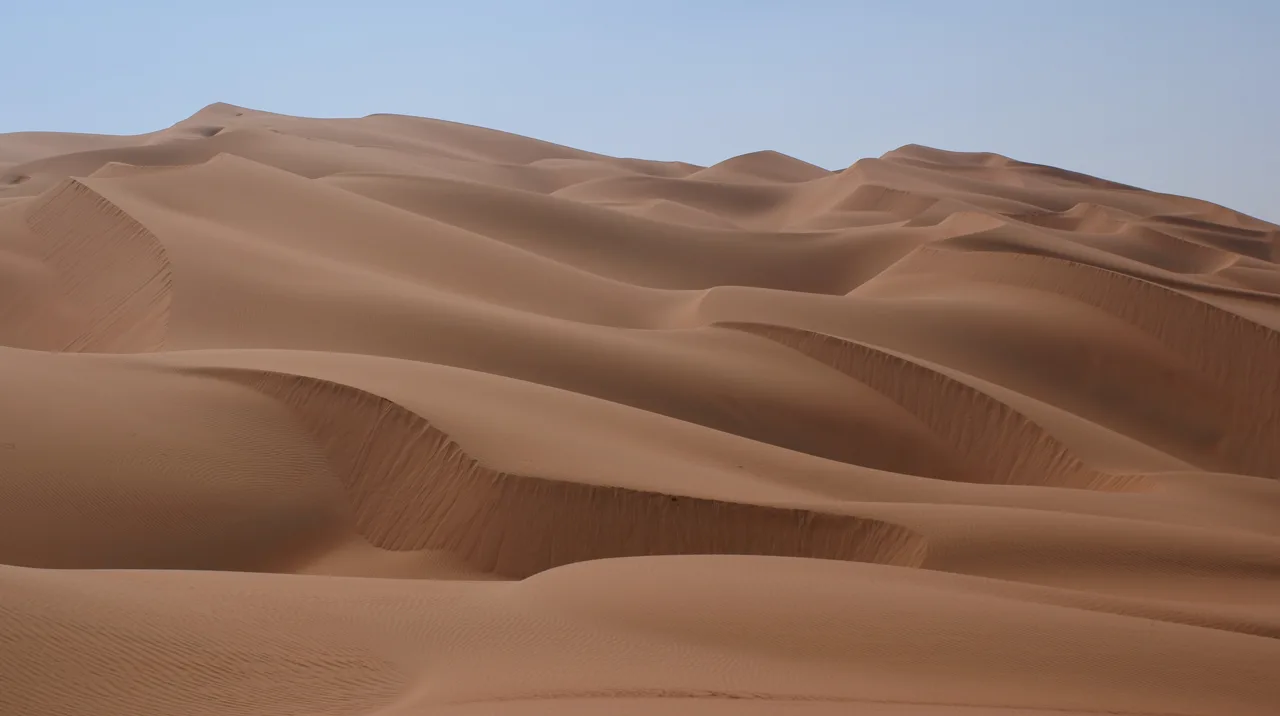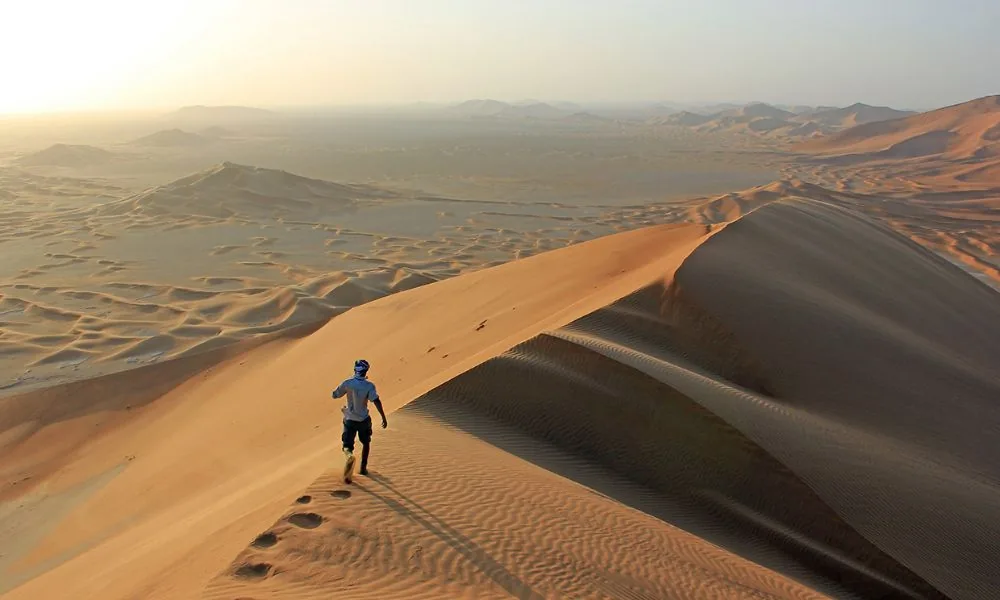
This desert is so large that it has its own name, and the sand dunes reach the height of a 70-storey building.
About The Empty Quarter
The Empty Quarter has been inhabited at its margins by Bedouin peoples for thousands of years. Wilfred Thesiger's crossings in the 1940s brought it to Western attention. The Arabian oryx was hunted to near-extinction here and has been reintroduced. Saudi Arabia's Vision 2030 is developing tourism access to the desert's edge.
The Empty Quarter, known in Arabic as Rub' al Khali, is the largest contiguous sand desert in the world, covering roughly 650,000 square kilometres across Saudi Arabia, Oman, Yemen and the UAE. The Saudi portion contains some of the tallest sand dunes on Earth, reaching up to 250 metres, and the desert has been a barrier, a refuge and a crossing ground for Bedouin peoples for millennia.
The Largest Sand Sea on Earth
The scale of the Empty Quarter is difficult to comprehend until standing on a dune ridge and see nothing but sand in every direction to the horizon. The dunes are barchan formations, crescent-shaped and sculpted by prevailing winds, and they shift constantly. The sand itself is saturated with iron oxide, giving it a deep terracotta colour that intensifies at sunrise and sunset. The desert is not entirely empty: Bedouin communities have crossed and inhabited its margins for thousands of years, and the explorer Wilfred Thesiger documented his crossings with Bedouin companions in the 1940s. Wildlife includes the Arabian oryx, reintroduced after near-extinction, and desert-adapted species like the sand cat and the camel spider. Access is typically from the northern or eastern edges, and guided desert camps offer the most practical way to experience the interior.
The Experience
You drive south from the oasis towns until the pavement ends and the sand begins. The dunes build gradually and then suddenly you are in a landscape where everything is sand. The colour at sunset is almost unreal: deep red-orange against a sky that goes from blue to black without any twilight. The silence is total. At night, the stars are thick enough to create a visible glow on the sand. Desert camps provide basic shelter, and the Bedouin guides know the terrain from a lifetime of familiarity.
Why It Matters
The Empty Quarter is the largest sand desert on Earth and one of the most extreme environments on the planet. It is both a geographical superlative and a cultural landscape for the Bedouin peoples who have navigated it for millennia.
Why Visit
The largest sand desert on Earth, with 250-metre dunes glowing terracotta at sunset and a silence so complete you can hear your own heartbeat.
✦ Photo Gallery
Best Season
🌤 November through February for tolerable temperatures. Summer is dangerously hot. Go with an organised desert tour or experienced guide.
Quick Facts
Best time to visit
November through February for tolerable temperatures. Summer is dangerously hot. Go with an organised desert tour or experienced guide.
Getting there
In Rub' al Khali, Saudi Arabia; reach Rub' al Khali first, then continue to the site.
Location
Rub' al Khali, Saudi Arabia
Type
attraction
Insider Tips
- 1
Go with an experienced guide or organised tour; this is not a recreational desert.
- 2
Sunrise and sunset transform the sand colour; plan around them.
- 3
Carry far more water than you think you need.
- 4
Winter nights in the desert are cold; bring warm layers.