“One hundred and eleven tombs stand as silent sentinels in the sand, yet the most famous of them all was never actually finished, leaving a masterclass in ancient stonemasonry barely changed since.”
About Hegra
The Nabataean city of Mada’in Salih, or Hegra, was a thriving metropolis of merchants and architects. They mastered hydraulic engineering, carving cisterns into the rock to capture every drop of precious rain. Their dominance over the frankincense trade allowed them to hire the finest craftsmen, who blended Greek, Roman, and Egyptian styles into a unique Nabataean aesthetic. After the Roman occupation and the eventual shift in trade routes to the Red Sea, the city was abandoned to the shifting sands. Across centuries, the dry climate acted as a perfect preservative, shielding the intricate inscriptions and delicate carvings from the decay found in more humid Mediterranean climates.
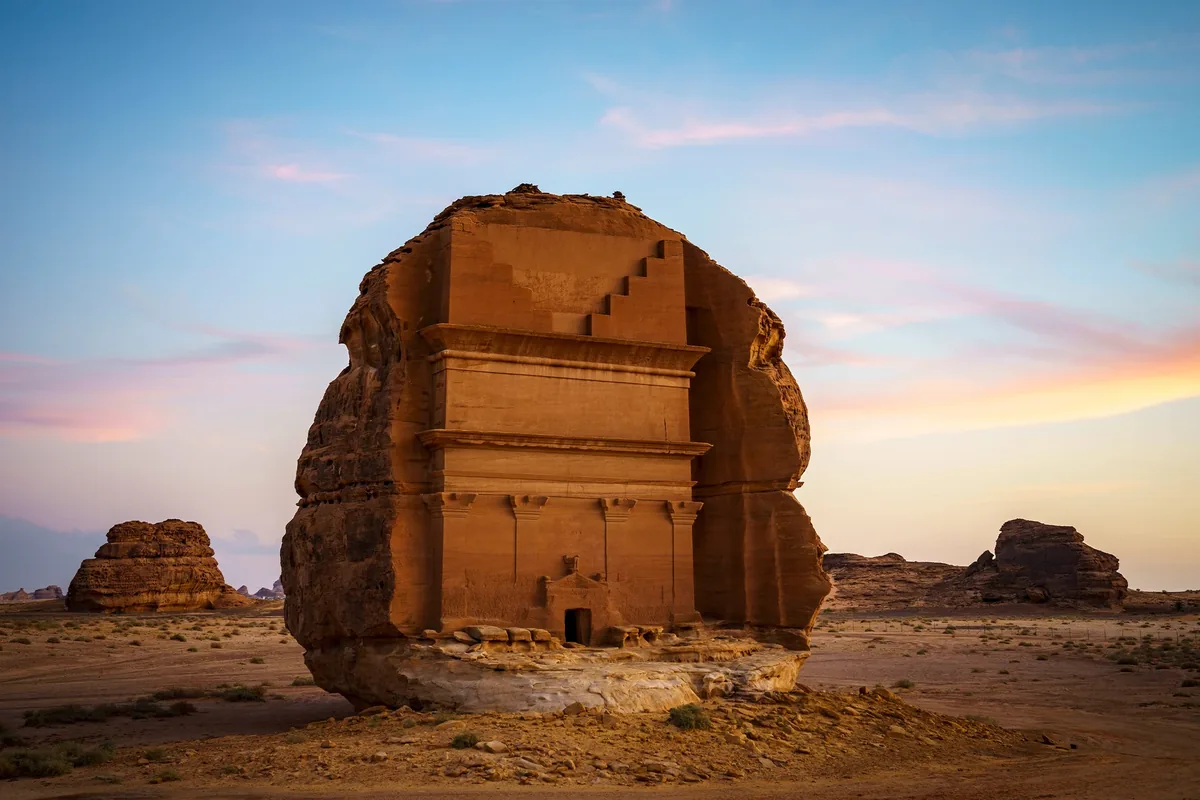
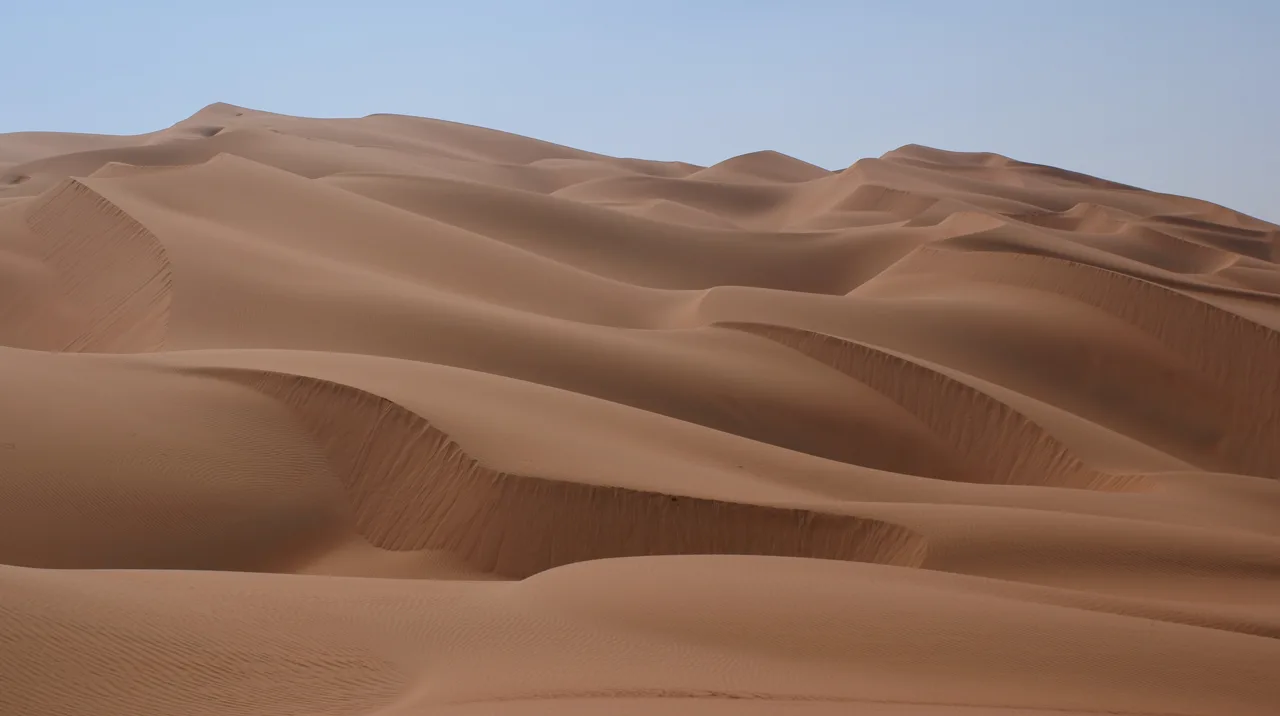
Silence has a weight in the desert of AlUla. It settles over the 111 monumental tombs of Hegra, where the Nabataeans carved their eternal legacies into the face of golden sandstone monoliths. While many know of Petra, Hegra offers a more intimate, solitary communion with the same ancient civilization. The landscape is a jagged collection of outcrops rising from the sand, each transformed into architectural masterpieces by stone-cutters who vanished two millennia ago. Here, the desert wind acts as a natural sandpaper, slowly softening the Roman-influenced pediments and eagle carvings that crown the burial chambers. It remains a place where the scale of human ambition meets the indifference of the geological clock.
It settles over the 111 monumental tombs of Hegra, where the Nabataeans carved their eternal legacies into the face of golden sandstone monoliths.
Hegra was the southern capital
Hegra was the southern capital of the Nabataean Kingdom, a wealthy trade empire that grew rich by controlling the spice and incense routes. Between the 1st century BCE and the 1st century CE, the city flourished as a cosmopolitan hub. When the Romans annexed the kingdom in 106 CE, they left their own marks, including a fortress that is the empire's southernmost known outpost. Local folklore later associated the site with the Thamud people and the story of the Prophet Salih, leading to centuries where the ruins were viewed with a mix of awe and caution. It was only in 2008 that this vast open-air museum became the first UNESCO World Heritage site in Saudi Arabia, finally inviting the world to witness its preservation.
The heat hits you first, but it is quickly forgotten when the Qasr al-Farid comes into view. This 'Lonely Castle' is a single, massive tomb carved from a four-story-high rock that stands entirely alone in the dunes. At first, the chisel marks at the base are still crisp, revealing the top-down carving method used by the ancient masons. The light at Hegra behaves like a liquid, flooding the carvings with orange and crimson hues as the sun dips lower. Walking between the tombs at Jabal AlBanat, The texture of the weathered stone under your fingertips, a grainy reminder of the thousands of years since these inscriptions were commissioned. The environment smells of sun-baked minerals and the occasional waft of wild desert sage. AlUla International Airport is the primary entry point, situated just a short drive from the archaeological park. Most people stay in the luxury desert camps or restored mudbrick hotels in the AlUla oasis. To protect the site, individual wandering is restricted; instead, you board eco-friendly coaches or private vintage Land Rovers that navigate the sandy tracks between the main landmarks. The town of AlUla is a ten-hour drive from Riyadh or a three-hour journey from Medina, making it a remote destination that requires careful planning to appreciate fully.
The Experience
The desert at Hegra doesn't feel empty; it feels occupied by the presence of those who carved their names into the rock. It becomes clear how the shadows of the tombs lengthen across the sand, creating a rhythmic pattern of dark and light. Sound-wise of the wind through the rocky crevices can often be mistaken for distant whispers. A strange sense of privilege standing before the tomb of Lihyan son of Kuza, realizing that for most of modern history, these faces were hidden from global view. The scale of the necropolis forces a perspective shift, where a human life feels as fleeting as the dust clouds kicked up by the tour vehicle.
The desert at Hegra doesn't feel empty; it feels occupied by the presence of those who carved their names into the rock.
Why It Matters
Hegra represents the most southern and best-preserved outpost of the Nabataean civilization. It provides an remarkable look into ancient trade, funerary practices, and cross-cultural architectural influences. Its significance lies in its ability to tell the story of a people who turned a hostile desert into a prosperous, art-filled home.
Why Visit
You visit Hegra to see the 'other' Petra without the overwhelming crowds or the constant hum of vendors. It offers a raw, cinematic experience where the monuments feel like they were discovered only yesterday. No other site on earth combines such well-preserved ancient architecture with the stark, surreal beauty of the Saudi desert.
✦ Insider Tips
- 1
Book your entry slot for the late afternoon tour to see the sun set behind the Qasr al-Farid tomb.
- 2
Bring a pair of high-quality sunglasses because the glare off the pale sand and light-colored rocks can be intense.
- 3
Look for the small carved snakes and eagles above the tomb entrances, which were intended to protect the deceased from grave robbers.
- 4
Download the AlUla app beforehand as cellular service can be spotty once you move deep into the archaeological park.
- 5
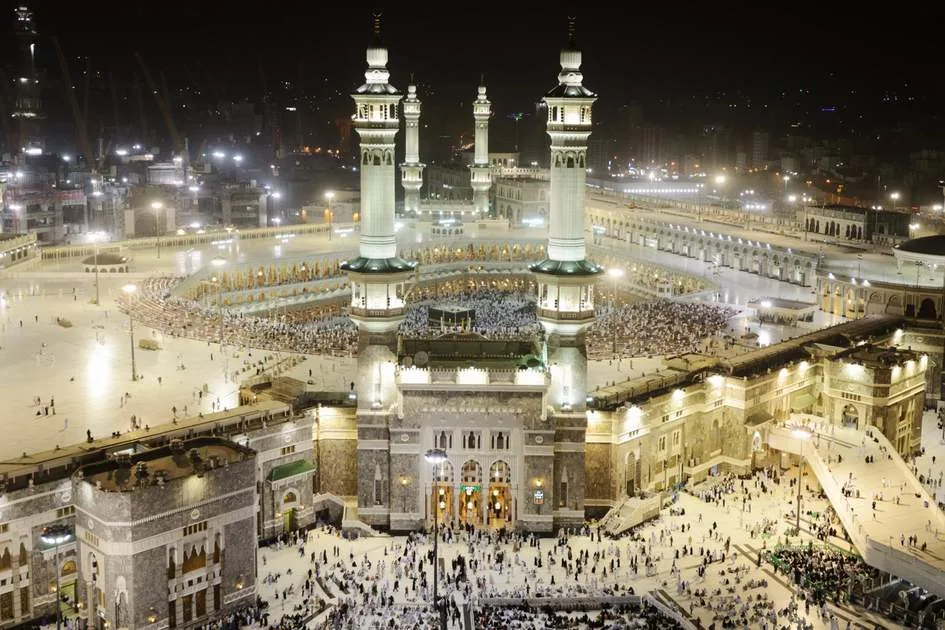
The site is open to all visitors, unlike the holy cities of Mecca and Medina which are restricted to Muslims.