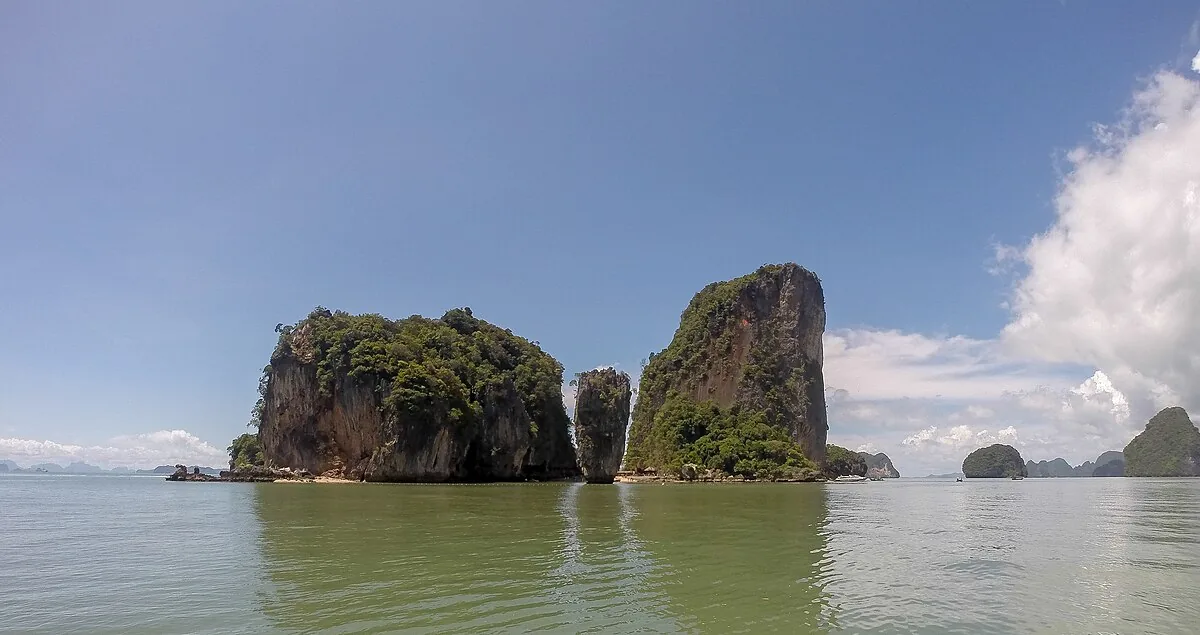
“One of the most photographed faces in the world is a stone Buddha head that has spent centuries slowly rising from the earth, cradled by the roots of a giant fig tree.”
About Ayutthaya Historical Park
Ayutthaya was the center of a sophisticated bureaucracy and a flourishing arts scene that influenced everything from Thai cuisine to classical dance. The 1767 siege was so devastating that the city was never rebuilt, marking a permanent shift in the region's power dynamics. In 1991, UNESCO recognized the site as a World Heritage Park, ensuring that the precarious brick structures are reinforced against the annual monsoon floods that frequently submerge the lower levels of the ruins.
Ayutthaya Historical Park
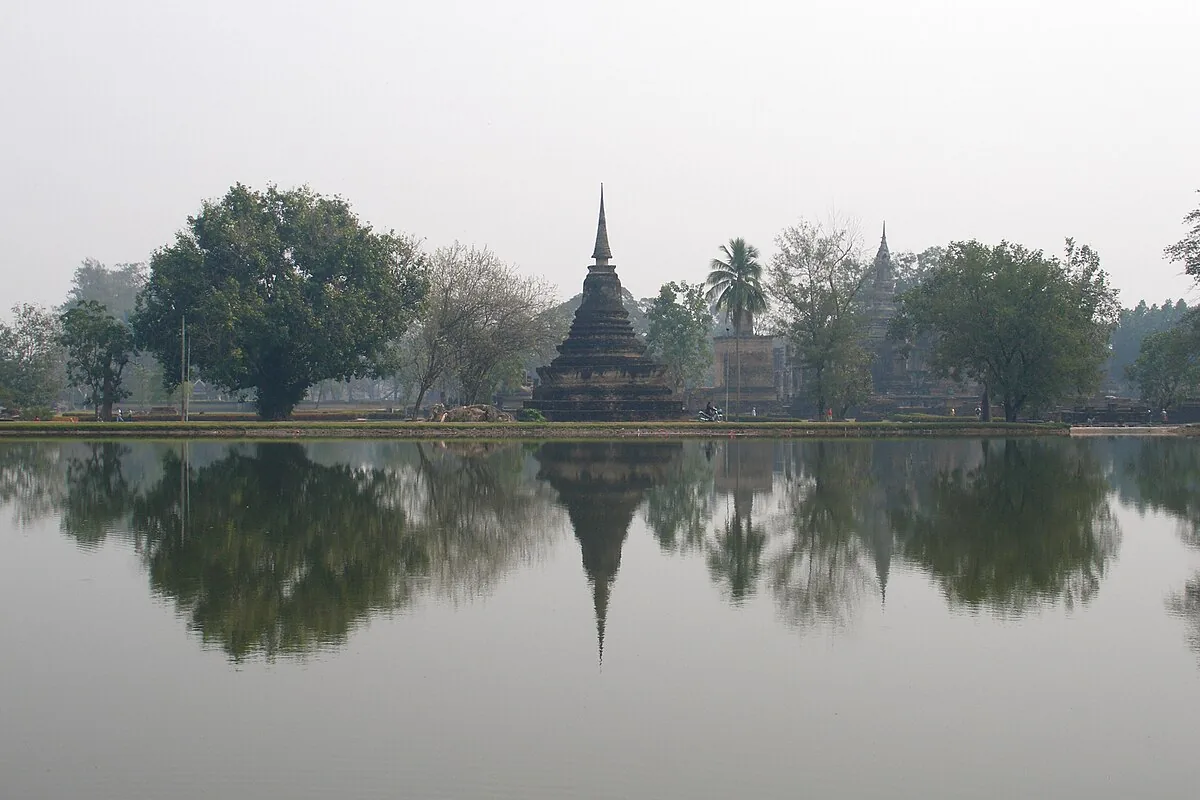
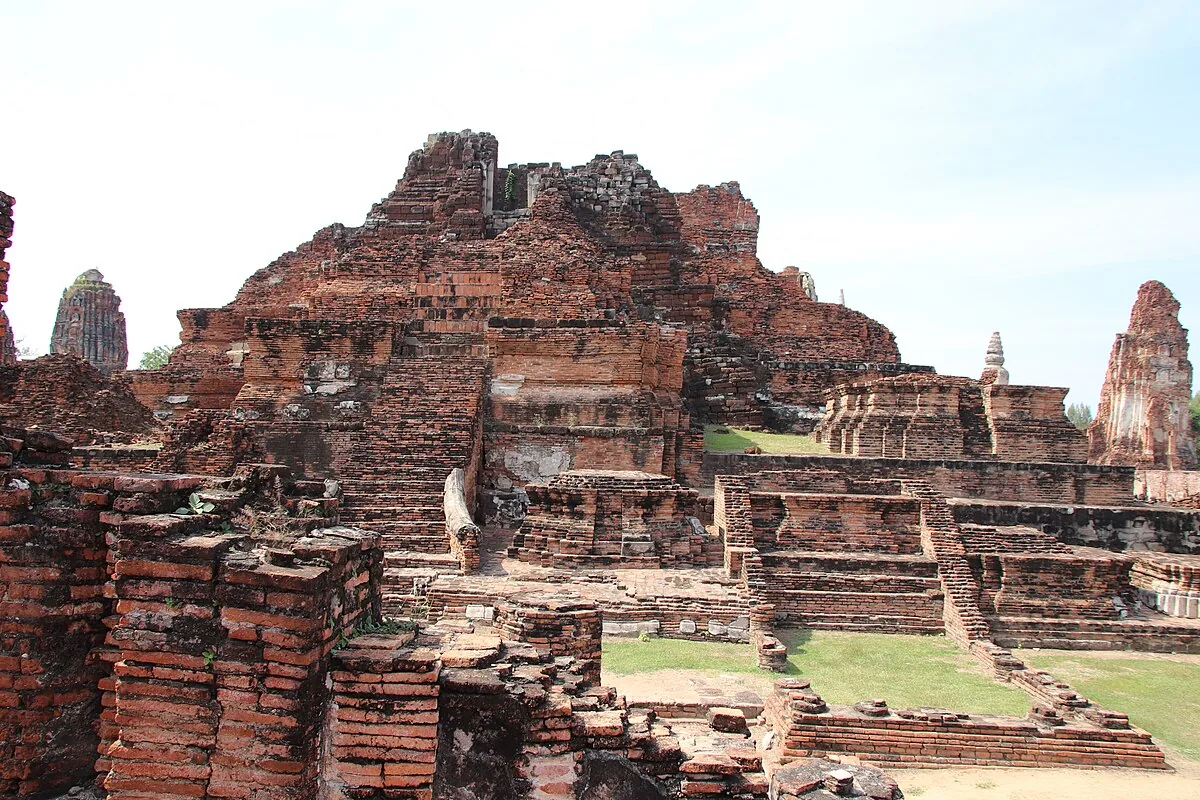
Rust-colored brick ruins rise from the emerald plains at the confluence of three rivers, marking the bones of what was once the most populous city on earth. Founded in 1350, Ayutthaya was the second capital of the Siamese Kingdom for 417 years before its violent destruction. Today, the park is a sprawling graveyard of decapitated Buddhas and leaning prangs that look like giant corn cobs reaching for the sky. Wandering through the tall grass between the crumbling temples of Wat Phra Mahathat and Wat Chaiwatthanaram feels like navigating a city that was abandoned only yesterday, despite the centuries of decay that have weathered its stone.
Rust-colored brick ruins rise from the emerald plains at the confluence of three rivers, marking the bones of what was once the most populous city on earth.
King Uthong founded
King Uthong founded Ayutthaya to escape a smallpox outbreak in Lopburi, turning an island surrounded by rivers into a strategic maritime hub. By the 1700s, the city was a global metropolis with over a million residents, attracting traders from as far as France, Holland, and Japan. The kingdom’s power was absolute until 1767, when the Burmese army invaded, razed the city to the ground, and melted the gold from the statues. The survivors fled south to found Bangkok, leaving Ayutthaya to be swallowed by the jungle until the 20th century, when the Fine Arts Department began the painstaking process of excavating and preserving the remnants of its former glory.
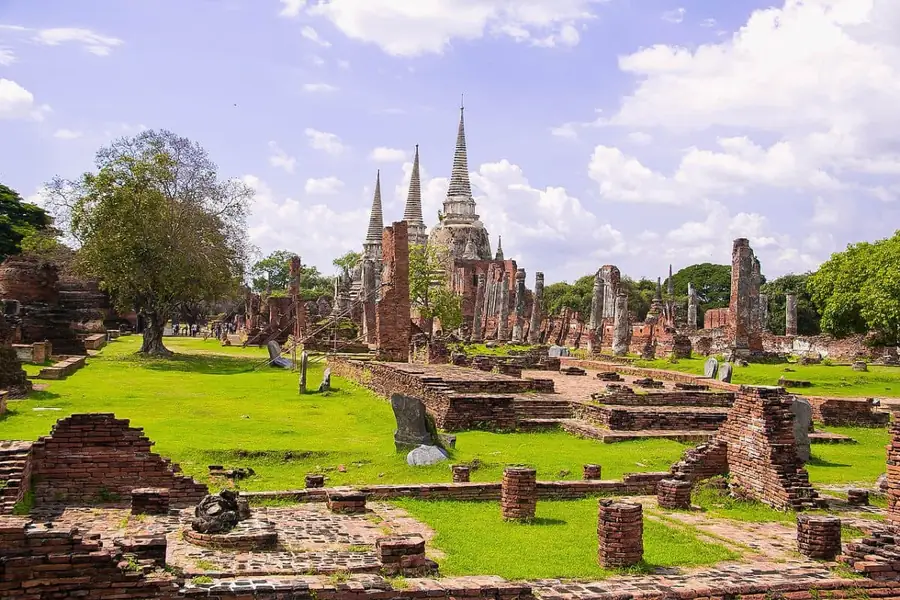
The air is heavy smelling
The air is heavy smelling of sun-baked brick and the dampness of the river. The crunch of gravel under your feet and the distant, rhythmic chanting from the active temples that still dot the park. One of the most haunting sights is the sandstone Buddha head entwined in the roots of a Bodhi tree, where the forest seems to be slowly reclaiming the sacred. The standout is the scale of the reclining Buddha at Wat Lokayasutharam, draped in a bright saffron cloth that glows against the grey stone. The light at sunset is particularly evocative, casting long, dramatic shadows through the arched windows of the old royal palace and turning the brickwork into a deep, glowing orange. Catch a local train from Bangkok’s Hua Lamphong or Bang Sue stations for a scenic two-hour journey that costs mere pocket change. Once at the Ayutthaya station, cross the river by ferry and rent a bicycle or hire a tuk-tuk driver for the day. Cycling is the most rewarding way to see the ruins at your own pace, allowing you to venture away from the main tourist hubs and find quieter corners of the park.
The Experience
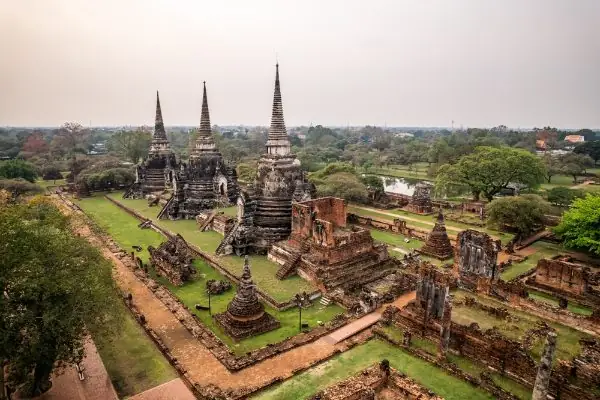
You feel the heat radiating off the ancient bricks as you climb the steep steps of Wat Ratchaburana, descending into a crypt that still holds remnants of 14th-century murals. The silence in the central courtyards is profound, interrupted only by the rustle of dry leaves and the occasional chime of a bell from a nearby monastery. What hits is that many of the Buddha statues are missing their heads, a grim reminder of the systematic looting that followed the city's fall. Near the water's edge near Wat Chaiwatthanaram as the sky turns indigo, the ruins feel less like a museum and more like a living memory of a lost civilization.
You feel the heat radiating off the ancient bricks as you climb the steep steps of Wat Ratchaburana, descending into a crypt that still holds remnants of 14th-century murals.
Why It Matters
This park is the architectural DNA of modern Thailand. The layouts and decorative styles seen here were directly exported to Bangkok, making Ayutthaya the essential link between the ancient Khmer-influenced kingdoms and the contemporary Thai state.
Why Visit
Ayutthaya offers a sense of scale and loss that the polished temples of Bangkok cannot provide. It is a place where you can touch the history of a global superpower that vanished in a single season, and see how nature eventually makes peace with the works of man.
✦ Insider Tips
- 1
Rent a bicycle with a basket and a lock near the ferry pier; the island is mostly flat and very easy to navigate on two wheels.
- 2
The ruins at Wat Chaiwatthanaram are best viewed from a boat on the river at sunset rather than from the crowded land entrance.
- 3
Bring mosquito repellent for the late afternoon, as the proximity to the river makes the park a hotspot for insects once the sun goes down.
- 4
Look for the small street food market near the park entrance to try 'Roti Sai Mai,' the local specialty of colorful pulled-sugar crepes.