Twenty-one thousand square feet of murals tell a single story of gods and demons along the galleries of a palace where no king has actually lived for decades.
About Grand Palace
Construction began in May 1782, utilizing salvaged materials from the abandoned royal palace in Ayutthaya to imbue the new site with historical continuity. Rama I intended the complex to be a replica of the lost capital, creating a sacred space that centered around the Emerald Buddha. Over the 19th century, King Chulalongkorn added grand halls with Italianate flourishes, turning the defensive fortress into a diplomatic stage where the East met the West on equal footing.
Grand Palace in Thailand
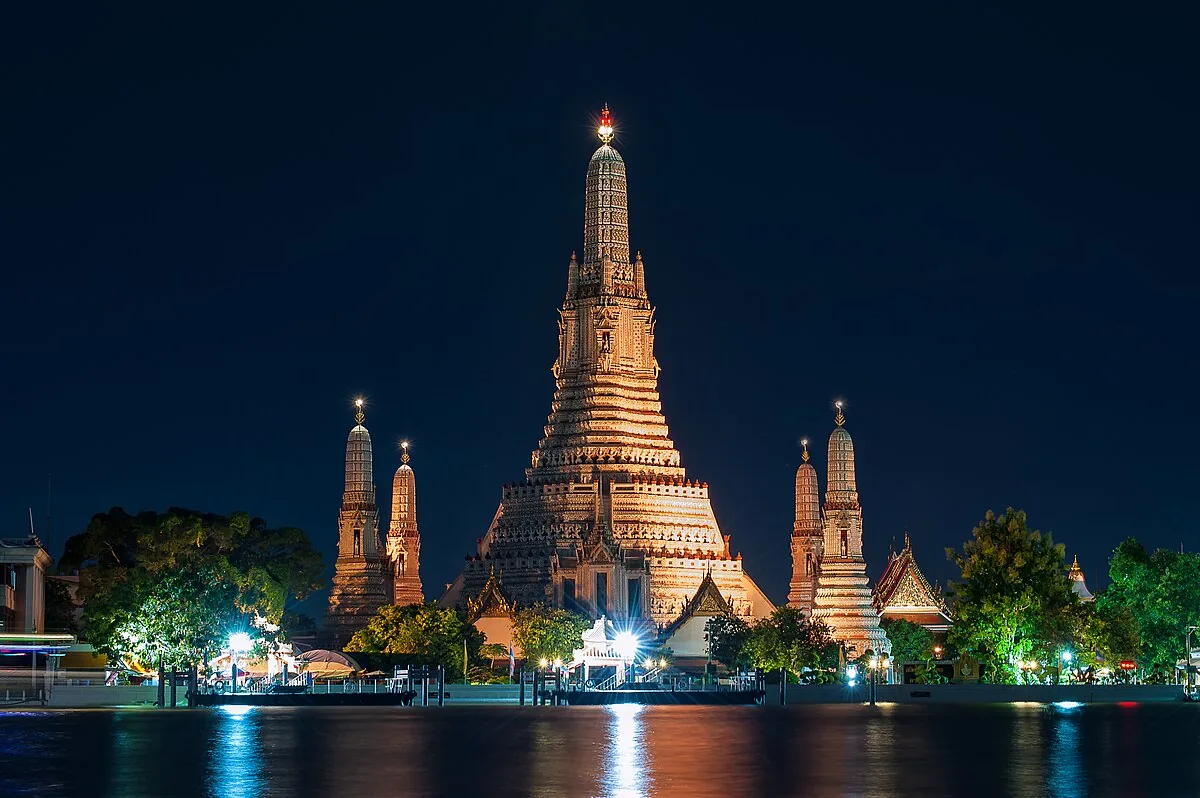
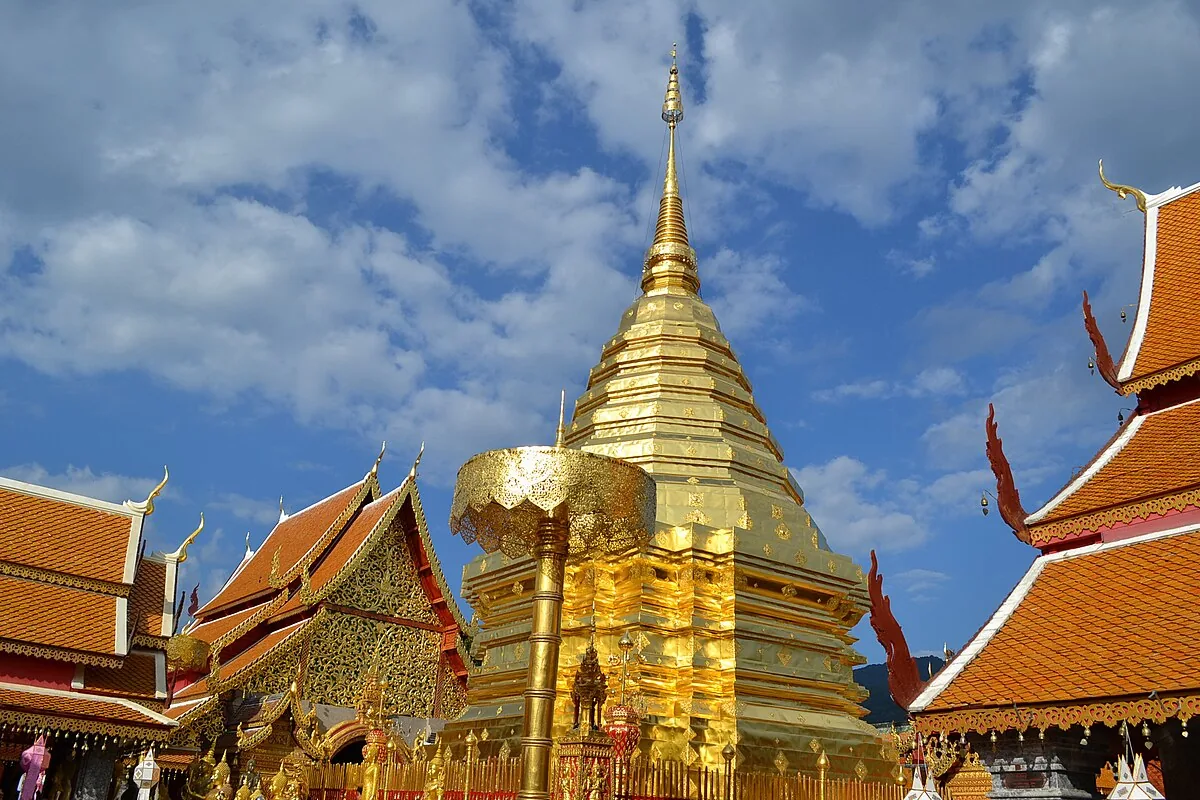
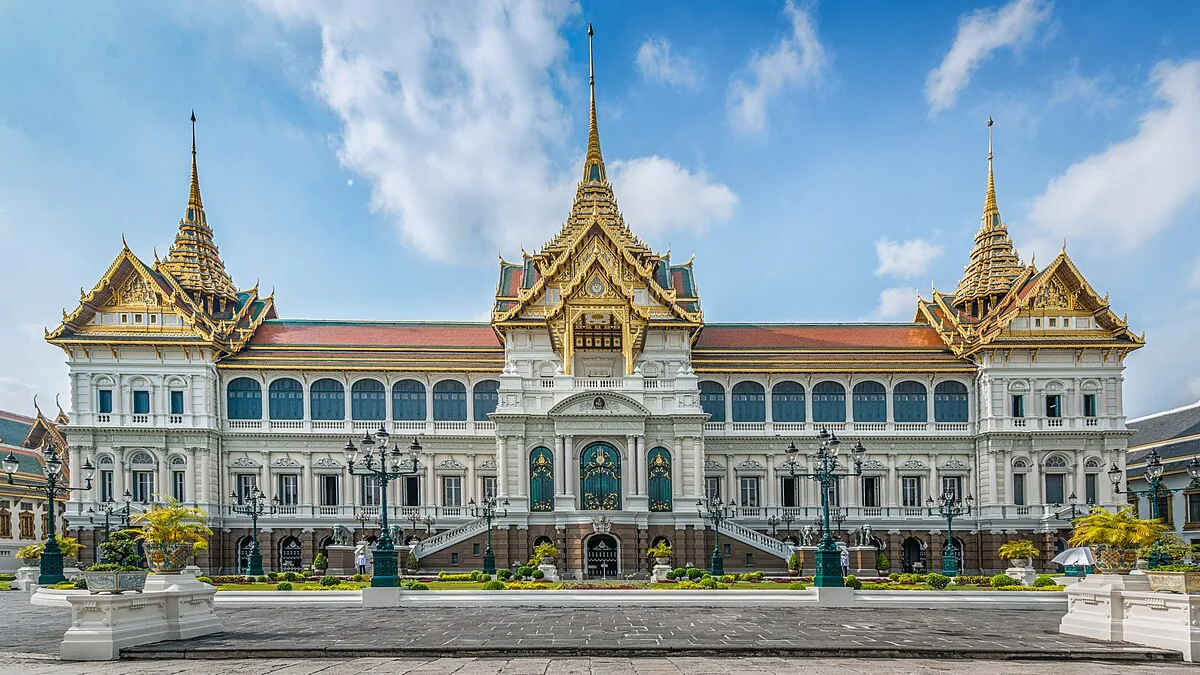
Gold leaf and fractured glass mosaics create a shimmering mirage on the banks of the Chao Phraya River, marking the spiritual and ceremonial heart of the Thai capital. For over two centuries, this walled city within a city was the residence of kings and the seat of the government. The complex is a dense thicket of tiered orange roofs, emerald spires, and fierce guardian statues that seem to vibrate under the intense Bangkok sun. Every inch of the 218,000 square meters is packed with symbolic detail, from the mythical creatures carved into the pediments to the sprawling murals depicting the Ramakien epic that line the inner galleries.
“Gold leaf and fractured glass mosaics create a shimmering mirage on the banks of the Chao Phraya River, marking the spiritual and ceremonial heart of the Thai capital.”
Grand Palace, Thailand
established this site, 1782
King Rama I established this site in 1782 when he moved the capital across the river from Thonburi, seeking a more defensible location. He chose a plot occupied by Chinese traders, whom he asked to relocate, and began building a palace that would signal the dawn of the Chakri Dynasty. While the initial structures were mostly timber, they were gradually replaced by masonry and marble as the kingdom’s wealth grew. The architecture evolved through the reigns, incorporating European styles alongside traditional Thai forms, most notably in the Chakri Maha Prasat Hall, where a Victorian-style facade is topped by three distinct Thai spires. This fusion reflects Thailand’s unique history of modernization without colonization.
The heat on the white marble
The heat on the white marble courtyards can be relentless, but the air inside the Wat Phra Kaew chapel remains cool and smelling of incense. From somewhere comes the constant, melodic tinkling of thousands of tiny bronze bells hanging from the eaves, catching the river breeze. The crowd moves in a hushed rhythm toward the Emerald Buddha, a small but profoundly powerful icon carved from a single block of jade. What you catch first is the transition from the sacred intensity of the temples to the regal formality of the Borom Phiman Mansion. The sensory details are overwhelming; the texture of the weathered stone, the blinding reflection of the gold-leafed chedis, and the vibrant colors of the ceramic floral patterns that decorate the pillars.
Take the Silom Line to Saphan
Take the Silom Line to Saphan Taksin Station and hop onto the Chao Phraya Express Boat to Tha Chang Pier. Walking from the pier leads you directly to the main entrance on Na Phra Lan Road. Taxis and tuk-tuks are plentiful, but river transport provides the most evocative approach, allowing the palace to slowly reveal itself from behind the riverside trees.
“Take the Silom Line to Saphan Taksin Station and hop onto the Chao Phraya Express Boat to Tha Chang Pier.”
The Experience
The echo of your footsteps on the polished stone is often lost beneath the collective gasp of visitors first laying eyes on the Golden Chedi. The mass of the weight of the humidity lifted momentarily as you stand beneath the shade of the gallery murals, tracing the intricate gold-stamped details of a battle scene. You register that the guards stand perfectly still in their stiff uniforms, oblivious to the swirling tourists and the scent of jasmine garlands sold near the gates. What sticks with you is the silence that falls as you enter the inner sanctum of the Temple of the Emerald Buddha, a sharp contrast to the chaotic energy of the city outside.
Why It Matters
This complex is the ultimate physical manifestation of Thai identity, merging the monarchy, the religion, and the state into a single architectural marvel. It serves as the site for every major national rite of passage and remains a symbol of the nation's endurance and artistic sophistication.
Why Visit
The sheer density of detail. While other palaces offer space and gardens, this one offers a concentrated explosion of craftsmanship where every tile and statue carries a thousand years of mythological weight. It is the only place where you can feel the true, unvarnished gravity of Thai royalty.
Insider Tips
- 1
Strict dress codes apply; even if you have a scarf to cover your shoulders, the guards often insist on a proper shirt and long trousers or skirts.
- 2
The official ticket includes entry to the Vimanmek Mansion and several other museums, so keep your receipt to use over the following week.
- 3
Scammers often linger outside the gates claiming the palace is closed for a holiday; ignore them and walk directly to the ticket booth.
- 4
Bring a refillable water bottle, as the stone courtyards radiate heat and prices for refreshments inside are considerably higher.