A sacred white elephant chose the location for this temple by climbing a mountain, trumpeting three times, and then dying on the spot where the golden spire now stands.
About Wat Phra That Doi Suthep
The temple's physical structure reflects the evolution of Lanna art, characterized by steep, multi-tiered roofs and the use of dark teak wood in the smaller pavilions. In 1935, a monk named Khruba Srivichai spearheaded a massive volunteer effort to build the first road up the mountain, replacing the arduous jungle trek that had existed for six centuries. This act of devotion made the temple accessible to the masses and cemented the monk’s status as a saint in Northern Thai culture.
Perched like a golden crown 1,073 meters above
Perched like a golden crown 1,073 meters above the Chiang Mai valley, this temple is the most sacred site in Northern Thailand. A gleaming, copper-plated chedi dominates the central courtyard, surrounded by a dizzying array of shrines, pagodas, and statues of white elephants. This space is noticeably thinner and cooler than in the city below, often smelling of mountain pine and the sweet smoke of hundreds of burning incense sticks. To reach the summit, pilgrims and visitors must tackle a 306-step staircase flanked by ornate ceramic-tiled nagas, though a modern funicular provides a swifter ascent for the weary.
“Perched like a golden crown 1,073 meters above the Chiang Mai valley, this temple is the most sacred site in Northern Thailand.”
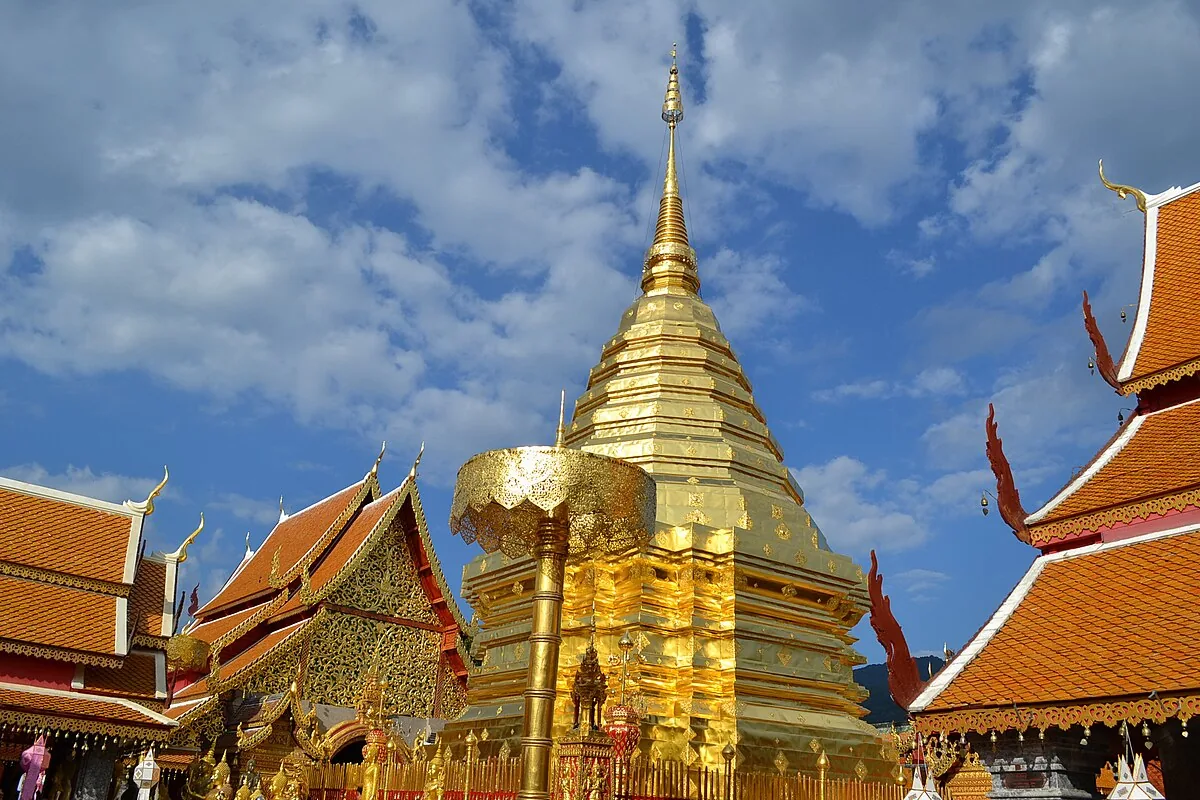
Wat Phra That Doi Suthep, Thailand
King of Lanna
Legend tells of a 14th-century monk from Sukhothai who brought a bone fragment believed to be from the Buddha’s shoulder to the King of Lanna. The relic miraculously split in two; one half was enshrined at a local temple, while the other was placed on the back of a sacred white elephant. The animal was released into the jungle and climbed Doi Suthep mountain, where it trumpeted three times, turned in three circles, and knelt down before passing away. Taking this as a divine sign, the King ordered the construction of the temple on that very spot in 1383. Over the centuries, the original modest stupa was expanded and covered in gold, becoming the spiritual anchor for the entire region.
The sound of the mountain wind catching
The sound of the mountain wind catching the hundreds of small bells tied to the temple eaves creates a constant, ethereal chorus. Audible here is the rhythmic 'thwack' of fortune sticks being shaken in wooden cups and the low murmur of monks chanting in the inner sanctum. The ground is often wet with mountain mist, reflecting the gold of the chedi and the vibrant colors of the mural paintings. Right away, the view from the observation deck, where Chiang Mai appears as a miniature grid of toy houses through the shifting clouds. The light at dawn is particularly spiritual, as the first rays of sun turn the golden spire into a blinding beacon that can be seen from the city center.
Most visitors hire a 'songthaew'
Most visitors hire a 'songthaew', a red shared taxi, from the base of the mountain or from near the Chiang Mai Zoo. The drive is a series of hairpin turns through the lush greenery of the national park, taking about thirty minutes. For the adventurous, the 'Monk’s Trail' is a steep but rewarding two-hour hike that follows a forest path marked by orange robes tied around the trees, leading you through smaller forest temples before reaching the main gates.
The Experience
The walk up the Naga stairs is a test of both stamina and focus, as the fierce green-and-gold serpents seem to watch your every move. The temperature drop as you reach the upper terrace, where the intensity of the gold leaf against the blue mountain sky is almost hypnotic. The opening note is the devotees walking clockwise around the chedi with lotus blossoms in their hands, their faces calm and eyes downcast. The moment of true connection comes at the lookout point, when the clouds suddenly part to reveal the entire valley bathed in the soft light of the late afternoon.
Why It Matters
This temple is the spiritual heart of the Lanna people and a primary destination for religious pilgrimages from across Southeast Asia. It houses a piece of the Buddha’s bone, making it a place of immense merit-making and a living repository of Northern Thai folklore and religious art.
Why Visit
No other temple in Thailand offers the same combination of high-altitude tranquility and historical gravity. The journey up the mountain is as much a part of the experience as the destination, providing a physical and spiritual transition from the urban noise to the silence of the clouds.
Insider Tips
- 1
Remove your shoes before entering the inner courtyard, but keep your socks on if the marble floor is too hot for your feet.
- 2
Take a songthaew for the ride up, but consider hiking the lower half of the Monk's Trail on the way back for a more peaceful descent.
- 3
A small donation of 20-30 baht is customary if you receive a blessing or a string wristband from one of the monks.
- 4
The funicular is hidden to the side of the stairs; use it if you have mobility issues, but the staircase is the true traditional experience.
- 5
Bring a light jacket, as the mountain summit can be surprisingly chilly even when the city below is sweltering.