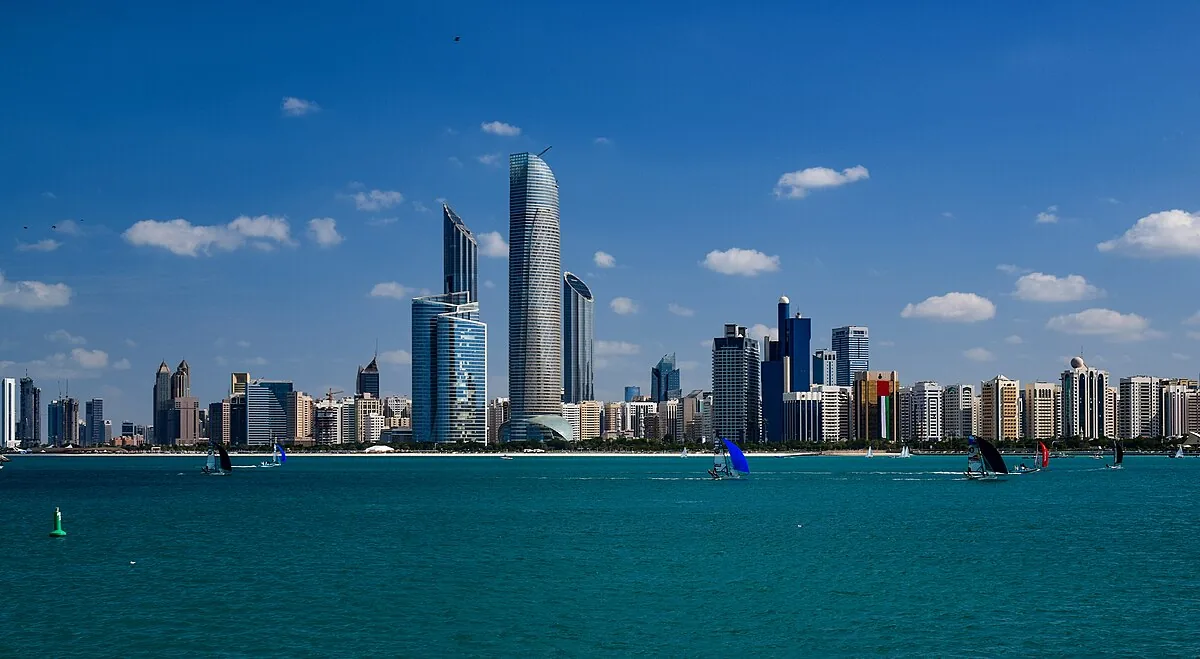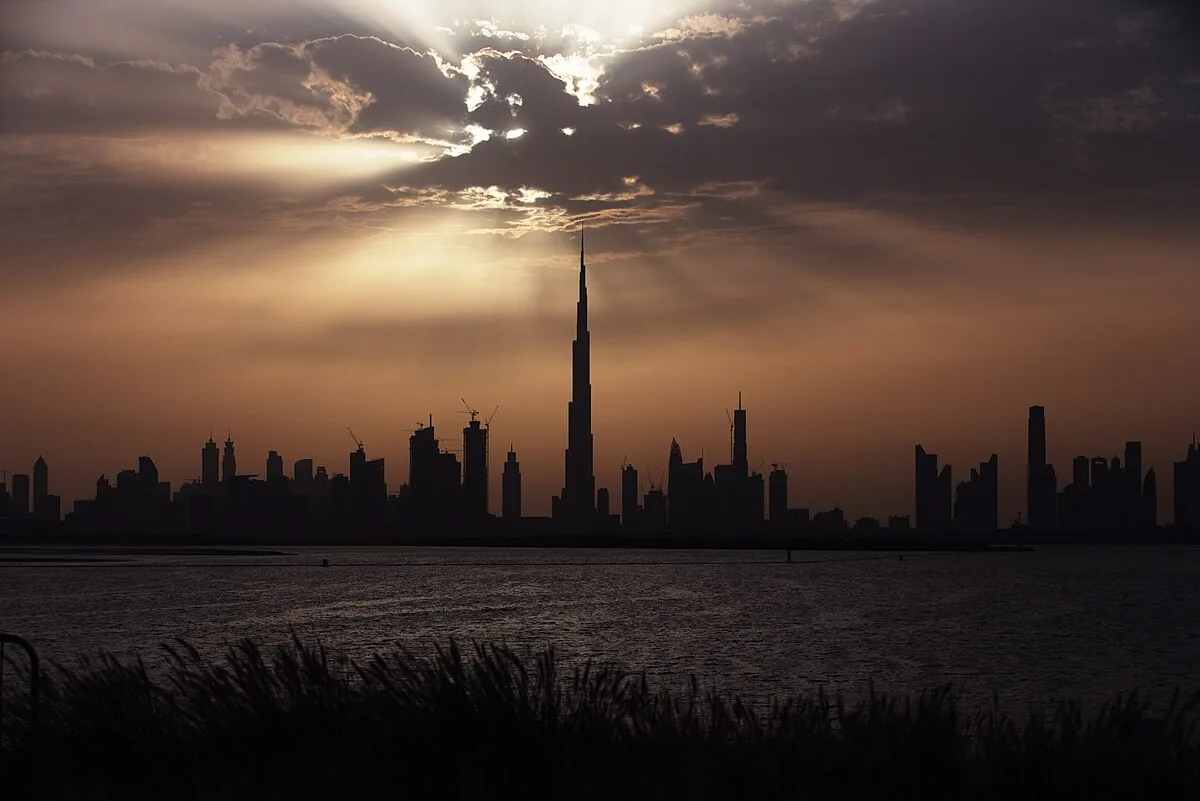
A two-minute voyage on a wooden boat costs less than a local newspaper, yet it transports you across a chronological rift that separates a billion-dollar skyline from a centuries-old trading port.
About Dubai Creek
The Creek’s history is etched into the very mud of its banks, beginning as a seasonal sanctuary for nomadic tribes before becoming a permanent settlement for pearl divers. By the early 1900s, it had grown into a cosmopolitan hub where Persian merchants, Indian traders, and Arab sailors bartered in a polyglot of languages. The turning point arrived in 1954, when the waterway was deepened to allow larger vessels to enter, a move that many historians cite as the true catalyst for the city’s economic explosion. Even after the discovery of oil, the ruling family maintained the Creek as a tax-free zone, ensuring that the traditional dhow trade remained a viable, vibrant part of the urban fabric. It is a rare example of a geographic feature that has managed to remain the emotional center of a city that has grown ten times its original size.
What Dubai Creek actually is
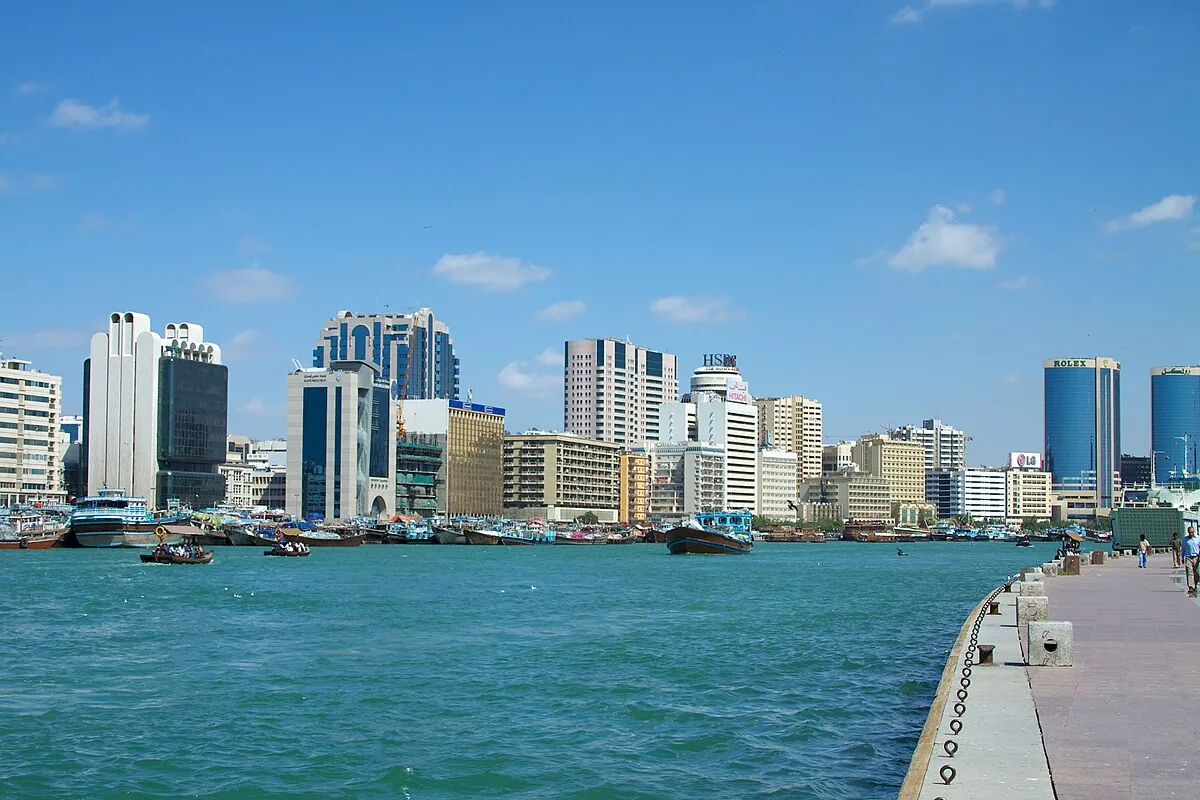
Brackish water laps against the wooden hulls of dhows that have barely changed their silhouette in a century, even as the steel-and-glass skyline of the modern city looms just a few miles away. Dubai Creek functions as the salt-water heart of the emirate, a natural inlet from the Persian Gulf that originally dictated where life could take hold in this arid corner of the peninsula. To stand on its banks is to witness the frantic, beautiful collision of an ancient maritime tradition with the hyper-speed of the twenty-first century. Here, It smells of diesel, brine, and the sharp, floral notes of frankincense drifting from the nearby souks. While the rest of Dubai looks toward the clouds, the Creek remains stubbornly, proudly tethered to the tide and the mud.
along these shores, 1833
The Bani Yas tribe first settled along these shores in 1833, drawn by the rare shelter the inlet provided for their fishing and pearling fleets. For decades, the Creek was the city's only highway, a shallow artery that required constant dredging to accommodate the massive wooden cargo ships arriving from India and East Africa. In the 1950s, a visionary decision by Sheikh Rashid bin Saeed Al Maktoum to expand the waterway effectively birthed modern Dubai, turning a quiet trading post into a global port. You can still see the cranes unloading crates of electronics and mountains of spices by hand, a labor-intensive choreography that feels entirely disconnected from the automated logistics of the nearby Jebel Ali. The waterway remains a living document of the city’s transition from a pearl-diving village to a mercantile titan.
Crossing the water on a traditional abra costs
Crossing the water on a traditional abra costs about the same as a piece of fruit, yet it offers a perspective that no luxury car can match. You come across a low, chugging vibration of the diesel engine through the wooden bench as the boat cuts through the wake of larger dhows. Seagulls wheel overhead, screaming above the calls of vendors and the rhythmic clatter of forklifts on the Deira wharves. As the sun begins to sink, the water turns a deep, oily copper, reflecting the neon signs of the older banks and hotels that line the Bur Dubai side. The element that captures the essence of the place occurs when the call to prayer erupts from a dozen different minarets simultaneously, their voices overlapping across the water in a complex, haunting harmony that temporarily silences the industrial hum.
Navigation usually begins at the Al
Navigation usually begins at the Al Sabkha or Deira Old Souq stations on the northern bank, or the Bur Dubai textile souq on the southern side. The Green Line of the Dubai Metro serves both Al Ghubaiba and Abra stations, making it easy to bypass the gridlocked traffic of the old city. Taxis can drop you at the edge of the wharves, but the best way to arrive is on foot, winding through the narrow alleys of the spice market until the horizon suddenly opens up to the sight of the water. Once at the edge, simply find the nearest wooden pier and wait for the next abra to pull in; there are no tickets or schedules, only a constant flow of commuters and travelers moving with the tide.
The Experience
Right away, the temperature drop by a few degrees as you descend the stone steps to the water’s edge, leaving the baking heat of the souk for the breezy openness of the channel. The sounds here are percussive, the thumping of heavy ropes hitting the docks, the splashing of the abra’s wake, and the distant, metallic ringing of ship bells. Just about everyone look at the skyline, but the real theater is on the Deira side, where sailors live on their dhows for weeks, cooking over small stoves and drying laundry on the masts. The light at twilight is particularly evocative, turning the hazy air into a golden mist that blurs the lines between the old coral-stone houses and the soaring glass towers in the distance. It is a place that feels thick with human effort, a gritty and honest contrast to the polished surfaces of the newer districts.
Why It Matters
Dubai Creek matters because it is the only part of the city that isn't a curated performance for tourists. It is a working waterway that continues to provide the lifeblood for thousands of merchant families, maintaining a trade link with the wider Indian Ocean that predates the concept of a modern nation-state. It serves as the collective memory of a people who went from sea-faring nomads to global citizens in a single generation.
Why Visit
Go because you need to see the grime and the glory that built this city. While the malls and fountains are impressive, they lack the soul found in the diesel-fumes and salt-spray of the Creek. It is the only place in Dubai where you can still feel the weight of history and the pulse of a trade that has survived every economic boom and bust since the nineteenth century.
✦ Photo Gallery
Best Season
🌤 Visit during the winter months of December and January, preferably at sunrise when the mist hangs low over the water and the dhow crews are just beginning their morning rituals.
Quick Facts
Best time to visit
Visit during the winter months of December and January, preferably at sunrise when the mist hangs low over the water and the dhow crews are just beginning their morning rituals.
Getting there
In Dubai, United Arab Emirates; reach Dubai first, then continue to the site.
What's nearby
Museum of the Future, Burj Khalifa and Mleiha Archaeological Centre are also in the area.
Location
Dubai, United Arab Emirates
Type
attraction
Coordinates
25.2558°, 55.3167°
Insider Tips
- 1
Walk along the Dhow Wharfage on the Deira side to see sailors loading everything from refrigerators to tires onto ships bound for Iran and Somalia.
- 2
Carry small one-dirham coins in your pocket; the boat pilots don't like breaking large notes and the fare is collected during the transit.
- 3
Visit the Creekside park on the Bur Dubai side if you want a quiet, grassy vantage point to photograph the skyline away from the heavy crowds.
- 4
Look for the smaller, unmarked alleyways leading off the Bur Dubai abra station; they lead to some of the oldest, most fragrant tea shops in the city.