Poetry is the only thing holding up this 77-meter silver eye, as the Arabic calligraphy etched into its steel skin acts as the building's structural windows.
About Museum of the Future
The Museum of the Future didn't start as a building but as a series of temporary exhibitions during the World Government Summit in 2014. These pop-up visions of the future proved so popular that the ruling family decided to give the concept a permanent, gravity-defying home. In 2015, the Dubai Future Foundation was formed to lead the project, commissioning Shaun Killa to create a design that used aerospace technology rather than traditional civil engineering. By 2018, the complex skeleton of 2,400 diagonally intersecting steel beams was complete, marking a milestone in robotic construction. It officially opened in 2022, instantly becoming a global icon for the post-oil era of the Emirates, where the primary export is no longer fuel, but ideas.
What Museum of the Future actually is
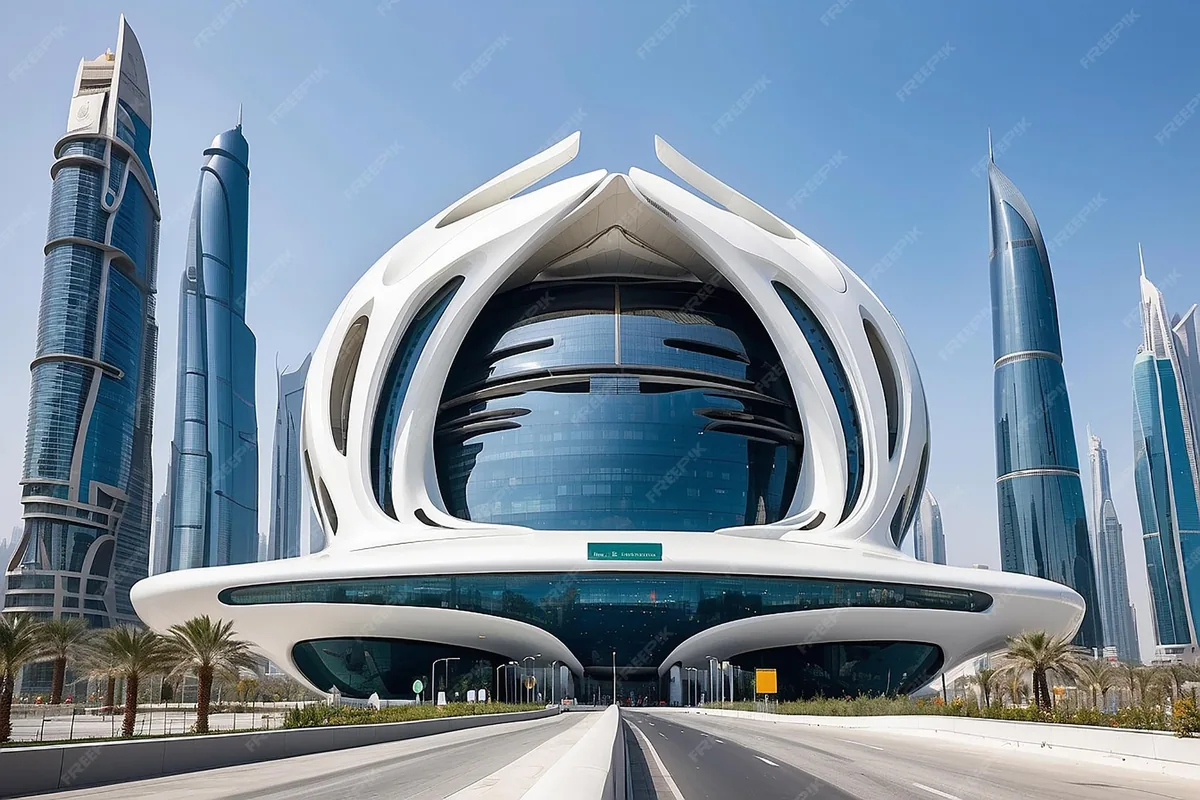
Stainless steel script curls across a giant silver torus, creating a windowed facade that looks less like a building and more like a thumbprint left by a passing deity. The Museum of the Future is a hollowed silver eye on the edge of Dubai’s frantic Sheikh Zayed Road, deliberately challenging every architectural convention of the skyscraper-heavy district. Its elliptical shape represents humanity, the green hill it sits upon represents the earth, and the empty space in the center represents the unwritten future. Sunlight filters through the 1,024 steel plates, each etched with Arabic calligraphy that doubles as the building’s windows. Inside, the atmosphere shifts from the roar of the city to a hushed, high-tech sanctuary where the air feels filtered and the light is diffused into intricate patterns of poetry. This structure functions as a living laboratory for the years to come, moving far beyond the traditional museum concept of archiving the past.
Architect Shaun Killa
Architect Shaun Killa envisioned a structure that could exist without a single internal column, a feat of parametric design and robotic engineering that felt impossible when the project was announced. Between the groundbreaking in 2015 and its grand opening on the palindromic date of February 22, 2022, the site became a proving ground for new construction technologies. The calligraphy on the skin is not mere decoration; it features the poetry of Sheikh Mohammed bin Rashid Al Maktoum, specifically lines about the power of imagination and the resilience of the Arab spirit. Over 14 kilometers of LED lights were integrated into these script-windows, turning the building into a glowing beacon after dark. It was built to serve as the headquarters for the Dubai Future Foundation, acting as a bridge between the visionary theories of global scientists and the physical reality of the city's streets.
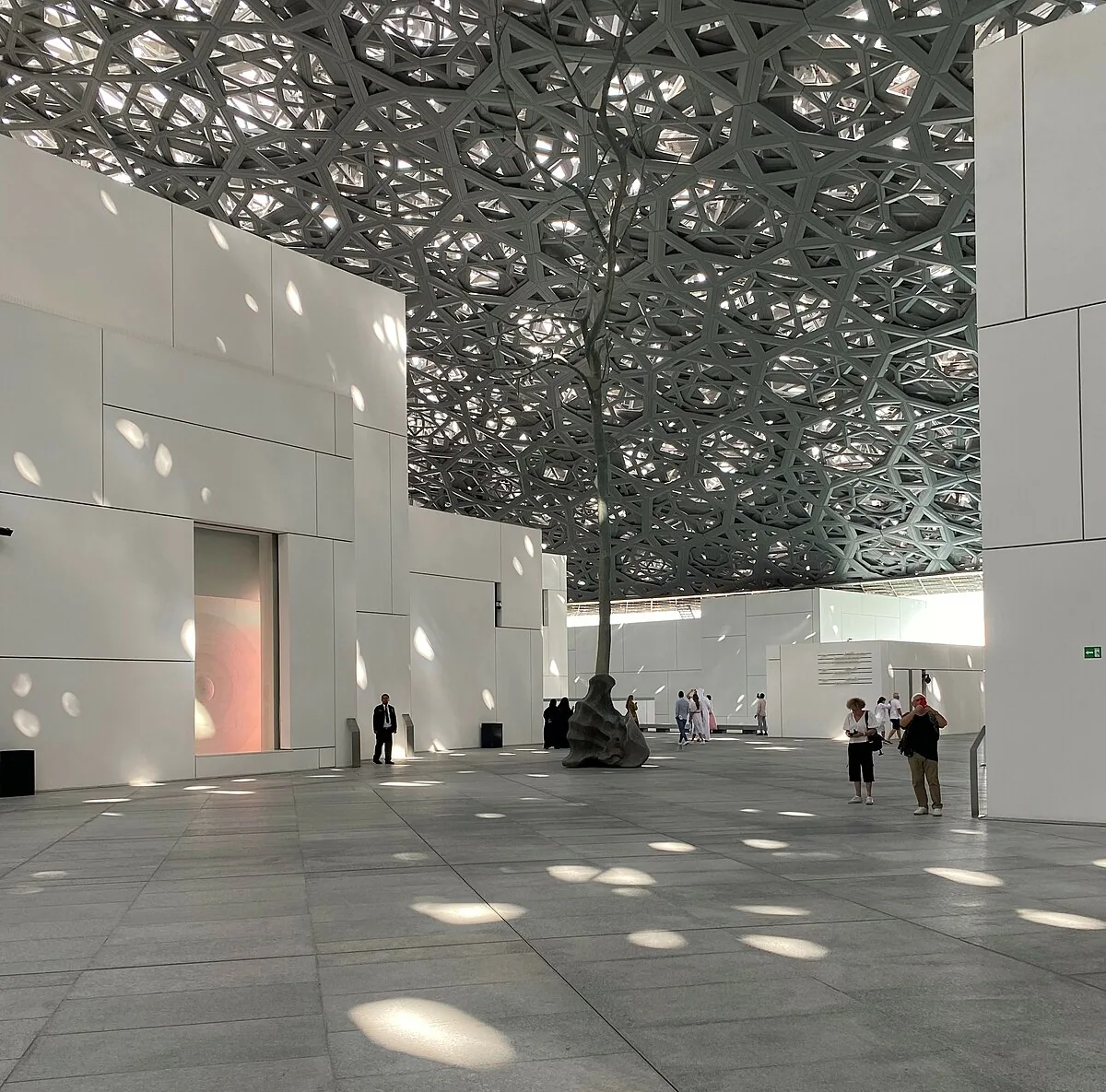
Stepping into the vast, bone-white atrium , There is a sense of weightlessness as futuristic elevators glide upward like mercury in a glass tube. The experience begins with a simulated launch to a space station, where you look down at a digital Earth through flickering port-holes. What gets your attention is the contrast between the high-velocity tech of the upper floors and the 'Al Waha' floor, a sensory spa where the floors are made of vibrating sand and the air smells of sandalwood and rose. What is audible transitions from the bleeps of a digital forest to the deep, resonant hum of a meditation chamber. Almost all visitors lose themselves in the massive 'Heal Institute' library of DNA, where thousands of glowing glass cylinders represent the species of our planet. At the top of the inner viewing platform, the wind whip through the void of the building, realizing you are standing inside the very heart of an architectural paradox.
Direct access is most elegantly achieved
Direct access is most elegantly achieved via the Dubai Metro Red Line, with the Emirates Towers station connected to the museum by a climate-controlled pedestrian bridge. If arriving by car, the museum sits between the iconic Jumeirah Emirates Towers and the packed financial district, though parking is often reserved for those with pre-booked entry. Taxis can drop you at the base of the verdant hill, allowing you to walk up through the landscaped gardens that feature over a hundred species of local flora. Because the museum operates on strict entry windows, reaching the lobby at least fifteen minutes before your allocated time is essential to navigate the security and bracelet collection process.
The Experience
A strange vibration in your chest as the 'spacecraft' lift pulls away from the lobby, a clever trick of sound and motion that tricks your inner ear. The light inside the calligraphy halls is ever-changing, casting long, sweeping shadows of Arabic letters across the white floors as the sun moves overhead. The first thing you register is that the air smells distinctly different on each floor, transitioning from a sterile, ozone-like scent in the space zones to a rich, damp moss aroma in the simulated Amazon rainforest. While the crowds gravitate toward the robot arms and interactive screens, the most haunting moment is found in the DNA vaults, where the sheer fragility of life is displayed in rows of glowing vials. At the top of the exterior terrace at the edge of the 'void,' the city’s traffic looks like a silent stream of light, and for a moment, the year 2071 feels closer than the present day.
Why It Matters
This landmark matters because it shifts the purpose of a museum from 'looking back' to 'acting forward.' It is a physical manifestation of the UAE’s desire to lead the global conversation on climate change, space exploration, and human wellness. Beyond the architecture, it serves as a massive, public-facing think tank where the questions being asked are more important than the answers provided.
Why Visit
Forget the Burj Khalifa for an afternoon and enter a building that has a soul made of literature. While other landmarks show you what money can build, the Museum of the Future shows you what imagination can conceive. It is the only place in the city where you can experience the year 2071 through all five senses before returning to the heat of the present.
✦ Photo Gallery
6 photos of Museum of the Future · click to enlarge
Best Season
🌤 Visit during the late afternoon in the winter months of January or February; the golden hour light pouring through the calligraphic windows creates a spectacular, dancing light show on the interior walls.
Quick Facts
Best time to visit
Visit during the late afternoon in the winter months of January or February; the golden hour light pouring through the calligraphic windows creates a spectacular, dancing light show on the interior walls.
Getting there
In Dubai, United Arab Emirates; reach Dubai first, then continue to the site.
What's nearby
Burj Khalifa, Dubai Creek and Mleiha Archaeological Centre are also in the area.
Location
Dubai, United Arab Emirates
Type
attraction
Coordinates
25.2191°, 55.2821°
Insider Tips
- 1
Tickets sell out weeks in advance, so book your slot the moment you confirm your flight to avoid being left at the gate.
- 2
Head straight to the viewing deck in the 'void' during the middle of your session to catch the best light for photos of the building's inner curve.
- 3
Spend extra time on the 'Al Waha' floor; it is a dedicated tech-free zone where you can experience digital detoxing in a desert-inspired sanctuary.
- 4
Look closely at the 1,024 steel panels, the number represents a kilobyte, the basic unit of digital information, a nod to the building's data-driven design.
- 5
Wear white or light-colored clothing if you want to 'disappear' into the monochromatic, futuristic aesthetic of the museum's interior galleries.