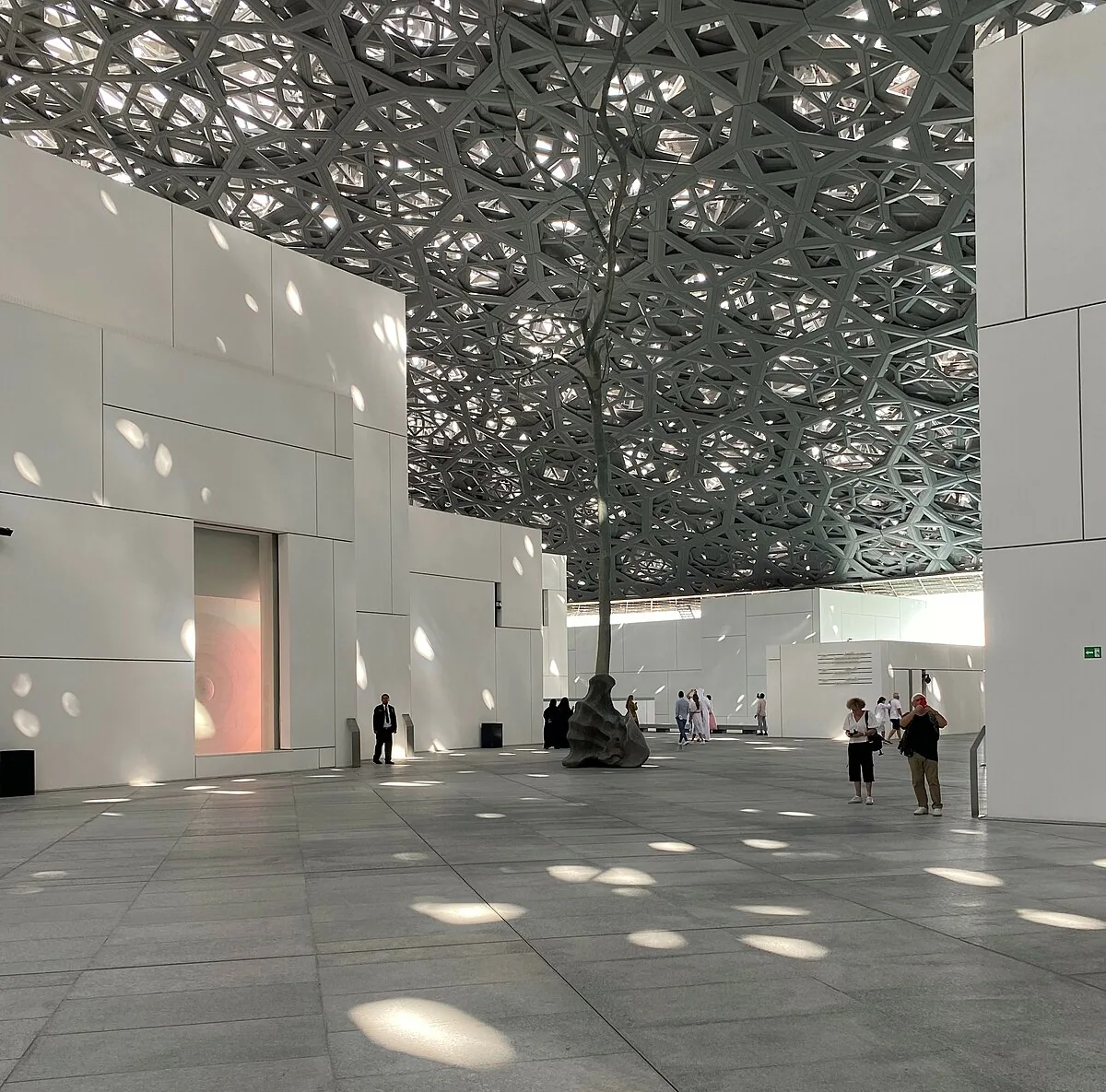
Five thousand individual geometric patterns adorn these walls, yet the most impressive feature is that this active seat of power actually invites you to walk through its most private halls.
About Qasr Al Watan
Constructed as a monumental addition to the presidential complex, the palace was envisioned as a permanent home for the highest levels of Emirati governance. For its first two years of existence, only the world's most powerful leaders walked these corridors, debating policy beneath the gold-flecked ceilings. In March 2019, the doors were unbolted for the public, transforming a site of political exclusion into a center for cultural education. The historians and architects involved insisted that every tile and archway pay homage to the 'Golden Age' of Islam, ensuring the building functioned as a physical narrative of the region's intellectual journey. Today, it remains a rare hybrid: a functioning government facility that doubles as one of the world's most significant cultural landmarks.
Qasr Al Watan in United Arab Emirates
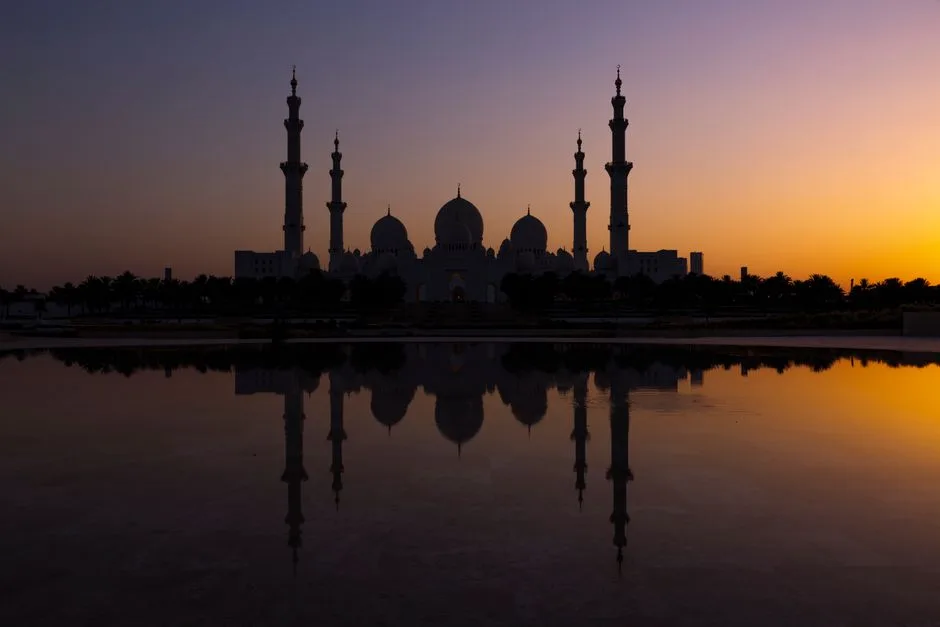
White granite and limestone facades rise with a blinding brilliance against the turquoise backdrop of the Arabian Gulf, marking a threshold where statecraft meets architectural poetry. Qasr Al Watan, the Palace of the Nations, is a working presidential headquarters that shed its veil of secrecy to welcome the curious in 2019. The structure utilizes a palette of white, yellow, and blue to mirror the desert sands and the sky, while its massive central dome spans thirty-seven meters in a feat of geometric precision. Sunlight dances through 5,000 unique geometric patterns, casting intricate shadows across floors polished to a mirror sheen. Through the maple wood doors, which are hand-carved with 23-carat gold leaf accents, entering a space that feels less like a government office and more like a cathedral dedicated to the intellectual heritage of the Arab world.
“White granite and limestone facades rise with a blinding brilliance against the turquoise backdrop of the Arabian Gulf, marking a threshold where statecraft meets architectural poetry.”
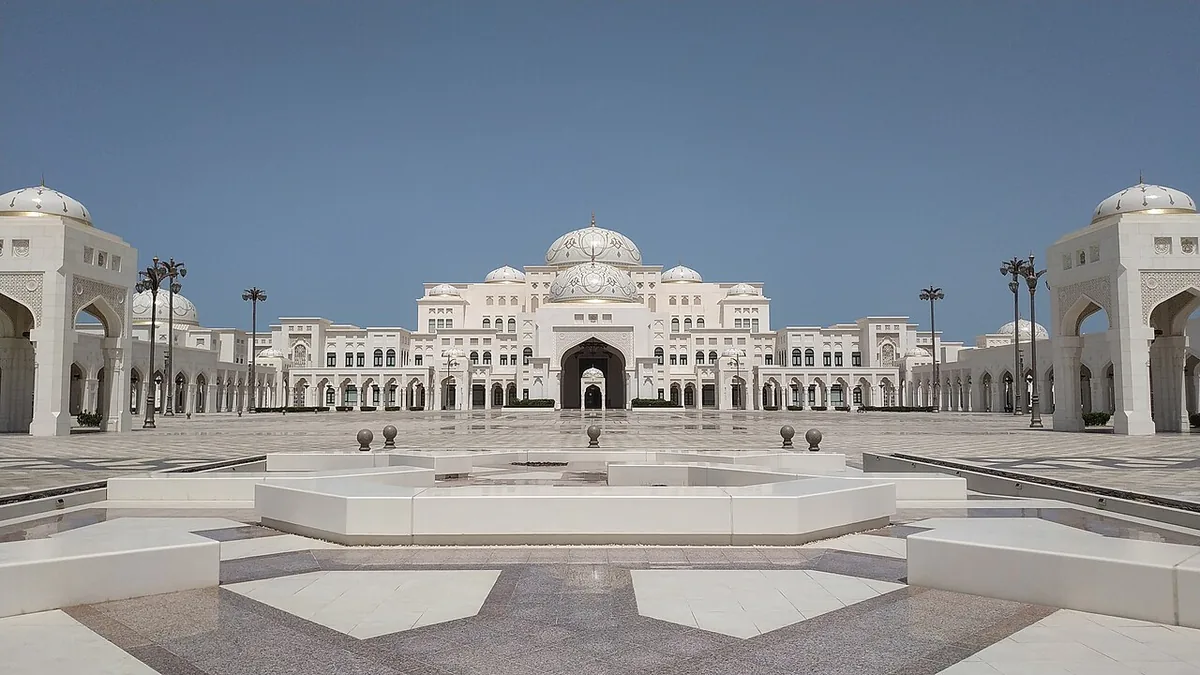
Qasr Al Watan, United Arab Emirates
Getting there
Designers labored for years to create a palace that would serve as the definitive tribute to Arabian craftsmanship while functioning as the primary meeting site for the UAE Cabinet and Federal Supreme Council. Completed in 2017, the palace was initially reserved for visiting heads of state and high-level diplomatic summits, a silent observer of the country's most critical legislative moments. The decision by the leadership to open these halls to the public marked a profound shift toward cultural transparency, intended to showcase the governance and history of the nation. Within the House of Knowledge, rare manuscripts and ancient maps trace the contributions of Arab scholars to the global fields of astronomy and medicine. The library itself houses 50,000 books, serving as a vibrant repository that links the nomadic traditions of the past to the sophisticated bureaucracy of the present day.
Standing beneath the Great Hall’s massive chandelier, The sheer scale of the space shrink your perspective, a sensation amplified by the hundreds of thousands of crystal pieces shimmering overhead. First, the cool, still air inside the chambers, which carries a faint, clean scent of polished wood and fresh lilies. In the Spirit of Collaboration room, a circular chandelier weighing twelve tons hangs over the very table where the Gulf Cooperation Council meets, its presence commanding a hushed reverence. The smooth grain of the intricately carved wooden panels and the cold, unyielding luxury of the marble surfaces. What captures the palace's soul occurs in the library, where the sudden silence and old paper offer a grounding contrast to the opulence outside. Walking back into the sunlight, the reflection of the white domes in the courtyard fountains creates a visual symmetry that lingers in your memory long after you depart.
Reaching the palace grounds involves navigating
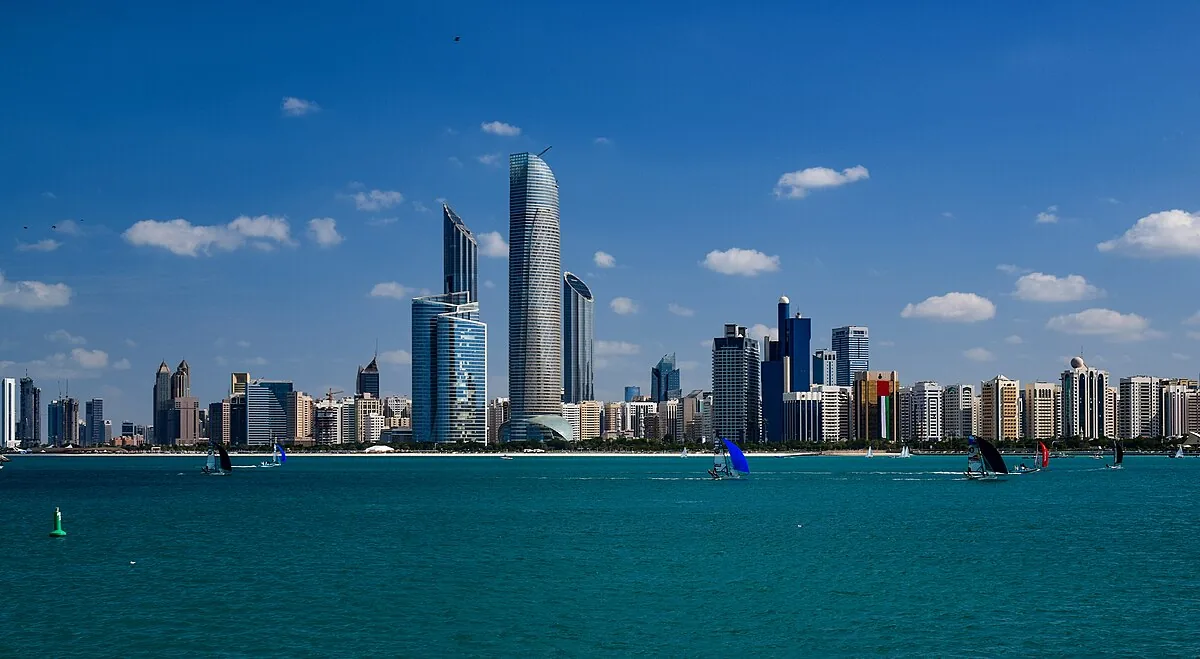
Reaching the palace grounds involves navigating to the western end of the Abu Dhabi Corniche, adjacent to the towering Etihad Towers and the Emirates Palace hotel. Visitors must pass through a dedicated visitor center where tickets are scanned before boarding a shuttle bus that traverses the manicured gardens of the presidential compound. Taxis are the most efficient way to reach the entrance from the city center, though ample parking is provided for those driving from Dubai or the interior oases. The shuttle ride offers the first true sense of the palace’s isolation and grandeur, as the modern skyline of Abu Dhabi slowly recedes to reveal the sprawling, ivory silhouette of the palace rising from its seaside perch.
“Reaching the palace grounds involves navigating to the western end of the Abu Dhabi Corniche, adjacent to the towering Etihad Towers and the Emirates Palace hotel.”
The Experience
The way the sound of your footsteps is swallowed by the sheer volume of the Great Hall, creating a quiet, cathedral-like atmosphere despite the grandeur. The light at mid-morning is particularly striking, as it pours through the high windows and illuminates the gold leaf on the maple doors, making the calligraphy seem to float. The gravity of history in the House of Knowledge, where the display of a singular, ancient compass recalls of the seafaring roots of the men who built this marble dream. The majority overlook the 'Power of Words' sculpture in the garden, but standing inside its gold-latticed cage and reading the Arabic poetry within is the moment that makes the palace feel human. It is an encounter with power that is surprisingly welcoming, stripped of the coldness often found in modern government architecture.
Why It Matters
Qasr Al Watan matters because it represents a bridge between the private world of Arabian royalty and the global public. It is a product of the belief that governance is rooted in knowledge and shared history rather than just wealth or force. Culturally, it serves as the UAE’s definitive architectural statement, blending centuries-old design principles with a 21st-century vision of a transparent, forward-looking state.
Why Visit
Skip the standard museum loops and come here to see where the actual decisions of a modern nation are made. It offers a level of craftsmanship that rivals the great palaces of Europe but with a distinctly Middle Eastern soul. You won't find another active presidential palace on Earth that gives you this much access to its inner sanctums and its intellectual treasures.
Insider Tips
- 1
Arrive around 4:00 PM to explore the interior before the sun sets, then stay for the spectacular light and sound projection on the palace facade at dusk.
- 2
Look for the 'Power of Words' sculpture by Mattar bin Lahej in the gardens; it is an open-work gold sphere that you can actually step inside for a unique photo.
- 3
The palace library is a quiet working space; if you have a valid Emirates ID or passport, you can actually register to use the collection for research.
- 4
Visit the 'Banquet Hall' to see the 149,000 pieces of unique silver and china used for official state dinners, it’s a masterclass in diplomatic staging.
- 5
Check the schedule for official state visits before you go, as the palace can close to the public on short notice for high-level diplomatic functions.