Cheetahs patrol the shadows of ancient salt mountains here, while the ruins of a 7th-century Christian monastery sit quietly tucked between the desert dunes and a turquoise sea.
About Sir Bani Yas Island
The island was first a hub for the pearling trade, its name honoring the Bani Yas tribe who first claimed its shores. Centuries after the pearl divers left, the island became a sacred site for a different reason as a Nestorian monastery flourished here, housing a community of monks who traded with seafaring merchants across the Indian Ocean. In the 1970s, the island underwent a dramatic ecological rebirth under the personal supervision of the nation's founder. Sheikh Zayed transformed the barren rock into a 'Living Laboratory,' introducing the Arabian Oryx, a species once extinct in the wild, and successfully re-establishing their numbers. This transition from a lonely salt dome to a packed wildlife sanctuary represents one of the most successful conservation efforts in the Middle East, blending royal history with an uncompromising commitment to the natural world.
Salt domes push upward from the floor
Salt domes push upward from the floor of the Arabian Gulf to create the rugged, terracotta-hued heart of Sir Bani Yas Island, a landscape where African savannah wildlife roams freely through ancient Arabian salt flats. This offshore sanctuary is a radical departure from the neon-drenched mainland, offering a quietude broken only by the crunch of salt crust under hoof and the rhythmic lap of the turquoise tide. More than half the island is dedicated to the Arabian Wildlife Park, a sprawling reserve where the slender silhouettes of giraffes browse alongside the curved horns of the Arabian oryx. The environment carries a unique scent here, a mixture of sea spray, dry scrub, and the damp earth of carefully tended mangroves. The walk along its shores, The weight of the modern world dissolve into a prehistoric rhythm that seems entirely detached from the glass towers of Abu Dhabi.
“This offshore sanctuary is a radical departure from the neon-drenched mainland, offering a quietude broken only by the crunch of salt crust under hoof and the rhythmic lap of the turquoise tide.”
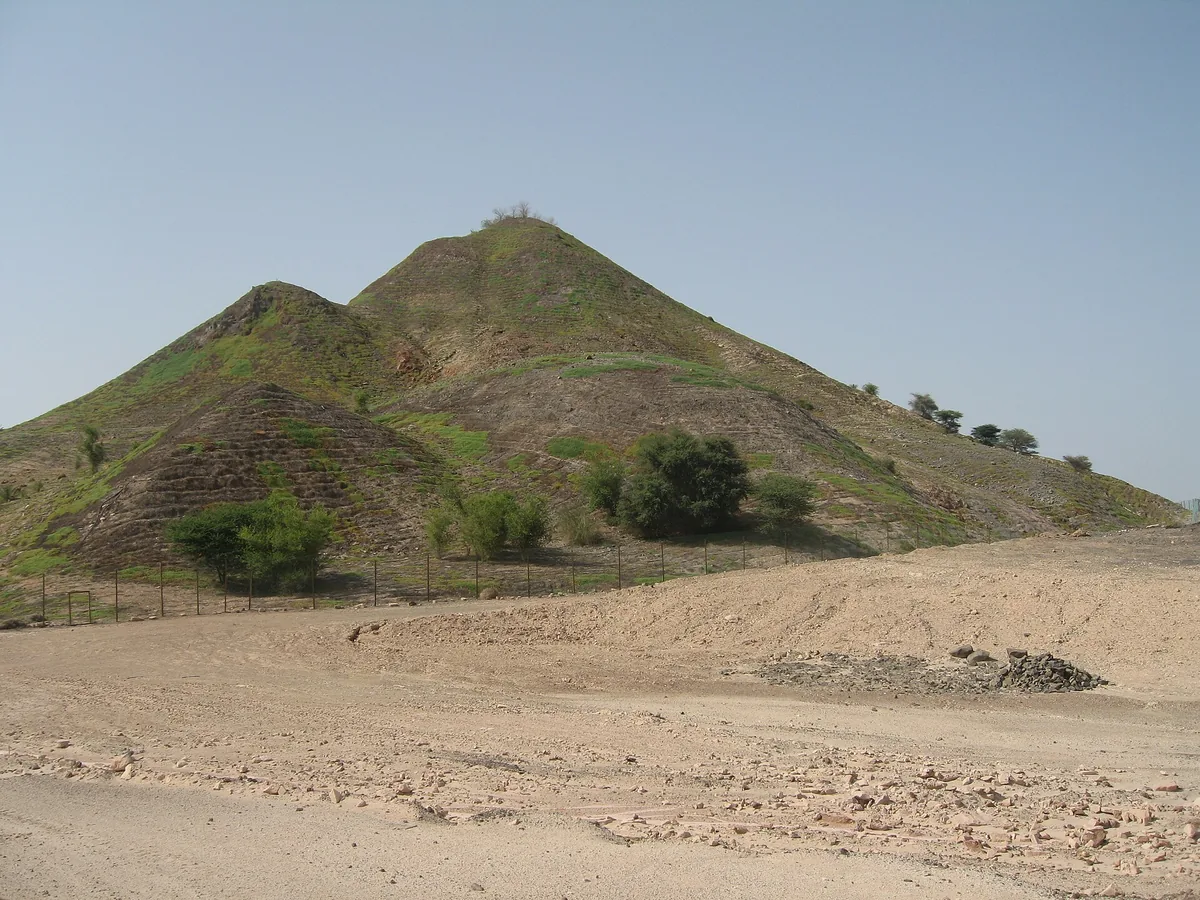
Sir Bani Yas Island, United Arab Emirates
Origins
Archaeological layers reveal that humans have sought refuge on this 87-square-kilometer island for over seven millennia, but the most striking chapter began with a Christian monastery founded around 600 AD. These ruins remained largely forgotten until 1992, serving as a silent a result of the region's diverse spiritual history. In 1971, Sheikh Zayed bin Sultan Al Nahyan established the island as a private retreat and a laboratory for his 'Greening the Desert' initiative. He transformed the parched landscape into a flourishing habitat by planting millions of trees and introducing endangered species to ensure their survival. What began as a personal conservation project evolved into a sophisticated sanctuary where biodiversity is guarded with the same intensity as the nation’s heritage, proving that even the most arid soil can be coaxed into life with enough vision and water.
Journeying to this remote outpost involves
Journeying to this remote outpost involves a two-and-a-half-hour drive west from Abu Dhabi city, traversing a long stretch of coastal highway where the desert eventually merges with the industrial architecture of the Ruwais refinery. Upon reaching Jebel Dhanna, you transition from the pavement to the sea, boarding a water taxi or a car ferry for a twenty-minute crossing to the island’s private jetty. The arrival feels like a slow-motion reveal as the industrial mainland fades and the red-tinged peaks of the island rise to meet the boat. For a more direct arrival, small aircraft can fly directly into the island’s dedicated airstrip, providing a bird's-eye view of the emerald mangroves that fringe the southern coast.
Visiting Sir Bani Yas Island
Scanning the horizon at dawn, There is a sharp jolt of surprise as a cheetah’s golden eyes blink from the shade of a Ghaf tree. The morning light turns the island’s central salt mountains a deep, bruised purple, contrasting vividly with the pale sand of the shoreline. The sheer density of life in the interior, where herds of gazelles dart through the scrub with a fluid grace that makes the desert feel crowded and vibrant. Sounds are stripped back to the basics: the dry rattle of wind through acacia branches and the distant, haunting cry of a peacock. While the wildlife is the primary draw, the most profound moment occurs standing among the low stone walls of the 7th-century monastery, realizing that travelers were finding peace in this exact salt-crusted wind long before the first oil well was ever imagined.
The Experience
The opening is the temperature feels slightly more temperate than the mainland, moderated by the constant coastal breeze that carries the tang of salt and wild grasses. The wildlife here isn't shy; you feel a strange sense of kinship when an oryx walks calmly across the road just a few feet from your vehicle. The bulk of visitors miss the small, fossilized remains of prehistoric animals embedded in the salt domes, which tell a story of a much greener past. The light at sunset is particularly dramatic, casting long, ochre shadows over the savannah and making the flamingo-filled lagoons glow with an iridescent pink. It is a place of slow observations and sudden, wild encounters that make your heart race in the middle of a profound, dusty silence.
Why It Matters
Sir Bani Yas Island matters because it is a tangible manifestation of a leader's dream to defeat the desert’s harshness through conservation. It serves as a vital genetic bank for the Arabian Oryx and a crucial stop for migratory birds traveling between Europe and Africa. Humanly, it provides a rare, non-urban perspective on Emirati identity, rooted in land stewardship and the preservation of a multi-faith archaeological past.
Why Visit
Pitch this to anyone who thinks the UAE is only about artificial islands and luxury malls. This is a place of raw geological beauty and genuine ecological purpose. It offers the only opportunity in the region to see apex predators and rare desert ungulates in a setting that feels entirely unscripted, all while walking through the ruins of a 1,400-year-old monastery.
Insider Tips
- 1
Book a guided walk of the Christian monastery ruins at sunset when the low light emphasizes the carved plaster crosses and ancient stone footings.
- 2
Pack a pair of high-quality binoculars; the cheetahs are masters of camouflage and often hide in the dense canopy of the Ghaf trees.
- 3
Ask your guide to take you to the salt domes at the center of the island to see the rare purple and green mineral veins exposed by erosion.
- 4
Keep your camera ready for the ferry crossing, as dolphins frequently follow the boat's wake in the channel between Jebel Dhanna and the island.
- 5
Visit the island's nursery to see the saplings being prepared for planting; it’s the best way to understand the sheer scale of the greening project.