The most advanced commercial dock in the world when completed in 1846 used no wood in its warehouse construction, a fire prevention innovation, and now houses Tate Liverpool, the Beatles Story, and one of Britain's first major heritage waterfront regenerations.
About Albert Dock
Designed by Jesse Hartley with cast iron column innovations and hydraulic dock systems, Albert Dock handled the trade of a Victorian empire. Container shipping made it obsolete by the 1970s; the 1988 restoration became a model for British heritage-led waterfront regeneration.
What Albert Dock actually is
Albert Dock is a complex of five-storey Victorian warehouses surrounding a dock basin in Liverpool's waterfront, completed in 1846 as the most sophisticated commercial dock in the world at the time. The cast iron, brick, and stone construction, with no wood used in the main warehouse buildings, a fire prevention measure, made it the first non-combustible warehouse complex in Britain. After commercial use ended in the 1970s, the dock was restored and reopened in 1988 as a mixed cultural and commercial destination. The Tate Liverpool gallery and the Beatles Story museum both occupy warehouses in the complex.
“Albert Dock is a complex of five-storey Victorian warehouses surrounding a dock basin in Liverpool's waterfront, completed in 1846 as the most sophisticated commercial dock in the world at the time.”
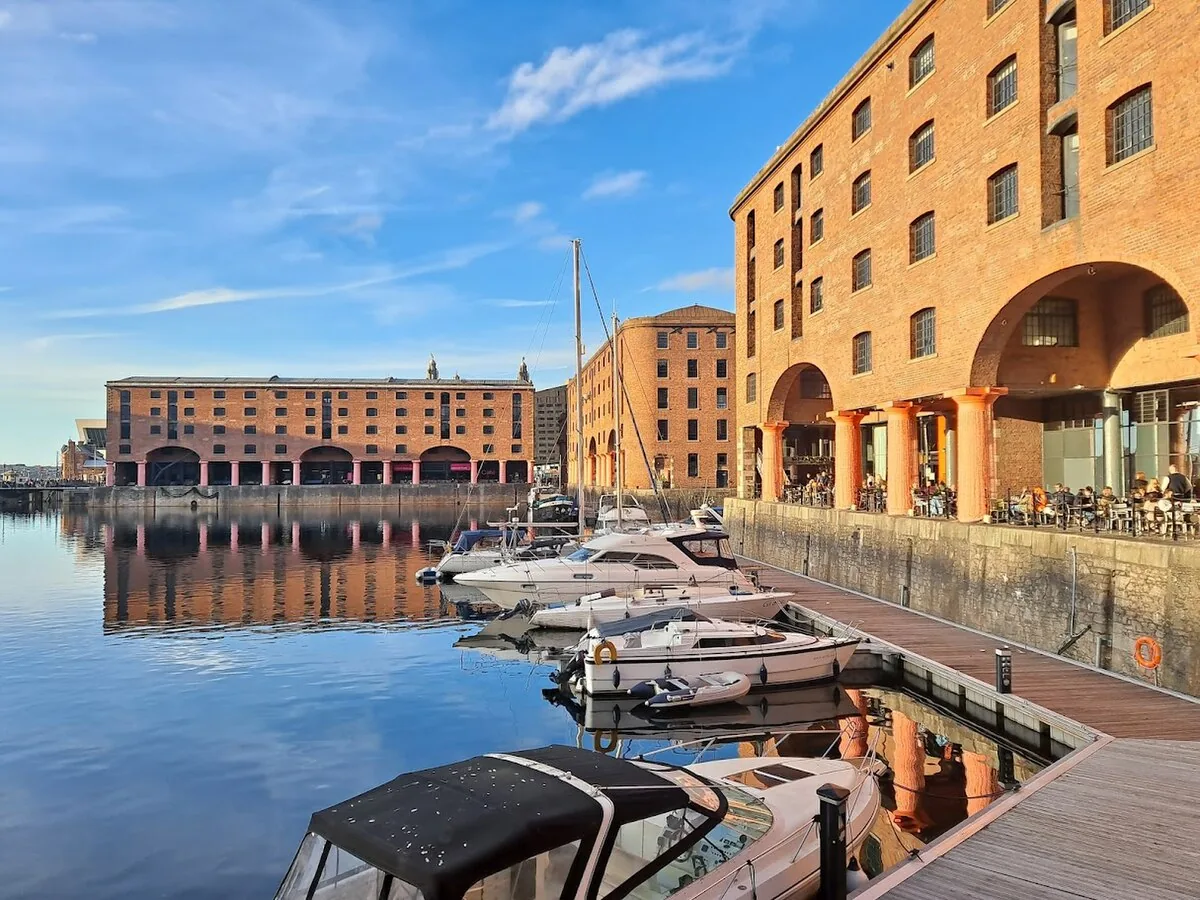
Albert Dock, United Kingdom
Liverpool in the mid-nineteenth century was one of the world's busiest ports, handling cotton, tobacco, and sugar from the Americas alongside the exports of Britain's industrial manufacturing heartland. Albert Dock was designed by Jesse Hartley and Philip Hardwick with a hydraulic dock system and the first use of cast iron columns in warehouse construction, both innovations that influenced dock design internationally. The dock's decline followed the shift to container shipping in the 1960s, which required the larger land area and different infrastructure of Seaforth Dock to the north. The restoration project that reopened the dock in 1988 was one of Britain's first major heritage-led waterfront regeneration schemes.
The dock basin is enclosed on four sides by the warehouse colonnades, and the water still reflects the buildings in a sheltered, formal composition. Tate Liverpool holds an international modern and contemporary art collection displayed in rotating exhibitions and is free for the permanent collection. The Beatles Story is a commercial exhibition in two warehouses covering the history of the band from Liverpool's Cavern Club era to the Abbey Road recordings. The Museum of Liverpool on the adjacent Pier Head covers the city's social and maritime history with particular candor about the slave trade that financed much of Liverpool's Georgian architecture.
Albert Dock is on Liverpool's waterfront , adjacent to the Three Graces, the Liver Building, Cunard Building, and Port of Liverpool Building, at the Pier Head. The nearest Merseyrail station is James Street; the Pier Head is a ten-minute walk. Liverpool has mainline trains from London Euston (approximately two hours).
“Albert Dock is on Liverpool's waterfront , adjacent to the Three Graces, the Liver Building, Cunard Building, and Port of Liverpool Building, at the Pier Head.”
The Experience
Walk the enclosed dock basin with its reflected warehouse colonnades, visit Tate Liverpool for the permanent modern art collection (free), explore the Beatles Story exhibition in the adjacent warehouses, and continue to the Museum of Liverpool for a candid account of the slave trade that financed the city's Georgian architecture.
Why It Matters
A Grade I listed Victorian dock complex and one of Britain's largest and most significant heritage waterfront regenerations, the anchor of Liverpool's UNESCO World Heritage waterfront.
Why Visit
The Museum of Liverpool handles Liverpool's slave trade history with more directness than most British museums bring to this topic, it's in the same building complex and provides essential context for understanding what the Victorian dock wealth was built on.
Insider Tips
- 1
The Museum of Liverpool on Pier Head is free and covers slave trade history with unusual candor, worth prioritizing.
- 2
The Liver Building clock tower tours run on selected days, book through the Liver Building website for one of Liverpool's best elevated views.
- 3
The Cavern Club on Mathew Street (fifteen minutes' walk) provides the live music context for the Beatles Story visit.