The visible stone circle on Salisbury Plain represents the final phase of a construction project that spanned fifteen hundred years, and the smaller bluestones in the inner ring were transported over 200 miles from Wales by means that archaeologists still debate.
About Stonehenge
Construction began around 3000 BCE with an earthwork ditch; the first stones arrived around 2500 BCE. Multiple repositioning phases followed across centuries. The monument's precise solar alignment suggests astronomical function, though the specific practices it supported are irrecoverable from the archaeological record.
What Stonehenge is
Stonehenge is a prehistoric stone circle on Salisbury Plain in Wiltshire, the most recognizable prehistoric monument in Europe and a UNESCO World Heritage Site. The visible structure, a ring of standing sarsen stones capped with lintels, surrounding a horseshoe arrangement of larger trilithons and smaller bluestones, represents the final phase of a construction project that extended across roughly fifteen hundred years, from approximately 3000 to 1500 BCE. The bluestones, the smaller inner ring, were transported from the Preseli Hills in Wales, over 200 miles away, by means that remain a matter of ongoing archaeological debate.
“Stonehenge is a prehistoric stone circle on Salisbury Plain in Wiltshire, the most recognizable prehistoric monument in Europe and a UNESCO World Heritage Site.”
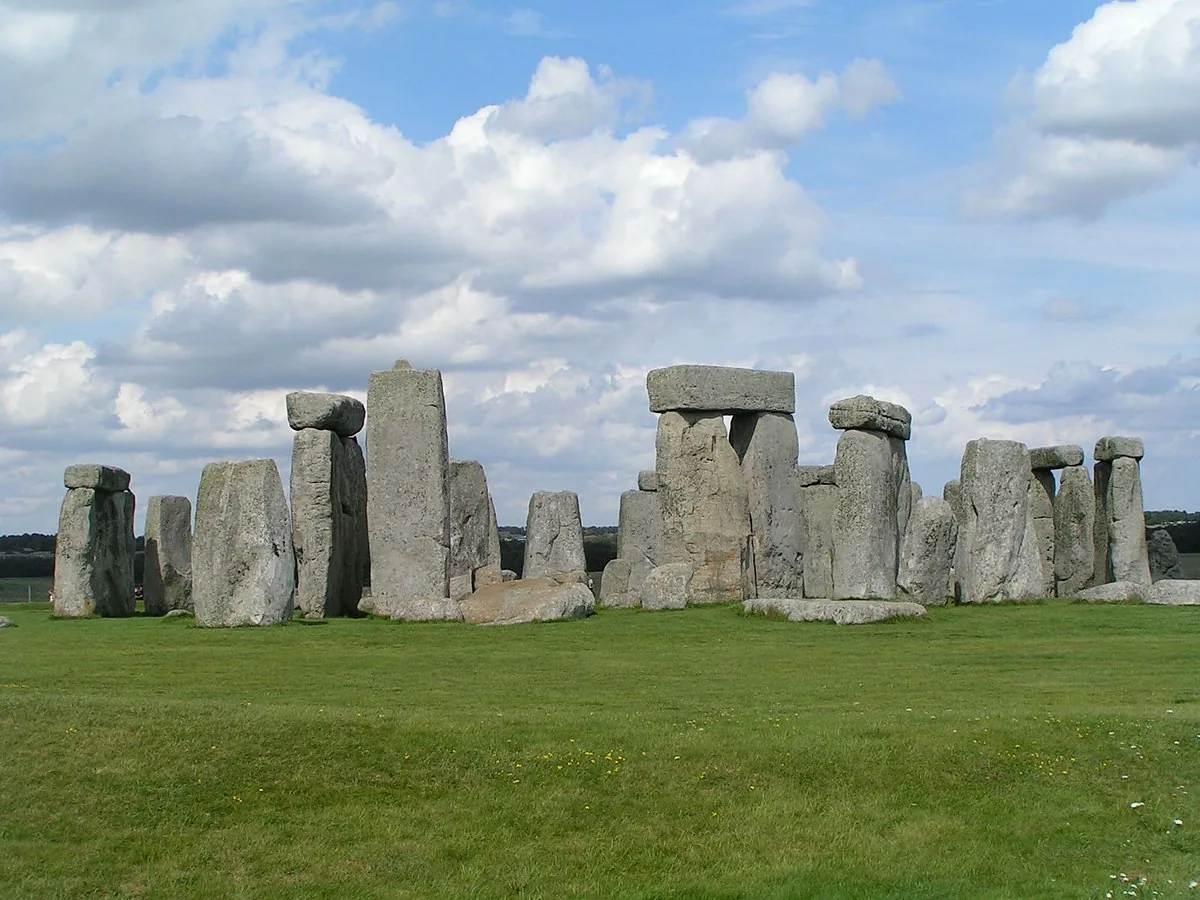
Stonehenge, United Kingdom
Stonehenge did not spring up all at once . The earliest features were a circular earthwork and ditch dug around 3000 BCE; the first stones were erected around 2500 BCE. Multiple phases of construction followed, with stones repositioned and the overall form reconfigured across centuries. The sarsen stones, the large grey ones, came from Marlborough Downs about 25 miles north and weigh up to 25 tonnes each. The monument is precisely aligned with the solstice sunrise in summer and sunset in winter, suggesting astronomical or calendrical function, though the specific religious or social practices associated with it are not recoverable from the archaeological record. The surrounding landscape is equally significant: dozens of burial mounds and related monuments visible from the circle form one of Europe's densest prehistoric ritual landscapes.
Access to the stones is managed from a visitor center about a mile away; a shuttle bus or a walking path crosses the open grassland to the circle. Visitors are kept outside a barrier that prevents touching the stones; the closest general access point is approximately five metres from the outer circle. The scale of the stones, the tallest sarsen uprights stand seven metres above ground, is not apparent from photographs and surprises most visitors at first sight. Special access tickets allow entry inside the stone circle outside normal opening hours, at dawn or dusk, for a more physically immediate experience.
Stonehenge is near Amesbury in Wiltshire , about 90 miles from London. Direct National Express coaches run from London Victoria (about two hours). No public transport reaches the site directly; the nearest train station is Salisbury, from which buses run to Stonehenge.
“Stonehenge is near Amesbury in Wiltshire , about 90 miles from London.”
The Experience
Approach across the open Salisbury Plain grassland by shuttle or walking path to the managed access perimeter, take in the seven-metre sarsen uprights whose scale photographs underrepresent, and book a special access dawn or dusk ticket to enter inside the stone circle itself.
Why It Matters
The most recognizable prehistoric monument in Europe and a UNESCO World Heritage Site, the culmination of fifteen centuries of construction in a landscape dense with related Neolithic and Bronze Age monuments.
Why Visit
The scale of the stones, visible only once you're standing five metres from the outer ring, consistently surprises visitors who have seen only photographs. The surrounding landscape of burial mounds extends the experience beyond the circle itself, particularly if you walk the downland paths.
Insider Tips
- 1
Special inner circle access tickets (dawn and dusk) sell out months ahead, book through English Heritage as soon as they become available.
- 2
The walk from the visitor center to the stones takes about twenty minutes and gives a better sense of the landscape than the shuttle bus.
- 3
The audio guide (included in standard ticket) explains the phased construction history that the monument itself doesn't make obvious.
- 4
The surrounding burial mounds are visible from the access path and worth pausing at, they are part of the same ritual landscape, not incidental.