“The world's first national public museum opened in 1759 with Hans Sloane's 71,000-object bequest, and the Rosetta Stone, transferred from French custody after Napoleon's defeat, provided the key that unlocked the decipherment of ancient Egyptian hieroglyphics.”
About British Museum
Founded with Hans Sloane's collection in 1753, the museum grew through donations, purchases, and imperial acquisition. The Elgin Marbles, taken from the Parthenon 1801-1812, remain the most disputed objects in any museum. The Great Court received its glass roof in 2000, creating Europe's largest covered public square.
What British Museum is
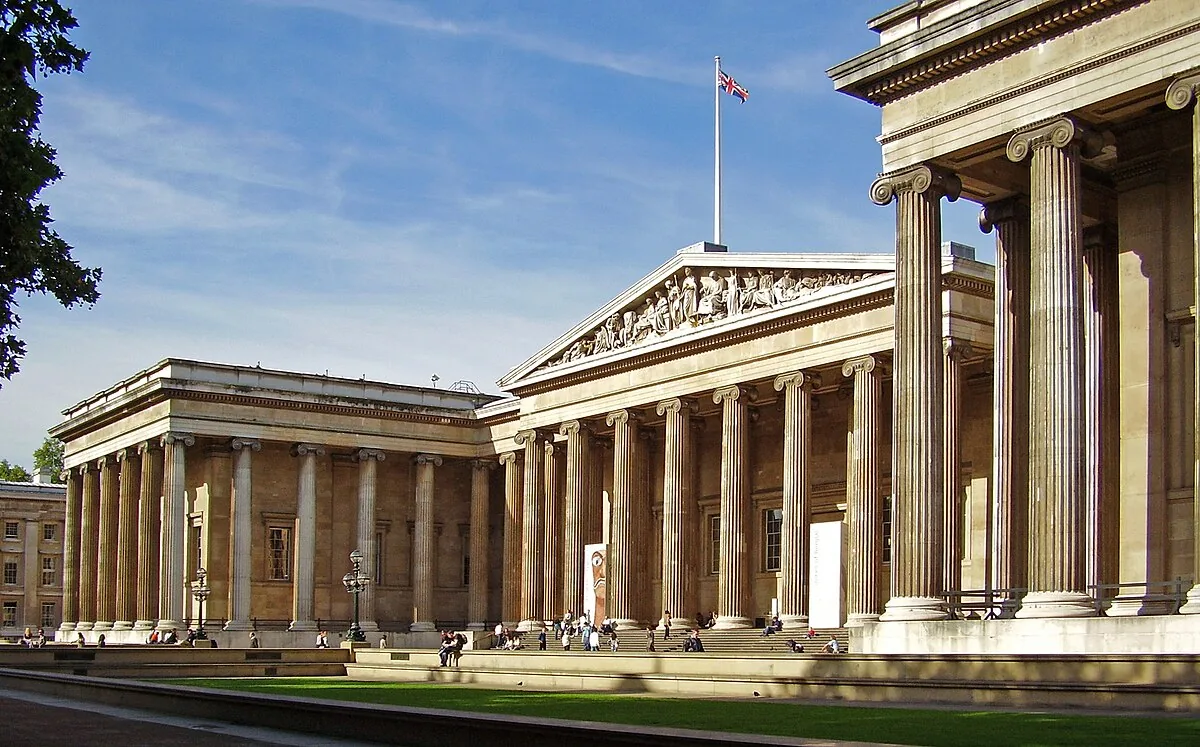
The British Museum in Bloomsbury holds a collection of approximately eight million objects spanning two million years of human history, one of the largest and most comprehensive in the world. The museum is free to enter and receives around six million visitors annually. The Great Court, enclosed by Norman Foster's glass and steel roof in 2000, is the largest covered public square in Europe and provides the main organizing space for a building that has been expanded continuously since its founding in 1753.
The British Museum in Bloomsbury holds a collection of approximately eight million objects spanning two million years of human history, one of the largest and most comprehensive in the world.
The museum began with the collection of physician and naturalist Hans Sloane, who bequeathed his 71,000 objects to the nation on his death in 1753 on the condition that the government purchase them for £20,000. Parliament agreed, and the British Museum opened to the public in 1759, the first national public museum in the world. The collection grew through donations, purchases, and the acquisitions of empire: the Elgin Marbles, taken from the Parthenon in Athens between 1801 and 1812, are the most contested objects in any museum in the world. The Rosetta Stone, found by French soldiers during Napoleon's Egyptian campaign and transferred to Britain under the terms of the 1801 capitulation, provided the key that unlocked the decipherment of ancient Egyptian hieroglyphics.
Room 4 holds the Elgin Marbles, the Parthenon sculptures, including a 75-metre frieze section, pediment figures, and metopes, displayed in a dedicated gallery. Room 4 is regularly crowded; the objects deserve more time than most visitors give them. The Lewis Chessmen, carved from walrus ivory in Norway around 1150 CE and found on the Isle of Lewis in 1831, are in Room 40 and less visited than their quality warrants. The Egyptian galleries, covering multiple rooms across the upper floor, include the Rosetta Stone (Room 4, immediately off the Great Court) and mummy collections from multiple periods. The weekly Friday late opening (to 20:30) offers a significantly quieter visit.
The museum is in Bloomsbury, central London , with the nearest Underground at Holborn (Central and Piccadilly lines) and Russell Square (Piccadilly). Tottenham Court Road (Elizabeth Line) is slightly further but well connected. Entry is free.
The museum is in Bloomsbury, central London , with the nearest Underground at Holborn (Central and Piccadilly lines) and Russell Square (Piccadilly).
The Experience
Spend time with the Parthenon sculptures in Room 4, find the Lewis Chessmen in Room 40 for walrus-ivory medieval artistry, view the Rosetta Stone immediately off the Great Court, and navigate the Egyptian mummy galleries on the upper floor.
Why It Matters
The world's first national public museum and one of the largest collections in existence, eight million objects spanning two million years of human history, free to visit.
Why Visit
The Lewis Chessmen are among the most expressive medieval objects in any collection, individually carved twelfth-century chess pieces with distinct facial expressions and postures that still read as personalities after nine centuries. They are in Room 40 and most visitors walk past.
✦ Insider Tips
- 1
The Friday late opening to 8:30pm reduces crowds significantly compared to weekend days.
- 2
The Lewis Chessmen in Room 40 are among the most interesting medieval objects in the museum and consistently undervisited.
- 3
The Elgin Marbles in Room 4 deserve more than the passing look most visitors give them, the frieze section reads as a single continuous composition.
- 4
The museum's free collection map is available at the Great Court information desks, essential for navigating the building's complex layout.