“The world's oldest commissioned warship still in active Royal Navy service is preserved in dry dock at Portsmouth, Nelson fell to a French sharpshooter on her quarterdeck at Trafalgar in 1805, and the spot is marked with a brass plaque.”
About HMS Victory
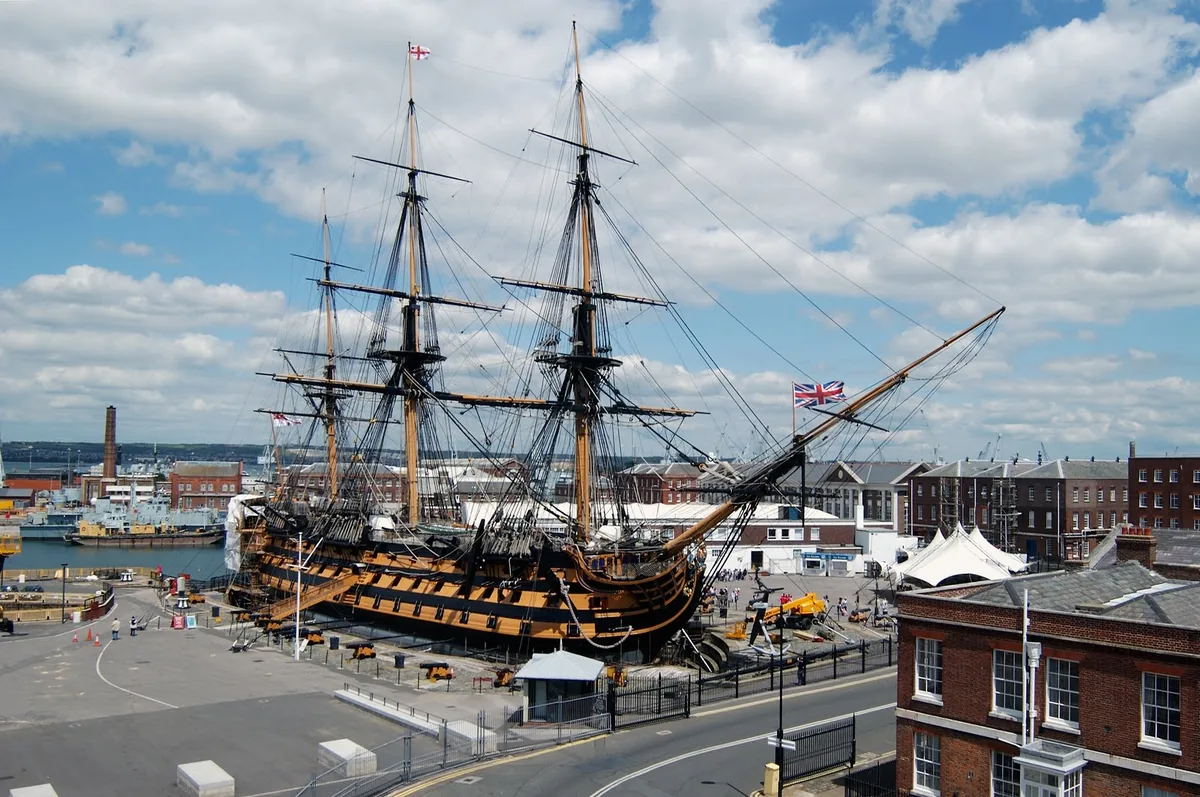
Launched in 1765 and Nelson's flagship at Trafalgar in 1805, HMS Victory remains a commissioned Royal Navy ship serving as the First Sea Lord's flagship. Nelson's unconventional attack strategy won the battle; he was shot at 1:15pm and died below decks at 4:30pm as the victory was secured.
What HMS Victory actually is
HMS Victory is a first-rate Royal Navy ship of the line, launched in 1765 and most famous as Horatio Nelson's flagship at the Battle of Trafalgar on 21 October 1805. The Victory is the world's oldest commissioned warship still in active service, she remains a commissioned ship of the Royal Navy, serving as the flagship of the First Sea Lord, and is preserved in No. 2 dry dock at Portsmouth Historic Dockyard. The battle in which she served as Nelson's command post decided the naval balance of power in the Napoleonic Wars and has never been fought over since.
HMS Victory is a first-rate Royal Navy ship of the line, launched in 1765 and most famous as Horatio Nelson's flagship at the Battle of Trafalgar on 21 October 1805.
The Battle of Trafalgar, fought off Cape Trafalgar on the Spanish coast, was a decisive British victory over the combined French and Spanish fleets commanded by Admiral Villeneuve. Nelson's strategy was unconventional: instead of the standard parallel engagement, he attacked perpendicular to the enemy line in two columns, intending to cut through and defeat the enemy in detail before their rear could come to support. The tactic worked but exposed the lead ships, including Victory, to raking fire. Nelson was shot by a French sharpshooter from the mizzen-top of the Redoutable at approximately 1:15pm and died below decks at approximately 4:30pm as the battle was being won. The spot where he fell, and the spot where he died, are both marked on the Victory today.
The Victory is accessed by a guided tour that moves through the ship from the upper gun deck downward, covering the battle stations, the galley, the surgeon's cockpit (where the wounded were treated below the waterline), and the orlop deck where Nelson died. The low overhead clearance throughout, the ship was built for sailors of the eighteenth century, who were smaller than the twenty-first century average, requires constant ducking. The quarterdeck spot where Nelson fell is marked with a brass plaque; the orlop deck where he died, surrounded by wounded men and told that the battle was won, is the most affecting space on the ship.
HMS Victory is in Portsmouth Historic
Dockyard, which is accessible from Portsmouth Harbour station by a five-minute walk. Portsmouth is about ninety minutes from London Waterloo by South Western Railway. The dockyard contains multiple attractions including the Mary Rose Museum and HMS Warrior; a combined ticket covers all.
Dockyard, which is accessible from Portsmouth Harbour station by a five-minute walk.
The Experience
Take the guided tour through gun decks, galley, and surgeon's cockpit, duck through the low overhead clearance built for eighteenth-century sailors, stand on the quarterdeck at the brass-marked spot where Nelson fell, and descend to the orlop deck where he died.
Why It Matters
The world's oldest commissioned warship still in service, the ship that decided the naval balance of power in the Napoleonic Wars, preserved as a working naval monument with a continuous connection to the battle it fought in 1805.
Why Visit
The orlop deck where Nelson died, crowded with wounded men in battle conditions, at the bottom of a wooden ship, is one of the most historically charged spaces in Britain. The guided tour makes the physical reality of a naval battle in 1805 unusually comprehensible.
✦ Insider Tips
- 1
The combined dockyard ticket covers Victory, the Mary Rose Museum, and HMS Warrior, budget a full day for all three.
- 2
The guided tour requires ducking throughout, not suitable without warning for tall visitors or those with back concerns.
- 3
The Mary Rose Museum (the raised hull of Henry VIII's warship) is immediately adjacent and complements Victory for a complete picture of English naval history.