“Six hundred red and fallow deer have grazed this 2,500-acre London park continuously since Charles I enclosed it in 1637, and each October, red deer stags conduct their roaring rut at close range among the ancient oaks.”
About Richmond Park
Charles I's 1637 enclosure dispossessed local commoners of land rights, generating legal challenges resolved only in 1751. The deer herd has been managed since the seventeenth century; the ancient oaks predate the enclosure by centuries.
Richmond Park
Richmond Park is the largest of London's Royal Parks at 2,500 acres, an ancient deer park in southwest London that has been enclosed since 1637 when Charles I brought deer here for hunting. The park holds approximately 630 fallow and red deer, a herd that has grazed this land continuously for nearly four hundred years, and functions simultaneously as a National Nature Reserve, a Site of Special Scientific Interest, and one of the most accessible significant natural spaces within a major European capital.
Richmond Park is the largest of London's Royal Parks at 2,500 acres, an ancient deer park in southwest London that has been enclosed since 1637 when Charles I brought deer here for hunting.
a court case, 1751
Charles I enclosed the park by constructing a ten-mile wall, dispossessing local people of common land rights in the process, a dispossession that generated legal challenges that were not fully resolved until a court case in 1751 restored pedestrian right of access. The deer herd has been managed continuously since the seventeenth century; the two species, red deer and fallow deer, are kept at controlled numbers through an annual cull. The ancient oaks within the park are among the oldest trees in London, with some individual trees estimated at over seven hundred years old, predating the park's enclosure by three centuries.
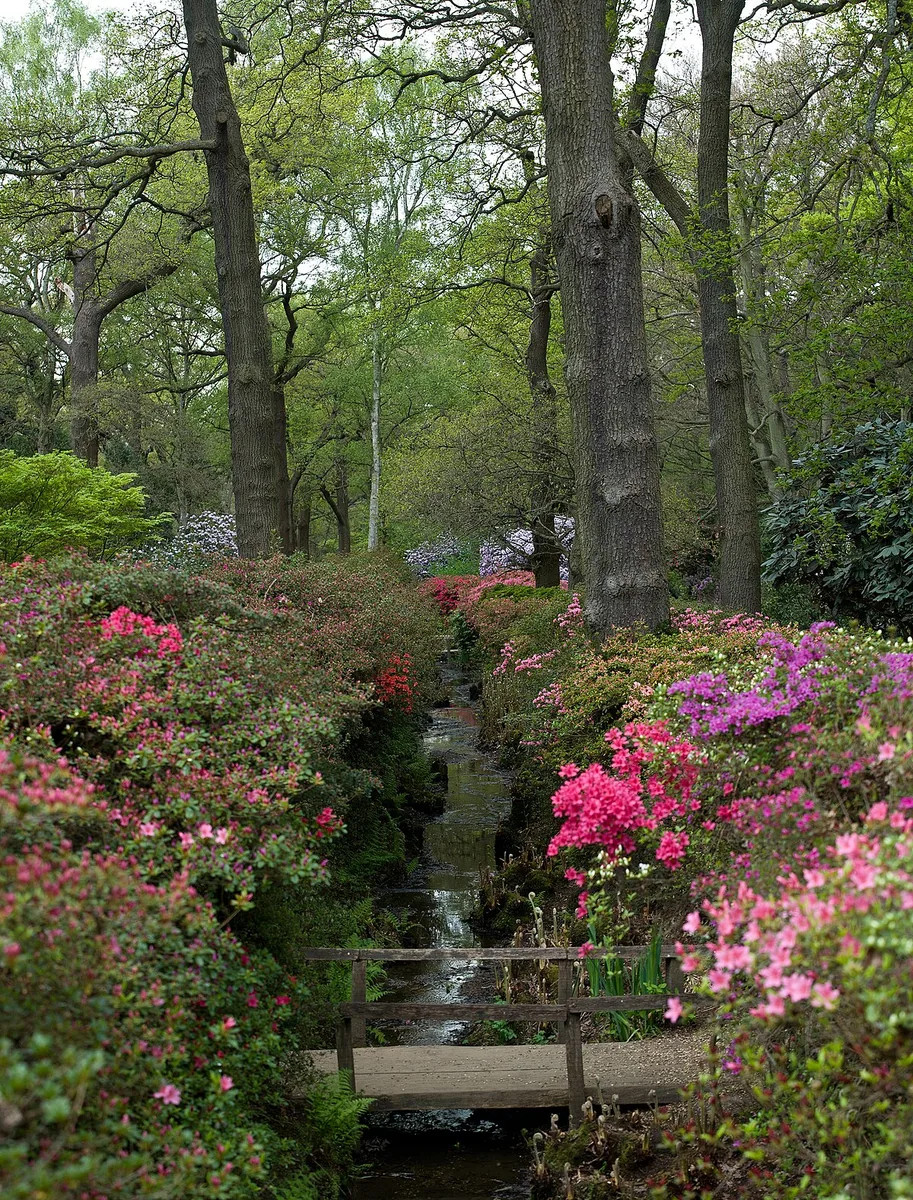
The deer are the primary attraction and are visible year-round across the open grassland, though autumn, the rutting season, brings the red deer stags into their most dramatic behavioral display. The rut occurs typically in October, when stags compete loudly with roaring and antler clashing; it is witnessed at close range within the park in a way that would be impossible in most enclosed natural reserves. Pen Ponds, the pair of reservoirs in the park's center, is a good birdwatching site year-round. The Isabella Plantation, a landscaped woodland garden within the park, has exceptional azalea and rhododendron displays in April and May.
Richmond Park has several car entrances and is served by bus routes from Richmond and Kingston town centers. Richmond station (District Underground line and South Western Railway) is about a mile from the Robin Hood Gate entrance. The park is free to enter on foot.
Richmond Park has several car entrances and is served by bus routes from Richmond and Kingston town centers.
The Experience
Walk the open grassland among fallow and red deer, watch the October rut when red stags roar and clash antlers, observe waterfowl at Pen Ponds, and visit the Isabella Plantation for azalea and rhododendron displays in April and May.
Why It Matters
London's largest Royal Park and a National Nature Reserve, a deer park in continuous use since 1637 that functions as the closest thing to genuine wild landscape accessible within a major European capital.
Why Visit
The October rut allows close observation of red deer behavior that in other contexts would require a significant journey to remote upland Scotland. Standing within fifty metres of a roaring red stag in southwest London is one of Britain's more incongruous wildlife experiences.
✦ Insider Tips
- 1
The October rut typically begins in the first two weeks of October for red deer, the roaring is audible across the park.
- 2
Keep at least 50 metres from deer at all times, particularly during the rut when stags are unpredictable, the park advises on safe distances.
- 3
The Isabella Plantation has free access but the azalea peak (late April to early May) draws crowds, weekday morning visits are quieter.
- 4
Pen Ponds in the park's center is a reliable kingfisher location, the resident pair are usually visible from the eastern pond bank.