“A tidal island off the Cornish coast has been inhabited since a twelfth-century Benedictine priory, the same family has lived in the castle since 1659, and the causeway connecting it to the mainland disappears under the sea twice a day.”
About St Michael's Mount
A 495 CE vision of the Archangel Michael established the island's devotional significance; a Benedictine priory was founded in 1135, modeled on the Norman Mont-Saint-Michel. The St Aubyn family has occupied the castle since 1659, the longest family tenure in any National Trust property.
St Michael's Mount in short
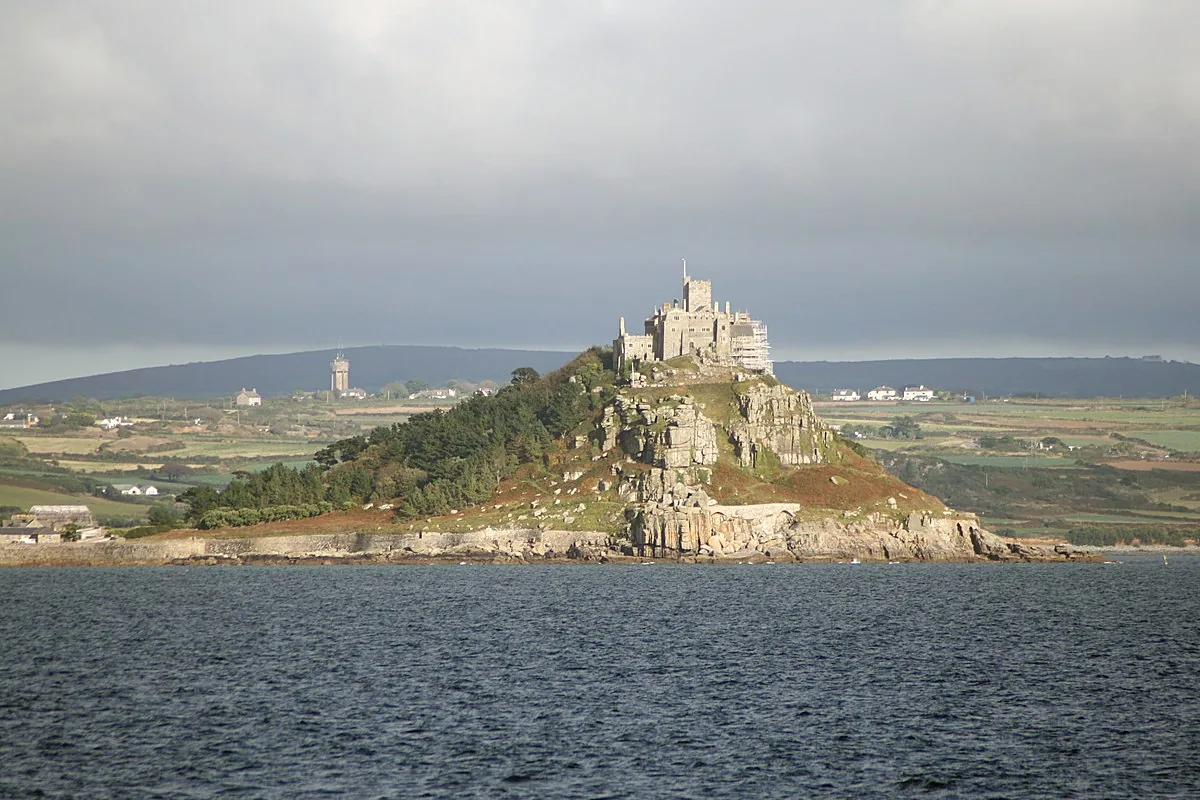
St Michael's Mount is a tidal island in Mounts Bay off the coast of Marazion in Cornwall, connected to the mainland by a granite causeway that is submerged at high tide and walkable at low tide. The castle and priory complex at the island's summit has been inhabited since the twelfth century, first as a Benedictine priory linked to Mont-Saint-Michel in Normandy, then as a fortress, and since the seventeenth century as the home of the St Aubyn family, who still occupy part of the castle. The National Trust now manages the castle and gardens, which are open to visitors on designated days.
St Michael's Mount is a tidal island in Mounts Bay off the coast of Marazion in Cornwall, connected to the mainland by a granite causeway that is submerged at high tide and walkable at low tide.
on the rock, 495
The island's religious significance predates the Norman period: Cornish tradition holds that fishermen saw a vision of the Archangel Michael on the rock in 495 CE, establishing a devotional connection that the Benedictines formalized when they established a priory here in 1135 under a grant from Henry I. The priory was modeled on its Norman parent at Mont-Saint-Michel, the two islands share similar tidal geography, with the connection to the mainland appearing and disappearing with the tide. During the Cornish rebellions of the fifteenth and sixteenth centuries, the Mount was fortified and besieged multiple times. The St Aubyn family acquired it in 1659 and has held it ever since, making their tenure in the castle the longest of any family in a National Trust property.
The causeway crossing at low tide , walking dry-shod across the exposed granite to the island, is the most atmospheric arrival. The climb through the harbor village and up the castle path leads to the Chevy Chase Room, the former refectory of the priory, and the castle apartments occupied by the St Aubyns. The subtropical gardens on the island's south-facing terraces, planted by successive generations, hold plants that would not survive on the mainland. The views from the castle walls across Mounts Bay and toward the Penwith peninsula are among the finest coastal panoramas in Cornwall. Marazion is near Penzance in west Cornwall, about five hours from London by train. From Marazion, the causeway is walkable at low tide; a passenger ferry operates at high tide from the beach. Cornwall's train journey is exceptionally scenic along the coast between Truro and Penzance.
The Experience
Cross the causeway dry-shod at low tide, climb to the castle through the harbor village, visit the Chevy Chase Room (former priory refectory) and the castle apartments, walk the subtropical terraced gardens, and view Mounts Bay and the Penwith coast from the castle walls.
Why It Matters
Cornwall's most distinctive historic site, a tidal island with continuous habitation since the twelfth century, combining medieval religious architecture, Cornish coastal landscape, and a still-inhabited castle.
Why Visit
The causeway crossing at low tide, walking across granite to an island that will be surrounded by sea within hours, provides an experience that photographs of the island from shore don't convey. The subtropical terraced gardens on the south-facing slopes are an unexpected botanical contrast to the Cornish coast.
✦ Insider Tips
- 1
Check the tide table before visiting, the National Trust website shows exact causeway crossing windows for each day.
- 2
The passenger ferry from Marazion beach operates at high tide as an alternative to the causeway.
- 3
The garden terraces on the south side of the island are less visited than the castle interior, budget time for them.
- 4
National Trust members enter free; non-members pay for castle and garden access.