The bridge was originally supposed to be painted in black and yellow stripes like a giant bumblebee, until a local architect noticed the beauty of the reddish-orange primer coat.
About Golden Gate Bridge
The Golden Gate Strait was named by explorer John C. Frémont in 1846 because it reminded him of the Golden Horn in Istanbul. Before the bridge, the only way across was by ferry, a trip that could be dangerous in the erratic Bay weather. Irving Morrow, the consulting architect, was responsible for the bridge’s signature color and its stepped Art Deco towers, arguing that a bold hue was necessary to make the structure visible to ships in the fog. Despite its age, the bridge is constantly being maintained; a crew of nearly thirty painters works year-round to touch up the steel, consuming over 5,000 gallons of paint annually to fight the corrosive salt air.
What Golden Gate Bridge actually is
Suspended between the Marin Headlands and the San Francisco presidio, this Art Deco masterpiece is painted a color that technically shouldn't exist in nature: International Orange. The Golden Gate Bridge is a two-mile long engineering marvel that defies the treacherous currents, gale-force winds, and dense fogs of the Pacific entrance. Its two towers rise 746 feet into the sky, supporting massive cables that contain enough wire to girdle the earth three times. While it is a vital artery for the Bay Area, it is also a giant musical instrument, humming in the wind and vibrating under the weight of forty million vehicles a year. It remains the most photographed bridge in the world, a soaring a result of the idea that a utilitarian structure can also be a work of high art.
“Suspended between the Marin Headlands and the San Francisco presidio, this Art Deco masterpiece is painted a color that technically shouldn't exist in nature: International Orange.”
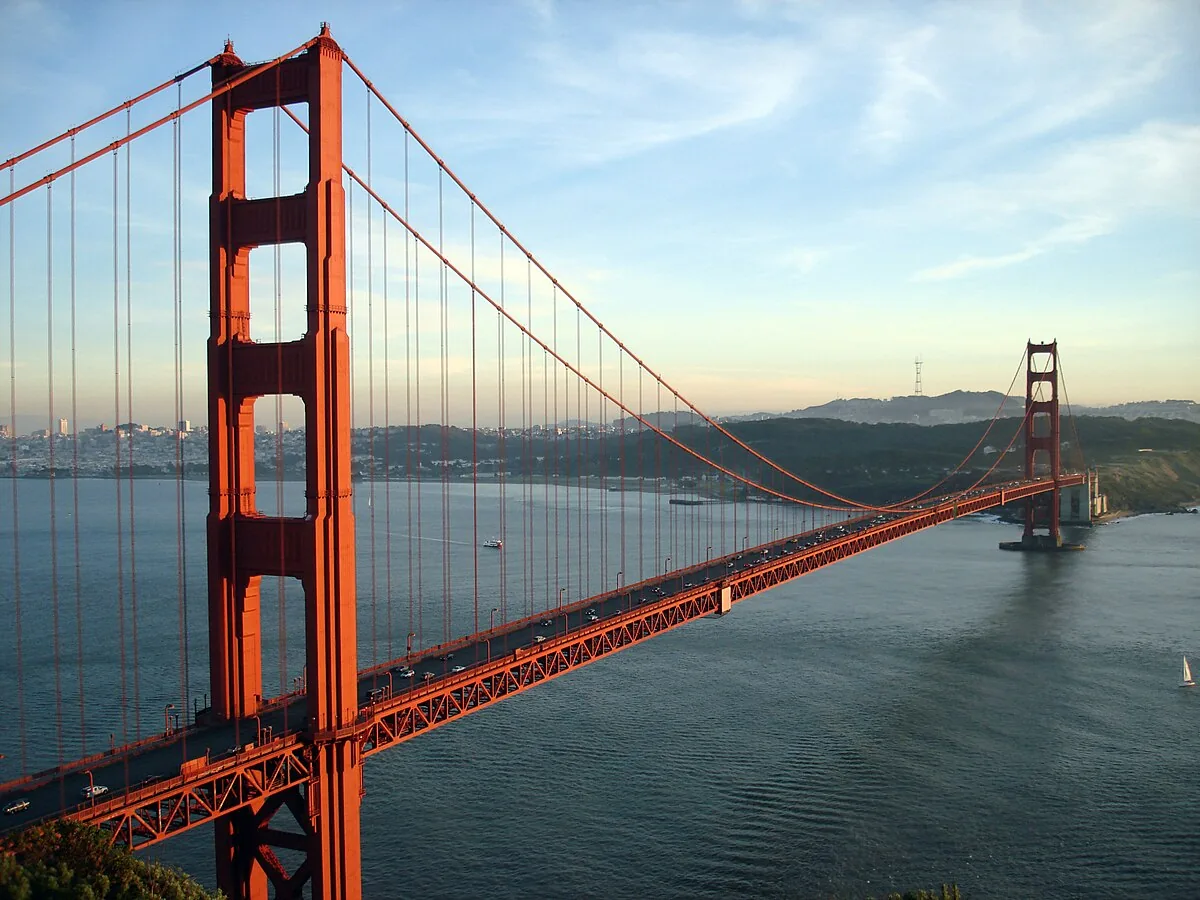
Golden Gate Bridge, United States
Experts originally said the bridge
Experts originally said the bridge was impossible to build due to the 60-mile-per-hour winds and the depth of the water. Chief Engineer Joseph Strauss spent over a decade lobbying for the project, eventually convincing the public to bond their own homes to fund it during the Great Depression. Construction began in 1933, a brutal four-year slog through the 'pea soup' fogs that frequently blinded the workers. Strauss insisted on a safety net beneath the floor, which saved the lives of nineteen men who became known as the 'Halfway to Hell Club.' When it opened in 1937, it was the longest suspension bridge on earth, a record it held for twenty-seven years until the Verrazzano-Narrows Bridge was completed in New York.
The air is cold and tastes of heavy salt, often accompanied by the 'wet' feeling of the fog rolling through the cables. You catch is the rhythmic 'thrum-thrum' of tires over the expansion joints and the mournful, low-frequency roar of the foghorns located on the south pier and mid-span. The walk across the pedestrian path, the bridge sway slightly in the wind and the subtle vibration of the massive steel suspension wires. The standout is the intricate Art Deco detailing on the towers, designed by Irving Morrow to catch the light even on the greyest days. The water below is a churn of dark navy and whitecaps, making the orange of the steel pop with an intensity that seems artificial. At the mid-span, the city of San Francisco looks like a toy town dwarfed by the Pacific horizon. The bridge is accessible from the San Francisco side via the Presidio, with numerous hiking trails and bus lines leading to the Toll Plaza. Biking across from Fisherman’s Wharf to Sausalito is the most popular way to experience the span, though the wind can make the return trip difficult. For the classic viewpoint, take a car or rideshare to the Marin Headlands on the north side, specifically to Battery Spencer, where the bridge towers look like they are close enough to touch.
The Experience
You feel a rush of adrenaline as you reach the center of the span, 220 feet above the swirling Pacific. Audibly, the of the wind whistling through the suspension cables creates a high-pitched, eerie song that locals call the 'Bridge Hum.' You notice the millions of rivets and the thickness of the main cables, which are made of 27,572 individual wires bound together. The most memorable moment is often the 'Karl the Fog' effect, where the towers disappear into a white cloud, leaving you suspended in a void with nothing but the orange railings for reference. It is a sensory experience that combines the industrial power of the 1930s with the raw, untamable force of the ocean.
Why It Matters
The Golden Gate Bridge is the definitive symbol of San Francisco and a global icon of American ingenuity. It proved that suspension technology could bridge even the most hostile waterways. Culturally, it marks the starting point for the Pacific, representing the final frontier of the American westward expansion and the daring spirit of the West Coast.
Why Visit
No bridge in the world has a more dramatic relationship with its environment. It isn't just a way to get to Sausalito; it is a two-mile walk through the clouds. It is the only place where you can feel the literal edge of the North American continent vibrating beneath your feet.
Insider Tips
- 1
Walk on the east side of the bridge for views of the city skyline and Alcatraz; the west side is for bikers and ocean views only.
- 2
Check the wind report before you go; if the gusts are over 30 mph, the pedestrian walkway is often closed or extremely unpleasant.
- 3
Drive to the 'Old Fort Point' at the base of the south pier to see the massive scale of the bridge from directly underneath.
- 4
Use the 'Golden Gate Bridge' app to pay tolls, as there are no cash booths and all billing is done through license plate recognition.
- 5
Bring a windproof shell and a scarf even if it's 80 degrees in the city; the bridge temperature is usually 15 degrees colder.