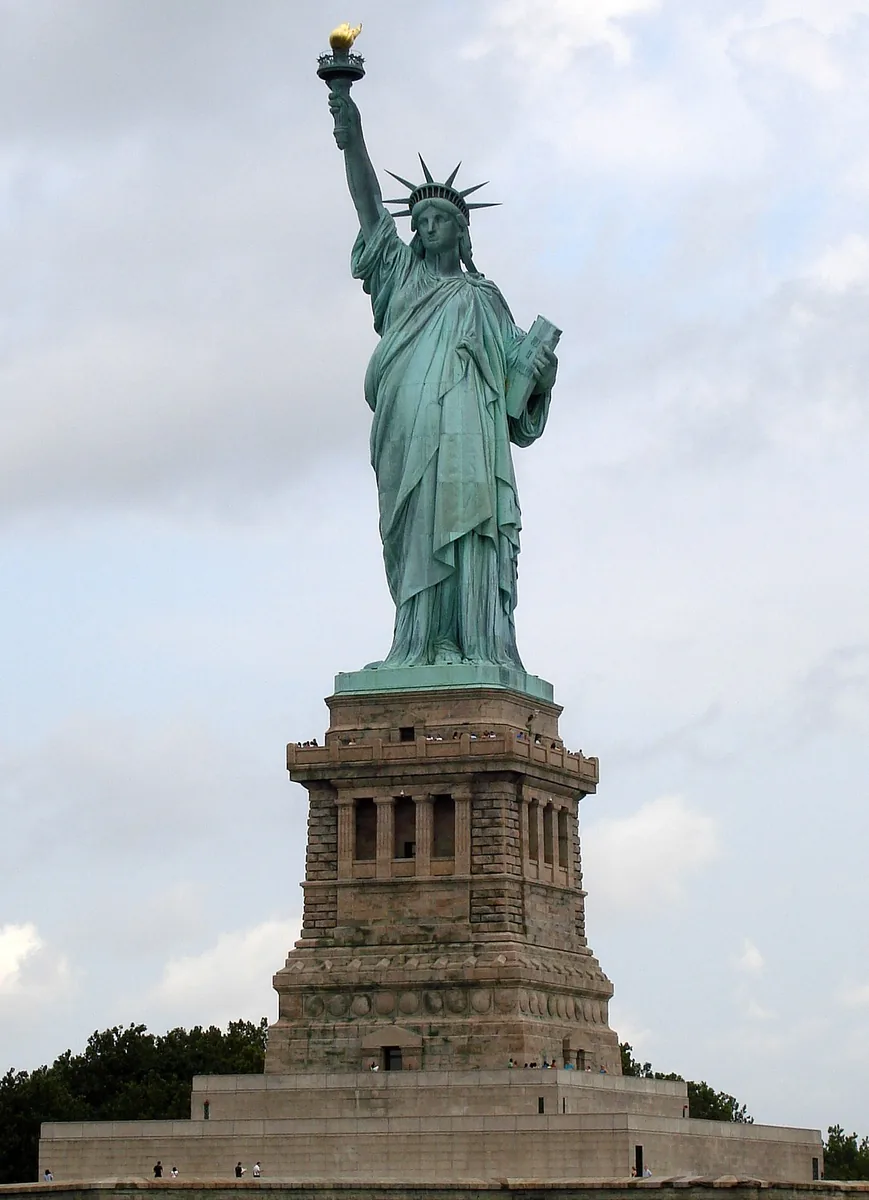
She arrived in 214 wooden crates, a disassembled jigsaw puzzle of copper sheets that had to be hammered into shape over an iron frame designed by the man who built the Eiffel Tower.
About Statue of Liberty
The statue's official name is Liberty Enlightening the World, intended to honor the abolition of slavery as much as national independence. In 1984, she underwent a massive restoration for her centennial, which included replacing her original torch with the current gold-plated one. The statue’s color is the result of natural oxidation; she was originally a shiny, penny-colored brown for the first few decades of her existence. During the world wars, her torch was extinguished to avoid giving a beacon to enemy submarines, making her a silent, dark sentinel in the harbor.
Statue of Liberty in short
Copper skin, weathered to a distinct sea-foam green, is still a colossal greeting in the middle of New York Harbor. The Statue of Liberty is not just a monument but a hollow, 151-foot tall giant designed by Frédéric Auguste Bartholdi with an internal iron skeleton engineered by Gustave Eiffel. She holds a torch of gold leaf and a tablet inscribed with the date of American independence, her feet breaking free from the chains of tyranny. While she was a gift from France to celebrate a centennial of friendship, she evolved into a global symbol of refuge. To see her from the water is to understand the exact emotional punch felt by millions of immigrants who once saw this silhouette as their first glimpse of a new life.
Bartholdi first envisioned a massive lighthouse
Bartholdi first envisioned a massive lighthouse for the Suez Canal before pivoting his design to fit the American harbor. Funding the project was a transatlantic struggle; the French raised money through public lotteries and entertainment, while American newspaper magnate Joseph Pulitzer had to shame the public into donating for the pedestal. The statue was built in Paris, disassembled into 350 pieces, and shipped across the Atlantic in 214 crates. President Grover Cleveland finally dedicated her in October 1886 amidst a harbor thick with fog and the roar of steamship whistles. She functioned as a lighthouse for sixteen years, though her light was never quite bright enough to guide ships safely through the Narrows.
The air smells of brackish river water and the metallic tang of old copper. The persistent, low-frequency hum of ferry engines and the sharp, rhythmic clanging of the flagpole hardware in the harbor wind. Walking around the base, The sheer scale of the granite pedestal and the vibrations of the city radiating across the water. The intricate folds of the copper robes, which are only about the thickness of two pennies squeezed together. The light in the harbor is constantly shifting, reflecting off the glass towers of Lower Manhattan and washing the statue in a pale, silvery glow during the morning. At her feet, the skyscrapers of the financial district look like a modern backdrop to an ancient goddess.
Access to Liberty Island is strictly
Access to Liberty Island is strictly controlled via Statue City Cruises, which depart from Battery Park in Manhattan or Liberty State Park in New Jersey. Security screenings are rigorous and resemble airport procedures, so arriving early is essential. Tickets for the pedestal and the crown sell out months in advance, though the grounds themselves offer the most expansive views of the harbor and the lady herself.
The Experience
A strange tightness in the air as you climb the narrow, winding stairs inside the statue, the iron girders of Eiffel’s skeleton surrounding you like a cage. Audible here of voices echoes strangely off the copper walls, creating an acoustic environment that feels both hollow and sacred. First, the thousands of rivets that hold the skin together, each one a tiny point of human labor from a Parisian workshop. The most profound moment occurs when you look back toward Ellis Island, realizing the proximity of the statue to the place where so many family histories began. The ferry ride back, watching her recede into the harbor mist, remains the most enduring image of the New York experience.
Why It Matters
The Statue of Liberty is perhaps the most recognized architectural icon on the planet. It represents the Enlightenment ideals of liberty and democracy, but also the enduring friendship between nations. Humanly, it serves as a massive, tangible poem to the concept of the 'Mother of Exiles,' providing a physical anchor for the American immigrant story.
Why Visit
No postcard can prepare you for the physical presence of Liberty. It is one thing to see her on a screen, but another entirely to stand in the wind of the harbor and realize she is made of nothing but thin metal and an idea. It is the quickest way to feel the pulse of American history.
✦ Photo Gallery
Best Season
🌤 September offers the most stable harbor weather, with clear skies and a crispness that makes the ferry ride pleasant without the stifling humidity of a New York summer.
Quick Facts
Entry
The ferry (the only access) is around 25 USD including the island; crown access costs a little more and is limited.
Opening hours
Open daily; ferries run from morning to late afternoon, with longer summer hours.
Time needed
Around half a day including the ferry and Ellis Island.
Best time to visit
September offers the most stable harbor weather, with clear skies and a crispness that makes the ferry ride pleasant without the stifling humidity of a New York summer.
Getting there
On Liberty Island in New York Harbor; reached only by the official ferry from Battery Park in Manhattan or Liberty State Park in New Jersey.
What's nearby
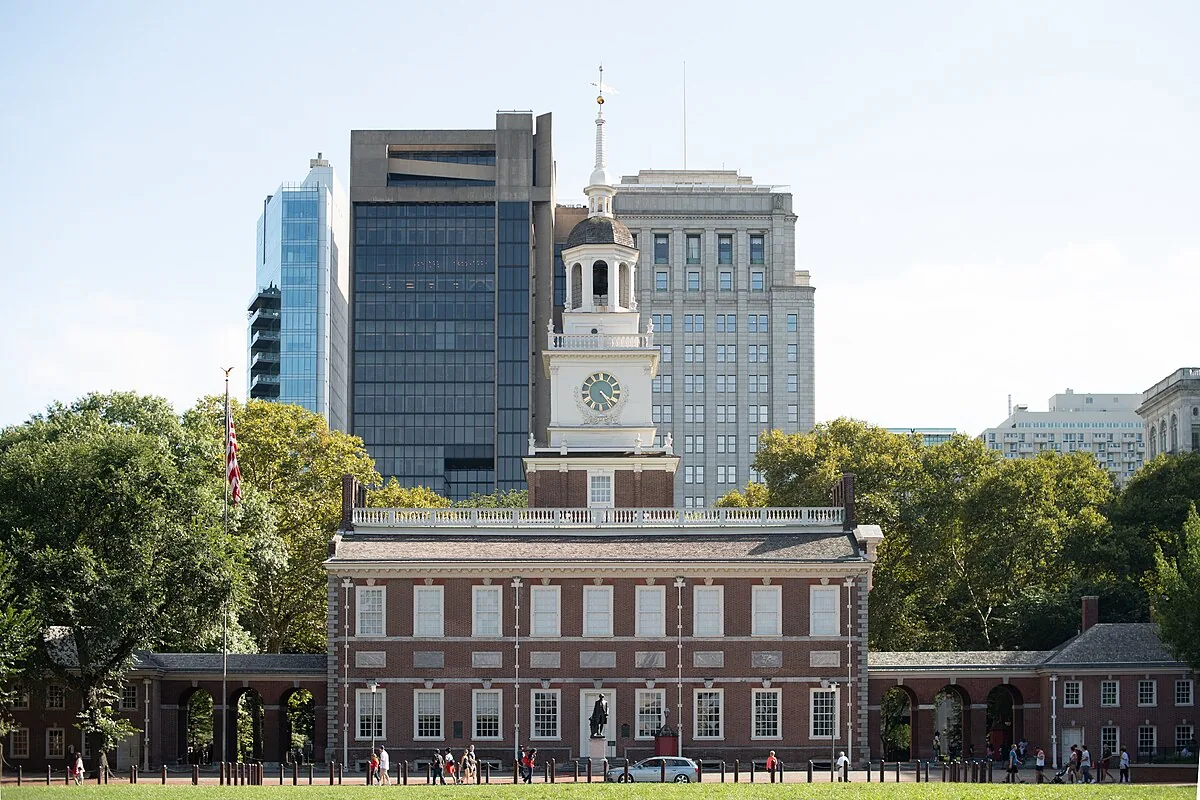
Metropolitan Museum of Art and Independence Hall are also in the area.
Location
New York City, United States
Type
attraction
Coordinates
40.6892°, -74.0444°
Insider Tips
- 1
Book the 'Crown' tickets at least four months in advance, as only a small number of people are allowed up each day.
- 2
Take the ferry from Liberty State Park in New Jersey to avoid the massive Manhattan crowds and enjoy a much shorter security line.
- 3
Bring a heavy jacket even in summer; the wind in the middle of the harbor is significantly colder than it is on the streets of the city.
- 4
Visit the Statue of Liberty Museum on the island to see the original 1886 torch up close; the detail in the glass is remarkable.
- 5
Do not buy tickets from street vendors in Battery Park; only the official ferry line has the right to land on the island.