He sits nineteen feet tall in a temple built on a reclaimed swamp, his marble hands forever clenched and relaxed to symbolize both his strength and his compassion.
About Lincoln Memorial
The 175 tons of white Georgia marble used for the statue were carved by the Piccirilli Brothers in New York before being shipped to Washington in pieces. The building itself uses stones from all over the country, Massachusetts granite, Tennessee marble for the floors, and Alabama marble for the ceiling, as a metaphor for a reunited nation. During the construction, a massive foundation of concrete piers had to be sunk forty-five feet deep to reach the bedrock of the Potomac. Since its completion, the memorial has evolved into the nation’s premier stage for civil rights protests and historic gatherings, far exceeding its original purpose as a simple tomb-like tribute.
Lincoln Memorial in short
At the western end of the National Mall, a Greek Doric temple of white Georgia marble anchors the capital’s most sacred axis. The Lincoln Memorial houses a nineteen-foot-tall seated statue of the 16th president, his hands resting on chair arms draped with the American flag. The architecture, designed by Henry Bacon, is a deliberate exercise in solemnity, using thirty-six fluted columns to represent the states in the Union at the time of Lincoln's death. Inside, the walls are inscribed with the Gettysburg Address and his Second Inaugural, text that remains as sharp and convicting as the day it was carved. It is a place that functions less like a tourist site and more like a secular cathedral, demanding a lowered voice and a slower pace.
Building a memorial for Lincoln was a process fraught with political delays, taking over fifty years to break ground after his assassination. The site was originally a swampy marsh that many critics claimed was too remote and unstable for such a heavy structure. Architect Henry Bacon won the commission in 1911, and sculptor Daniel Chester French spent years perfecting the marble figure, originally intended to be only ten feet tall before realizing the scale of the building would dwarf it. The memorial was dedicated in 1922 by Chief Justice William Howard Taft, notably in front of a racially segregated audience. This irony was challenged in 1939 when Marian Anderson sang on the steps after being barred from Constitution Hall, and again in 1963 when Martin Luther King Jr. delivered his 'I Have a Dream' speech from the same spot.
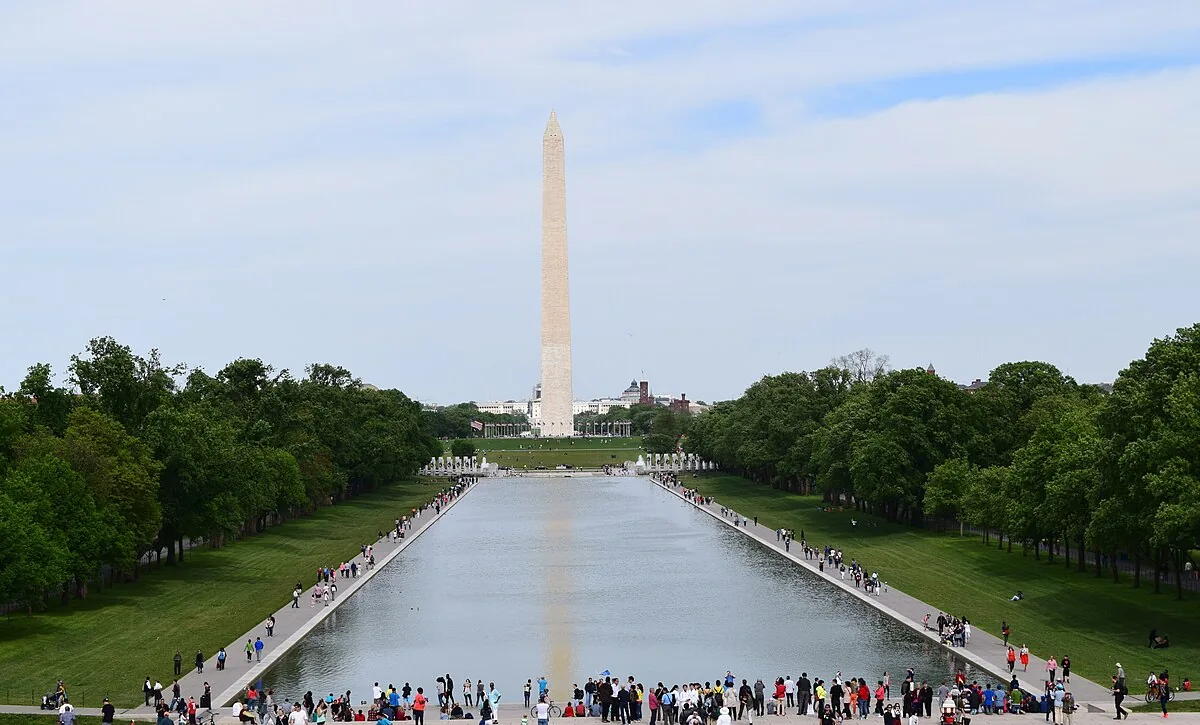
The air feels cool and still under the high limestone ceiling, smelling faintly of damp stone and wax. From somewhere comes the soft, echoing scuff of footsteps on the polished floor and the occasional, distant siren from the D.C. streets. Walking up the long flight of steps, the transition from the humid, noisy city to a space of quiet, white authority. First, the way the light catches the striations in the marble, making the statue appear to have a soft, almost human glow in the late afternoon. The reflection of the Washington Monument in the pool below creates a visual bridge between the two great presidents. From the spot where King stood, the view toward the Capitol offers a panorama of the entire machinery of American democracy. The memorial is most easily reached on foot from the Foggy Bottom-GWU Metro station or by using the National Mall Circulator bus. It is situated at the far end of the Mall, a significant walk from the Smithsonian museums, so many visitors use the city's bikeshare program to cover the distance. Parking is notoriously difficult in the area, making public transit or a long, reflective walk the most practical options.
The Experience
The sense of heavy silence as you read the words of the Second Inaugural Address, realizing the weight of the war Lincoln was trying to heal. Audibly, the of the wind whipping through the open columns provides a lonely, mournful soundtrack to the experience. The standout is the subtle variations in the marble's color, from brilliant white to a soft, weathered grey in the corners where the rain hits. The majority rush to take a photo of the face, but the real power is in the hands, one fisted in resolve, the other open in peace. The moment of standing on the 'I Have a Dream' step, looking out over the reflecting pool, is the closest you can get to the heartbeat of American history.
Why It Matters
The Lincoln Memorial is the architectural embodiment of the American Union. It serves as a permanent reminder of the cost of the Civil War and the ongoing struggle for equality. Culturally, it has become the 'front porch' of the nation, the place where the most important conversations about the American character are held through protest and prayer.
Why Visit
Visit the Lincoln Memorial at night to see the statue illuminated against the dark sky. Without the school groups and the midday heat, the space becomes truly transcendent. It is the only place in Washington where the grandeur of the architecture is matched perfectly by the moral weight of the man it honors.
✦ Photo Gallery
Best Season
🌤 Late March brings the cherry blossoms to the nearby Tidal Basin, providing a soft pink frame for the white marble and a fragrance that defines the Washington spring.
Quick Facts
Best time to visit
Late March brings the cherry blossoms to the nearby Tidal Basin, providing a soft pink frame for the white marble and a fragrance that defines the Washington spring.
Getting there
In Washington D.C., United States; reach Washington D.C. first, then continue to the site.
Location
Washington D.C., United States
Type
attraction
Coordinates
38.8893°, -77.0450°
Insider Tips
- 1
Go at 2:00 AM if you want to experience the memorial in absolute, cathedral-like silence; it is open 24 hours a day and beautifully lit.
- 2
Look for the 'I Have a Dream' inscription on the landing eighteen steps down from the top to see the exact spot where MLK spoke.
- 3
Visit the small museum in the basement (the 'under-croft') to see the engineering feats required to keep the heavy marble from sinking into the Potomac mud.
- 4
Check the inscriptions for a typo; in the Second Inaugural Address, the word 'FUTURE' was accidentally carved with an 'E' instead of an 'F' and later patched.