These high-rise apartment buildings were already several centuries old when the first European explorers stumbled upon them in the mid-1500s.
About Taos Pueblo
Taos Pueblo is the only living Native American community designated both as a World Heritage Site and a National Historic Landmark. The architecture is purely functional, designed with few ground-level doors for defense; residents originally used ladders to enter through the roofs. Over the centuries, the pueblo has resisted the encroachment of modern utilities to preserve its spiritual connection to the land. The current San Geronimo Chapel, completed in 1850, replaced the one destroyed by the U.S. Army, and it serves as a distinctive mix of Catholic and traditional Tiwa beliefs. The resilience of the people here is matched only by the durability of the mud they use to build their world.
What Taos Pueblo actually is
Multi-storied adobe dwellings rise toward the New Mexican sky, their stepped silhouettes mirroring the jagged peaks of the Sangre de Cristo Mountains. Taos Pueblo is not a museum but a living community that has been continuously inhabited for over a millennium. The two main structures, Hlauuma and Hlaukwima, are built of sun-dried mud bricks and straw, a material that requires constant, rhythmic replastering by the hands of the residents. A sense of no running water or electricity allowed within the ancient walls, as the Red Willow Creek provides the lifeblood for the community just as it has for centuries. Through the dusty plazas, you are stepping into one of the oldest architectural traditions in North America, where the boundary between the earth and the home is almost non-existent.
“Multi-storied adobe dwellings rise toward the New Mexican sky, their stepped silhouettes mirroring the jagged peaks of the Sangre de Cristo Mountains.”
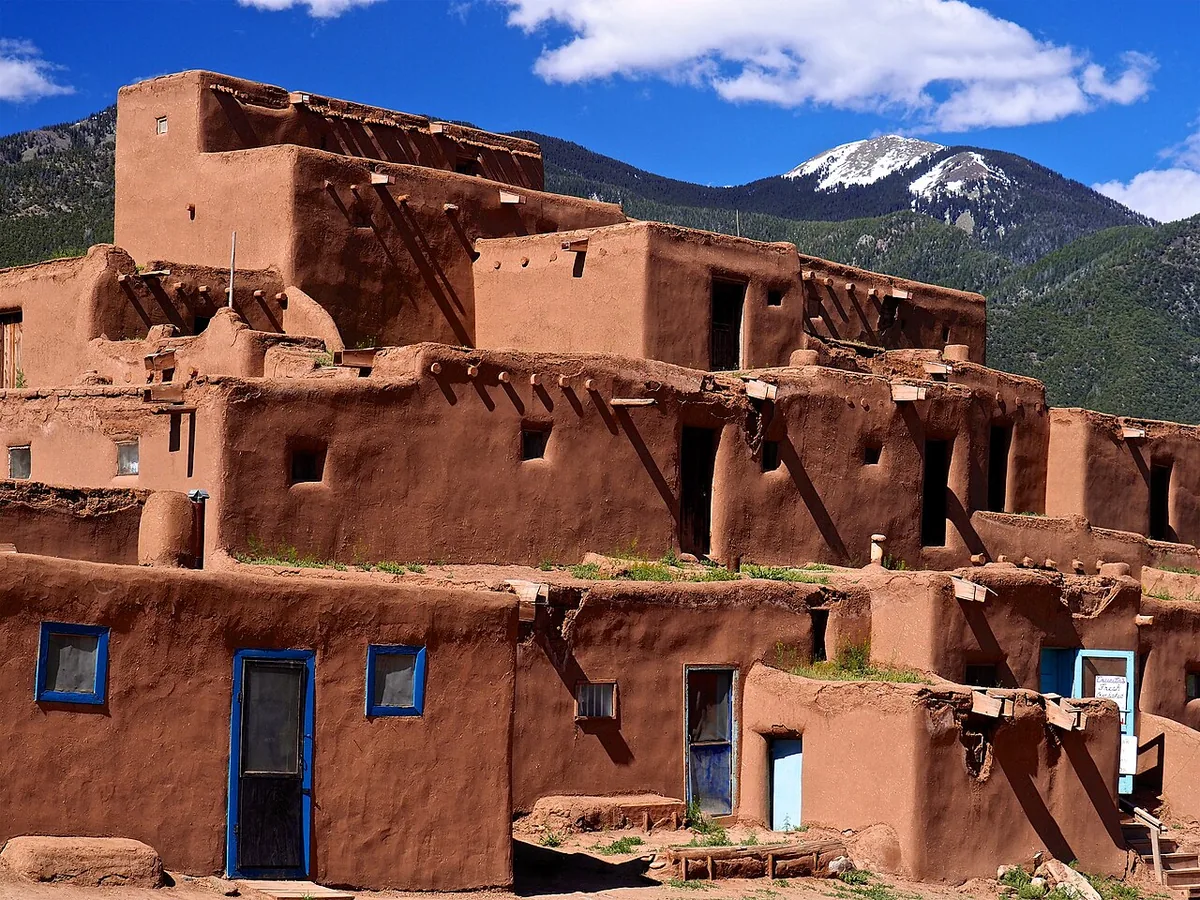
Taos Pueblo, United States
to this valley, 1000
The ancestors of the Taos people migrated to this valley around 1000 AD, developing a sophisticated culture based on irrigation and trade. The pueblo was a major center for exchange between the mountain tribes and the plains people long before the Spanish arrived in 1540. The 1680 Pueblo Revolt was largely organized from these very rooms, as the various tribes united to expel the Spanish colonists from the region. In 1847, the pueblo was the site of a tragic siege during the Taos Rebellion, the ruins of the original San Geronimo church still stand as a haunting memorial to those lost. Today, it is a UNESCO World Heritage site, protected by the tribe to ensure that their sovereign traditions and Tiwa language remain vibrant for future generations.
The pueblo is located just three miles north
The pueblo is located just three miles north of the town of Taos, making it a short drive or a long, scenic walk. Visitors enter through a gate where a modest admission fee is paid, which helps fund the ongoing maintenance of the adobe structures. Because it is a sovereign nation and a private community, the pueblo occasionally closes for tribal ceremonies without much prior notice. Respecting these closures and the 'no-photo' zones around the sacred areas is the fundamental price of admission for any curious traveler.
Visiting Taos Pueblo
The air is dry and carries the scent of cedar smoke and parched earth. The soft, conversational ripple of the creek and the occasional sound of a wooden ladder being shifted against a mud wall. Walking between the buildings, the radiating heat from the adobe and the gritty texture of the ground beneath your sandals. Immediately, the turquoise doors and the drying corn hanging from the vigas, small bursts of color against the monochromatic tan of the walls. The light at mid-day is harsh and uncompromising, highlighting the thumbprints in the fresh plaster, while the late afternoon shadows turn the pueblo into a series of golden cubes. Standing near the beehive-shaped hornos, the smell of baking bread is an olfactory bridge to a thousand years of history.
The Experience
What comes is a sense of slow, deliberate time as you watch a resident carefully apply a new layer of mud to a wall, a task that has been repeated by forty generations. Audibly, the of the wind through the surrounding sagebrush is the only thing that breaks the quiet of the plaza during the midday heat. The absence of wires and pipes, a visual silence that makes the sky feel larger and more present. Almost all visitors stay for the bread, but the real moment occurs when you stand by the creek and realize this water has sustained this exact spot since the Middle Ages. The feel of the sun-warmed adobe is something you feel in your bones long after you leave.
Why It Matters
Taos Pueblo is a monument to indigenous persistence and architectural genius. It proves that sustainability is not a modern invention but a thousand-year-old practice. Culturally, it is the heart of the Southwest, offering a rare glimpse into a society that has successfully balanced the demands of the modern world with the mandates of its ancestors.
Why Visit
Visit Taos Pueblo to see a version of America that existed long before the colonies. It is a place that challenges your understanding of history and architecture simultaneously. You go to experience a living culture that doesn't need to perform for tourists to be authentic; it simply exists in its own time.
Insider Tips
- 1
Buy a loaf of frybread or oven bread from a local vendor; it is the most direct and delicious way to support the families living in the pueblo.
- 2
Always ask for permission before taking a photo of a resident, as this is their home and not a public park.
- 3
Check the official website on the morning of your visit to ensure the pueblo hasn't closed for a private tribal ceremony.
- 4
Bring cash for the admission fee and for purchasing local pottery and jewelry directly from the artists in their homes.
- 5
Walk to the cemetery at the ruins of the old church to see the unique fusion of traditional and Christian burial customs.