Pioneer engineers used ox-hide and wooden pegs to build an auditorium with such perfect acoustics that a whisper carries three hundred feet without a microphone.
About Temple Square
The site was designated just days after the first group of Mormon pioneers entered the valley. They envisioned a city of wide streets and abundant water, with the temple as the literal and figurative center of their universe. Truman O. Angell, the architect, spent years refining the design to incorporate symbolic elements like the Big Dipper and the phases of the moon into the stone. During the mid-20th century, the square expanded to include the massive Family Search Center and the Conference Center, which features a four-acre meadow on its roof. It has evolved from a defensive settlement to an international landmark that welcomes millions of visitors regardless of their faith.
Temple Square
Granite spires pierce the mountain air of Salt Lake City, marking a ten-acre sanctuary that feels worlds away from the buzzing traffic of the Utah capital. Temple Square is the global spiritual anchor for the Church of Jesus Christ of Latter-day Saints, but its appeal stretches far beyond theology. The grounds are a masterclass in horticultural precision, where millions of blooms rotate with the seasons against a backdrop of neo-Gothic architecture. At its center stands the Salt Lake Temple, a massive structure of quartz monzonite that took forty years to complete. Surrounding it, the Tabernacle’s silver dome houses one of the world's most sophisticated pipe organs, creating an acoustic environment so sensitive that a dropped pin can be heard from across the room. Every inch of this plaza was designed to suggest permanence and order deep in the rugged American West.
“Granite spires pierce the mountain air of Salt Lake City, marking a ten-acre sanctuary that feels worlds away from the buzzing traffic of the Utah capital.”
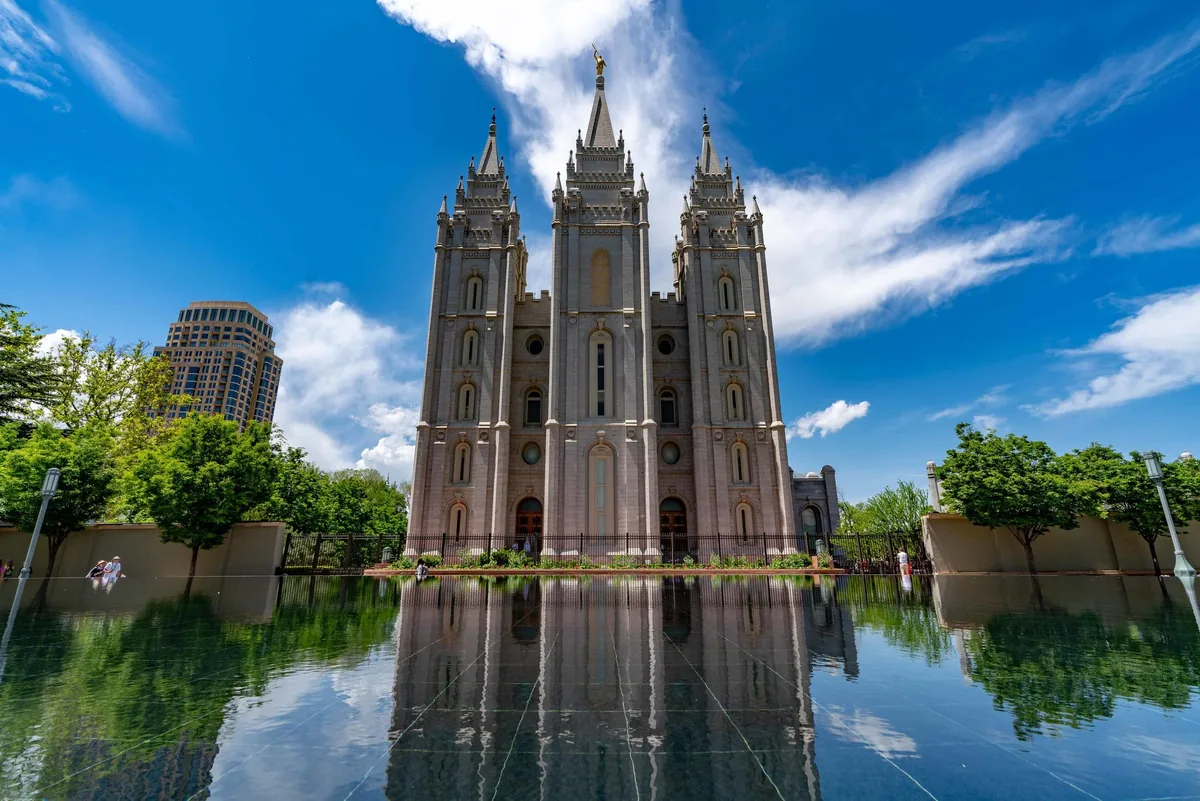
Temple Square, United States
the salt-crusted valley, 1847
Brigham Young arrived in the salt-crusted valley in 1847 and struck his cane into the dry earth, declaring it the spot where his people would build their sanctuary. The construction of the main temple was a grueling generational labor that began in 1853, involving oxen teams hauling massive stone blocks from canyons twenty miles away. It survived the threat of the Utah War and the transition from a desert outpost to a modern metropolis. The Tabernacle, completed in 1867, was a marvel of pioneer engineering, built with a bridge-like roof structure held together by wooden pegs and rawhide because nails were too expensive. Today, the square remains the most visited site in Utah, balancing its role as a sacred ground with its function as a world-class center for genealogical research and choral music.
There is a faint, clean scent of manicured flower beds and the cool moisture of several granite fountains. The rhythmic tolling of bells and the distant, muffled rehearsal of the Tabernacle Choir during their practice sessions. The walk across the smooth stone pavers, The radiating heat of the sun reflecting off the light-colored buildings. What catches you is the incredible detail in the bronze statues depicting pioneer families, their faces etched with a weary but determined realism. The light at mid-morning is particularly sharp, catching the gold-leafed figure of Moroni atop the highest spire. Standing near the Reflection Pool, the chaos of the outside world drops away, replaced by a meticulously groomed silence that encourages quiet contemplation.
The square sits at the geographical heart
The square sits at the geographical heart of Salt Lake City, with all street addresses in the valley radiating out from this point. The TRAX light rail system offers a 'Free Fare Zone' in the downtown area, making it effortless to reach from nearby hotels or the airport line. For those driving, several underground parking garages surround the perimeter, though walking from the City Creek Center allows for a more dramatic entrance through the landscaped shopping promenade.
“The square sits at the geographical heart of Salt Lake City, with all street addresses in the valley radiating out from this point.”
The Experience
A strange, calm gravity as you step inside the gates, where the urban noise of Salt Lake City suddenly vanishes. The sound of water splashing against granite becomes the dominant soundtrack to your walk. The kindness of the volunteer guides who speak dozens of languages, reflecting the global reach of the institution. Looking up at the temple's six spires, you sense the sheer weight of the stone and the forty years of labor it took to stack it. The most quiet moment happens at the Assembly Hall, where stained glass filters the high-altitude sun into pools of violet and blue on the wooden pews.
Why It Matters
Temple Square represents the zenith of the pioneer spirit and the communal effort required to build a civilization in the desert. It is the cultural hearth of the Intermountain West and a monument to religious conviction. Beyond faith, it serves as a significant site for architectural history and the world's most extensive repository of ancestral records.
Why Visit
Visit Temple Square to witness a level of urban maintenance and horticultural beauty rarely seen in public spaces. It offers a rare chance to hear a 11,623-pipe organ in a building designed specifically for its sound. You go to experience the silence and the scale of a place that was built to last for eternity.
Insider Tips
- 1
Attend a Thursday evening rehearsal of the Tabernacle Choir to hear the world-famous ensemble for free in an informal setting.
- 2
Visit the Family Search Center to have specialists help you trace your own lineage using their massive digital archives at no cost.
- 3
Check the status of the ongoing temple renovation, as certain viewpoints are currently restricted while the foundations are being seismically upgraded.
- 4
Look for the 'Sun Stones' and 'Moon Stones' carved into the temple exterior, which represent different degrees of heavenly glory in the church's theology.