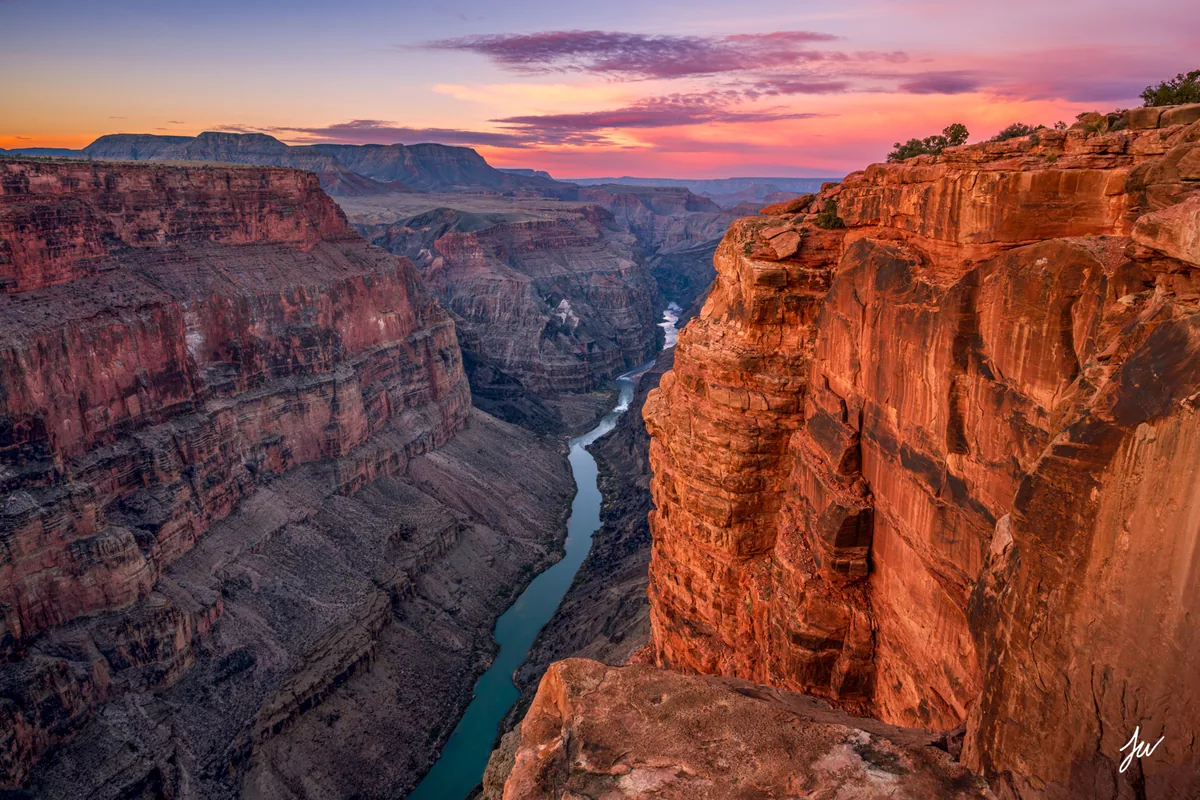
The ground beneath your feet is a thin, rocky lid sitting atop a chamber of molten magma large enough to fill the Grand Canyon several times over.
About Yellowstone National Park
The volcanic activity here is driven by a 'hotspot' in the Earth's mantle that has been stationary while the North American plate slides over it. This has created a trail of ancient calderas across the Snake River Plain, with the current Yellowstone caldera forming during a massive eruption 640,000 years ago. In the 1990s, the park became the site of a radical ecological experiment with the reintroduction of gray wolves, an act that successfully rebalanced the entire ecosystem. Today, the park serves as a vital sanctuary for the largest concentration of megafauna in the lower forty-eight states.
Steam rises from the frozen earth in ghostly
Steam rises from the frozen earth in ghostly plumes while the smell of brimstone hangs heavy over a landscape like a laboratory for the planet's creation. Yellowstone sits atop a restless supervolcano, a geographic fact that manifests in thousands of geysers, bubbling mud pots, and prismatic springs that defy the visible spectrum. The park is a high-altitude wilderness where bison herds stall traffic and grizzly bears roam the Lamar Valley under the watchful eyes of wolf packs. While the geysers attract the masses, the sheer vastness of the lodgepole pine forests and the roar of the Yellowstone River carving through yellow rhyolite canyons provide a quieter, more primal sense of scale. It remains a place where the Earth's crust feels thin and the power of the natural world is entirely unfiltered.
“Steam rises from the frozen earth in ghostly plumes while the smell of brimstone hangs heavy over a landscape like a laboratory for the planet's creation.”
Yellowstone National Park, United States
Nez Perce, Crow, and Shoshone peoples lived in this geothermal basin for thousands of years before the first mountain men returned with tales of 'fire and brimstone' that were largely dismissed as hallucinations. In 1871, the Hayden Geological Survey brought back the first photographs and paintings, proving to a skeptical Congress that these wonders actually existed. On March 1, 1872, President Ulysses S. Grant signed the act that created Yellowstone, making it the first national park in the world. The early years were chaotic, with the U.S. Army eventually taking over to protect the wildlife from poachers and the geysers from tourists who used them as laundries. This military stewardship lasted until the National Park Service was formed in 1916, establishing the blueprint for conservation that has since been exported to every corner of the globe.
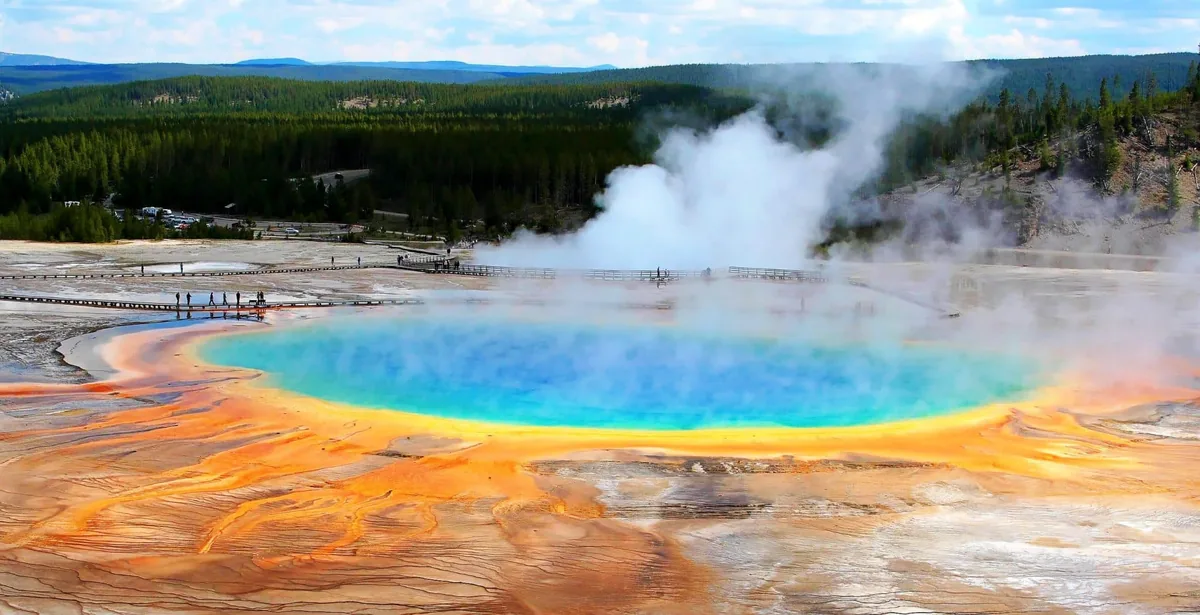
The air is a sharp mix of cold mountain oxygen and the pungent, egg-like scent of hydrogen sulfide gas from the thermal vents. The rhythmic, guttural glup-glup of the Fountain Paint Pots and the thunderous roar of the Lower Falls as it plunges three hundred feet into the canyon. Along the boardwalks at Grand Prismatic Spring, The sudden waves of heat from the steam and the fine mist on your face. The opening note is the way the bacteria-mats create rings of neon orange and deep blue, colors so intense they look like digital artifacts. The light at sunrise in the Hayden Valley illuminates the frosted manes of the bison, turning their breath into glowing clouds. Standing before Old Faithful, the tension of the crowd is broken only by the sudden, violent hiss of boiling water shooting into the sky.
Yellowstone is massive, with five distinct
Yellowstone is massive, with five distinct entrances spread across Wyoming, Montana, and Idaho. People generally fly into Bozeman or Jackson Hole and rent a car, as the park’s 'Grand Loop' road requires hours of driving to navigate. The north entrance at Gardiner is the only one open year-round to wheeled vehicles, providing a connection to the Mammoth Hot Springs and the wildlife-rich northern range. During winter, the interior of the park is accessible only via guided snowcoach or snowmobile, offering a silent, white version of the landscape that few travelers ever see.
“Yellowstone is massive, with five distinct entrances spread across Wyoming, Montana, and Idaho.”
The Experience
There is a profound sense of ancient patience while waiting for a geyser to erupt, a reminder that the Earth operates on its own schedule. The hum of a wolf howl echoing across the Lamar Valley at dawn is a primal noise that triggers a physical reaction in your gut. The opening note is the 'ghost trees' near the thermal basins, their roots killed by shifting hot water and their trunks bleached bone-white by the minerals. Almost all visitors never leave the boardwalks, but the moment you step onto a backcountry trail, the smells of pine and damp earth take over. The sheer scale of the Yellowstone Lake, an inland sea at nearly 8,000 feet, is the thing that stays with you long after the sulfur smell fades.
Why It Matters
Yellowstone is the birthplace of the national park idea, a radical concept that land should be preserved for public enjoyment rather than private exploitation. It is one of the world's last intact temperate ecosystems and a critical laboratory for understanding geothermal energy and extremophile biology. Its survival represents one of the greatest successes of the global conservation movement.
Why Visit
Visit Yellowstone because it is the closest you can get to seeing the world as it was before humans dominated it. It is a place of beautiful violence, where the earth boils and predators still rule the valleys. You go to be reminded that we are guests on a very powerful and very restless planet.
Insider Tips
- 1
Drive the Lamar Valley at first light if you want to see wolves and grizzlies; the 'wolf watchers' with their spotting scopes are usually happy to let you take a look.
- 2
Check the geyser prediction board at the Old Faithful Visitor Center, but then walk out to the Castle or Daisy geysers for a more private eruption.
- 3
Stop at the boiling river near the North Entrance, where you can soak in the exact spot where a freezing mountain stream meets a scalding hot spring.
- 4
Fill your gas tank before entering the park; the distances between service stations are vast and mountain driving consumes fuel faster than you expect.