Lalibela, and why the flight is worth it
Eleven churches cut downward into solid rock in the 12th and 13th centuries. Not caves converted into churches. Churches, with columns, arches, windows, drainage systems and carved crosses, excavated from the top down out of the living bedrock. King Lalibela commissioned them as a new Jerusalem after the original fell to Saladin. Bet Giyorgis, cross-shaped, sunk 12 metres below ground level, is the one on the postcards. It is better in person.
The 11 churches divide into two clusters connected by narrow tunnels. The layout is confusing without a guide. Hire one. The priests guarding each church will show you illuminated manuscripts and ceremonial crosses if you ask. The entrance ticket covers all churches and is valid for multiple days.
Outside the churches, the town is small and high (2,500 metres, pack layers). The market sells honey, spices and hand-woven netela shawls. The tej bars serve honey wine in round-bottomed glass flasks. Local restaurants dish up injera with slow-cooked wots that are as good as anything in Addis.
If you can time your visit to Timkat (Ethiopian Epiphany, usually January 19), do it. The churches fill with white-robed pilgrims and the ceremonies are extraordinary. Genna (Ethiopian Christmas, usually January 7) is quieter but also special.
Simien Mountains and the baboons on the cliff edge
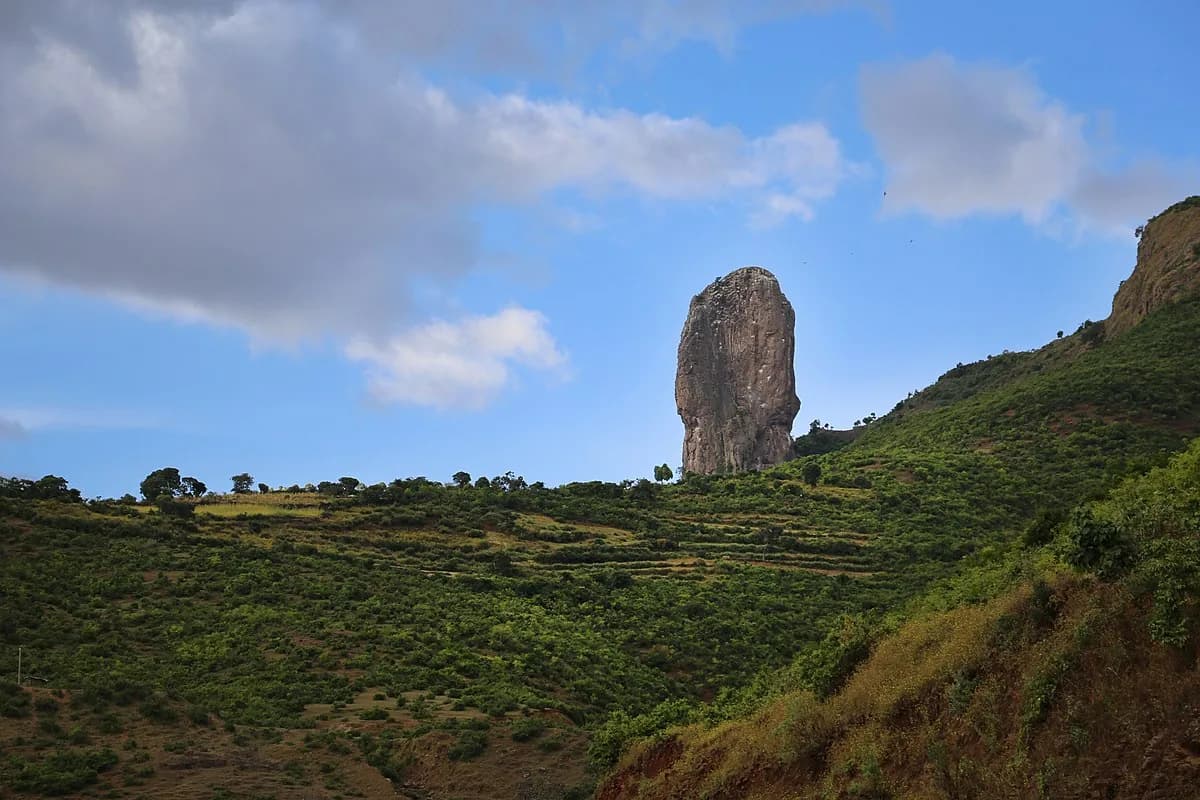
The Simien Mountains are jagged peaks and sheer escarpments above 3,000 metres, with drops of 1,500 metres that you walk along rather than away from. The scenery is dramatic in a geological, plate-tectonic way. It does not look like a national park. It looks like someone cracked the earth open.
The Gelada baboons are the hook. Found nowhere else on the planet, they graze in troops of several hundred on the cliff edges and pay zero attention to humans walking past. The standard trek, Sankaber to Geech Camp to Chenek Camp, takes three to four days with an optional extension to Ras Dashen (4,550m), Ethiopia's highest point.
A licensed guide and an armed scout are mandatory. The altitude is real. Acclimatise in Gondar or Lalibela first. Camps are basic: bring a sleeping bag and warm layers. Debark, the nearest town, is three hours from Gondar by car. The trek itself is long and high but not technical.
Gondar's castles and the ceiling full of angels
Gondar was the Ethiopian capital for two centuries, and the Royal Enclosure has a complex of castles and banquet halls that look transplanted from medieval Europe. They are not European. The architecture blends Portuguese, Indian and Aksumite influences into something original. Emperor Fasilides' castle, a three-storey stone tower built in 1636, is the centrepiece.
The Debre Berhan Selassie Church is a short walk from the enclosure. The ceiling is covered with rows of angel faces, all staring down at you. It is one of the most reproduced images in Ethiopian art and it is jarring in person. Fasilides' Bath, a sunken stone pool, fills with water during Timkat when thousands of pilgrims plunge in.
Gondar is the starting point for the Simien trek and sits at 2,200 metres, making it a good place to let your lungs adjust.
Timing
When to visit Ethiopia
October to March is dry season: clear skies, comfortable temperatures at altitude, and the best trekking conditions. January brings Timkat and Genna celebrations. April-May is a short rainy season. June to September is the main rainy season (the kiremt), with daily downpours in the afternoon. The rains make some roads impassable but the landscape turns green and waterfalls are at their fullest.
Average temperature & rainfall in Addis Ababa
Temp °CRain mmReal climate averages for Addis Ababa (capital). Source: Open-Meteo archive. Rainfall is total monthly precipitation.
Sample route
The perfect 5 days in Ethiopia
A ready-made 5-day route built from Ethiopia's top sights. Adjust it to your pace, or generate your own plan.
Coffee the way it started
Coffea arabica is from Ethiopia. Not "inspired by" or "descended from." From. The genetic diversity of wild coffee in the Ethiopian highlands exceeds every commercial plantation on Earth combined.
The coffee ceremony is a daily social ritual, not a tourist show. Green beans roasted over charcoal in a small pan. Ground by hand in a wooden mortar. Brewed in a jebena, a black clay pot. Served in tiny cups without handles. Three rounds: abol, tona, baraka. Leaving before the third is rude.
The coffee regions (Sidamo, Yirgacheffe, Harrar) are in the south and east. If you visit, you can see the plants and taste varieties at the source. In Addis, Tomoca is the classic coffee house, standing-room only, serving thick buna since the 1950s.
A macchiato in Addis costs about 10 birr. That is $0.15. You are drinking the same beans that cost $6 a cup in Brooklyn, in the only place on Earth where they grow wild.
Addis Ababa: one day, done right
Most people pass through because Ethiopian Airlines uses Bole as a hub. The city is loud, chaotic, trafficked, and at 2,400 metres high enough to leave you winded on the first day.
The National Museum has Lucy, the 3.2-million-year-old Australopithecus afarensis skeleton. She is smaller than you expect. The Ethnological Museum at Addis Ababa University is better than most national museums in larger countries. The Merkato, one of the biggest open-air markets in Africa, is overwhelming. Go with a local or at least without valuables.
Ethiopian food centres on injera, a spongy teff-flour flatbread that is plate and utensil. Stews (wots) of lentils, chickpeas, beef and greens are spooned on top. You tear off injera and scoop. The vegetarian food is excellent because the Orthodox calendar requires fasting from meat and dairy for roughly 200 days a year, and the fasting menu has evolved into its own cuisine.
Logistics that will catch you off guard
Fly the Historic Route. Ethiopian Airlines connects Addis to Lalibela, Gondar, Axum and Bahir Dar cheaply. The roads are long and rough. Book internal flights early because popular routes fill up.
The calendar situation is real. Ethiopia is 7-8 years behind the Gregorian calendar and the clock is offset by 6 hours (their 1 o'clock is your 7am). When someone tells you a time, ask: Ethiopian or European?
Visa: e-visa online, most nationalities, $52 for 30 days. Takes 1-3 business days. Do not show up at the airport expecting to sort it out.
ATMs work in Addis and major cities. They do not work reliably in smaller towns. Bring clean US dollar bills as backup. The birr is the currency and you cannot get it outside the country.
Guide fees are part of the trip. Lalibela guides cost $30-50 per day. Simien scouts are mandatory and paid separately. These costs stack up. Budget for them from the start rather than being surprised.
Altitude across the Historic Route runs from 2,000 to 4,500 metres. Bring warm layers. Give yourself a day or two to adjust before trekking.
Visa & Entry
Do you need a visa for Ethiopia?
2 countries enter Ethiopia visa-free. Check the full requirements for your passport →
FAQ
Ethiopia, your questions
MapCurio Editorial
Writing about East Africa, the Horn and the places that require patience before they reveal anything. Visa and entry rules are cross-checked against the latest passport-index data, and climate figures use the Open-Meteo historical archive. Last reviewed June 2026. Always confirm visa and safety details with official sources before booking.
Keep exploring