A skyscraper-clogged horizon forced engineers to build a concrete spire so tall that its final piece had to be lowered into place by a heavy-lift helicopter named Olga.
About CN Tower
Ground broke in 1973 on what was then a desolate patch of railway land, marking the beginning of a forty-month marathon of engineering. Over 1,500 workers labored in shifts to pour the 40,000 cubic meters of concrete required to form the hexagonal core, using a massive ring-shaped mold that rose as the concrete hardened. The project was a high-stakes gamble for Canadian National, costing roughly 63 million dollars at the time, a figure that seems modest given the tower's enduring status. It opened to the public in June 1976, immediately shifting the center of gravity for Toronto's tourism. While its original purpose was to broadcast signals over the city's new high-rises, it quickly evolved into a cultural anchor, eventually being named one of the Seven Wonders of the Modern World by the American Society of Civil Engineers.
CN Tower in Canada
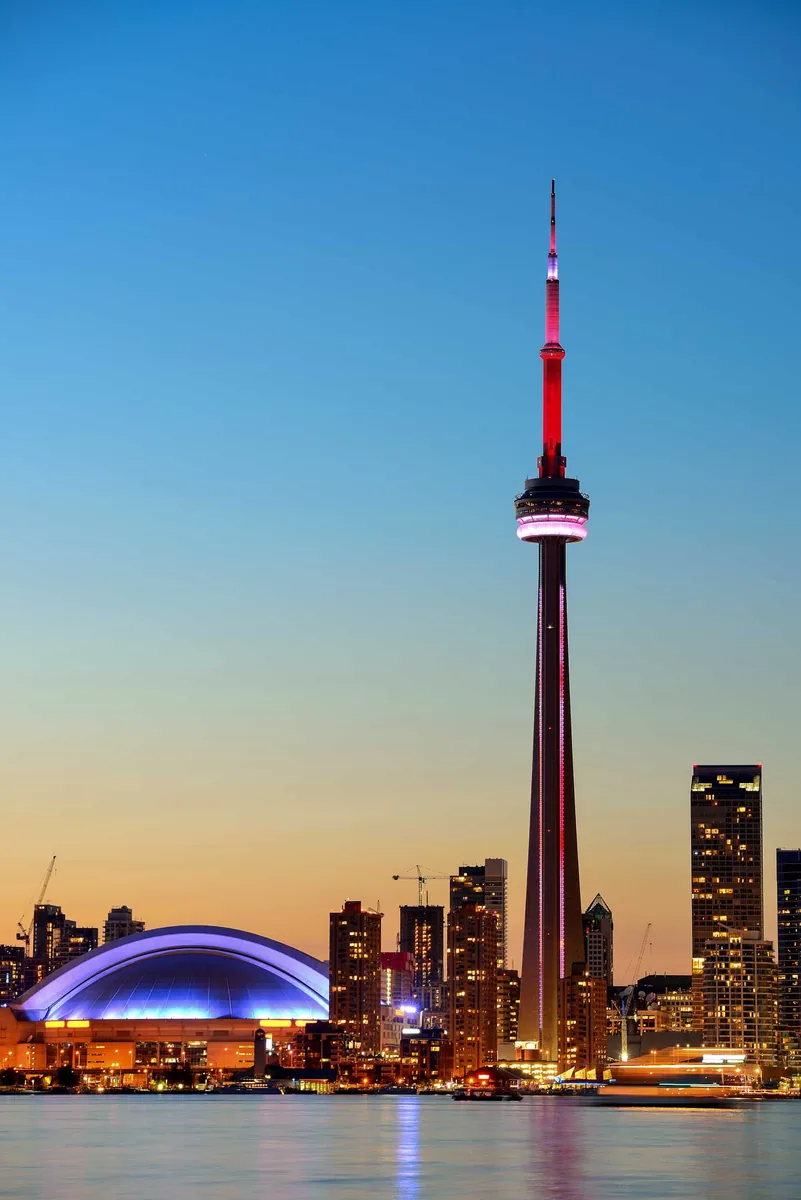
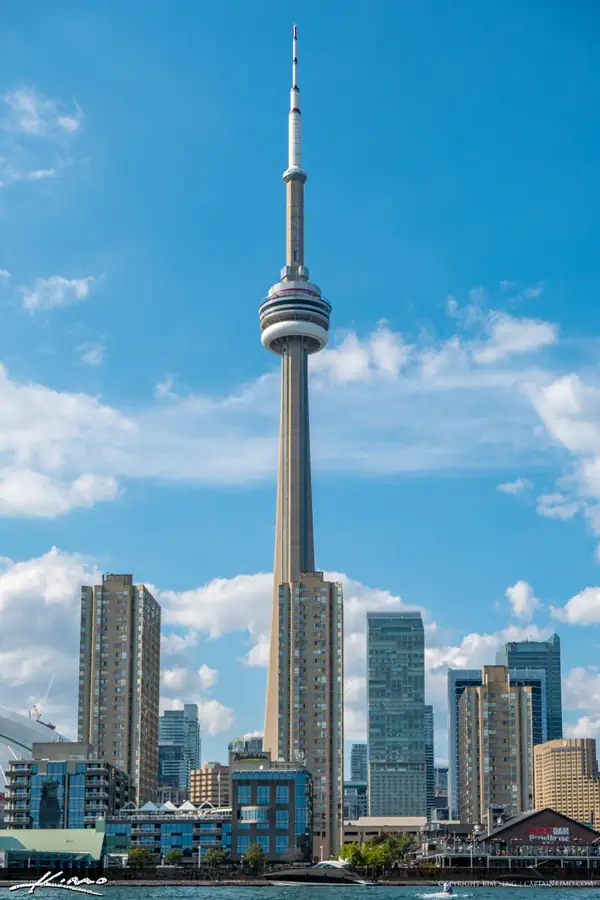
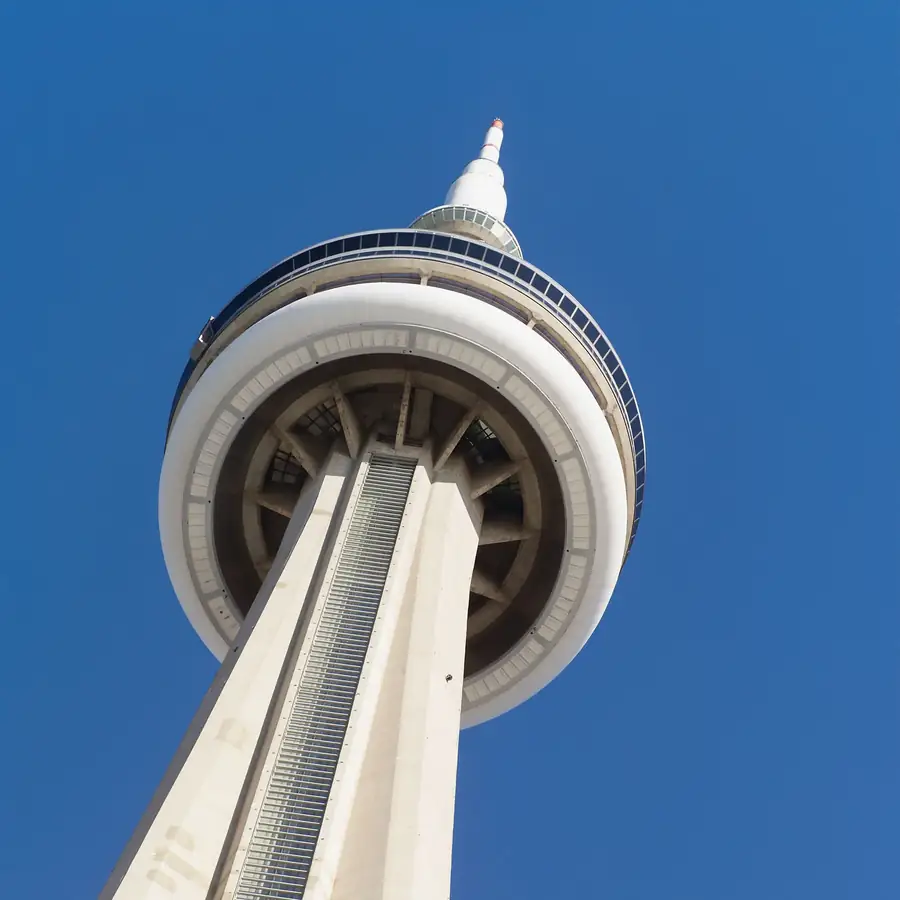
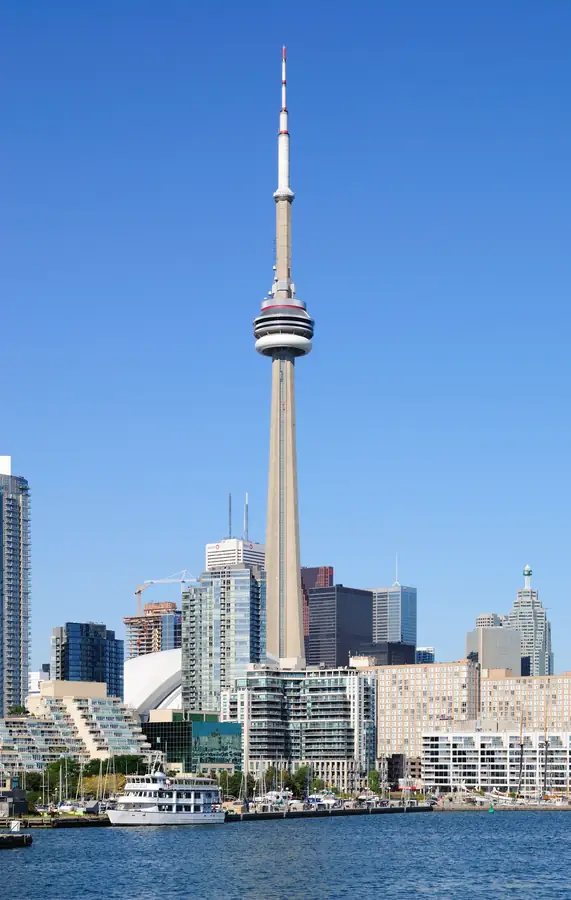
Standing at the base of this concrete needle, you have to crane your neck so far back it aches just to glimpse the radome bulging against the Ontarian sky. The CN Tower remains the undisputed anchor of Toronto’s skyline, a 553-meter exclamation point that transitioned from a functional telecommunications hub to a symbol of national pride. Unlike the glass skyscrapers that huddle around its feet, the tower possesses a brutalist grace, its post-tensioned concrete ribs tapering upward with a purpose that feels both industrial and elegant. It is a place of forced perspective where the sprawling urban grid of Canada's largest city suddenly reveals itself as a delicate toy town bordered by the infinite blue of Lake Ontario.
“Standing at the base of this concrete needle, you have to crane your neck so far back it aches just to glimpse the radome bulging against the Ontarian sky.”
CN Tower, Canada
Canadian National Railways conceived this project
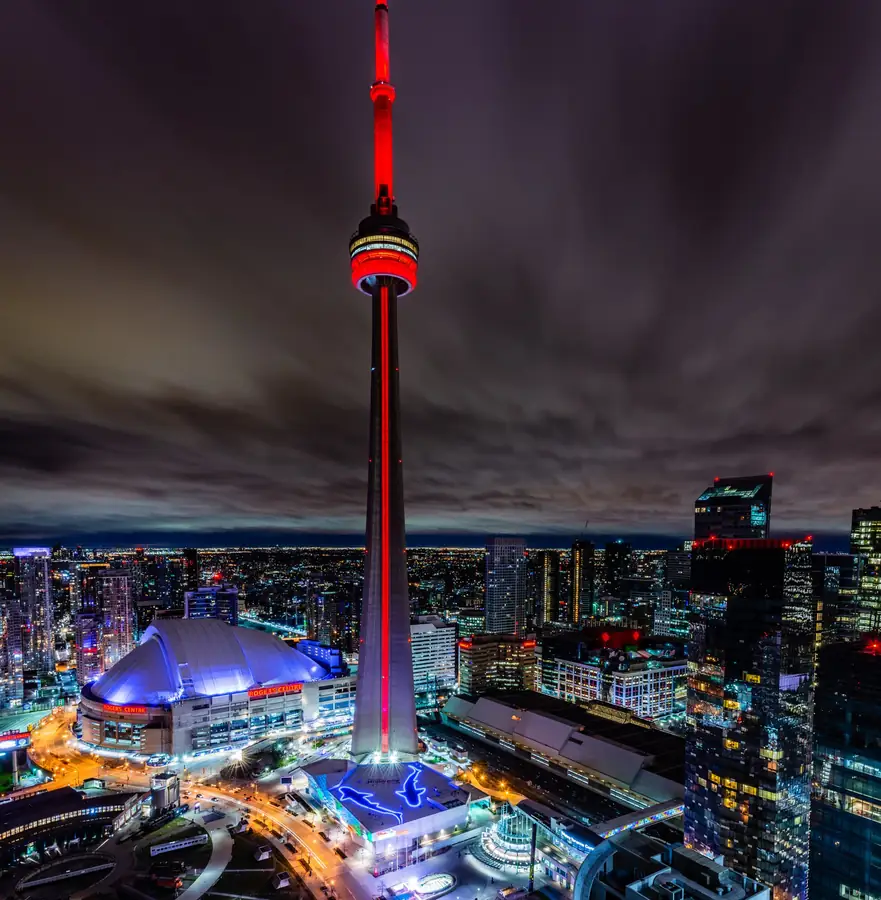
Canadian National Railways conceived this project in the early 1970s not as a tourist icon, but out of desperate necessity. The rapid rise of skyscrapers in the downtown core was wreaking havoc on radio and television signals, prompting engineers to design a structure that would clear every rooftop in the city. Construction began in 1973, involving a massive twenty-four-hour-a-day pour of concrete that saw the tower rise by nearly six meters every week. When the final piece of the antenna was bolted into place by a giant Sikorsky helicopter named 'Olga' in 1975, the tower officially became the tallest free-standing structure on the planet. For over three decades, it held that title, representing a moment of mid-century Canadian ambition that sought to outbuild the world from a former railway marshaling yard.
CN Tower, Canada
Commissioned by King Street
The ascent begins in a glass-floored elevator that rockets you upward at twenty-two kilometers per hour, leaving your stomach somewhere near the lobby. The first thing you register is the cityscape shrinking with a speed that feels slightly cinematic, the streetcars on King Street turning into tiny red husks. Once you reach the LookOut level, the air feels different, filtered by the immense height and the quiet hum of the building's internal systems. A remnant of the slight, intentional sway of the structure during high winds, a gentle reminder of the engineering flex required to keep this giant standing. Stepping onto the Glass Floor for the first time produces a physical jolt of vertigo that no amount of logic can soothe. The majority focus on the horizon, but looking straight down through the reinforced panes reveals the tiny, ant-like movement of tourists at the Rogers Centre next door. The light at sunset is particularly evocative, as the shadows of the financial district stretch out toward the islands while the sky turns a dusty violet. The curve of the earth on exceptionally clear days, a sight that makes the sprawling GTA feel like a small island of light in a vast, dark wilderness. The experience peaks at the SkyPod, where the silence of the high atmosphere provides a stark contrast to the chaotic energy of the streets far below.
CN Tower, Canada
Navigating to the tower
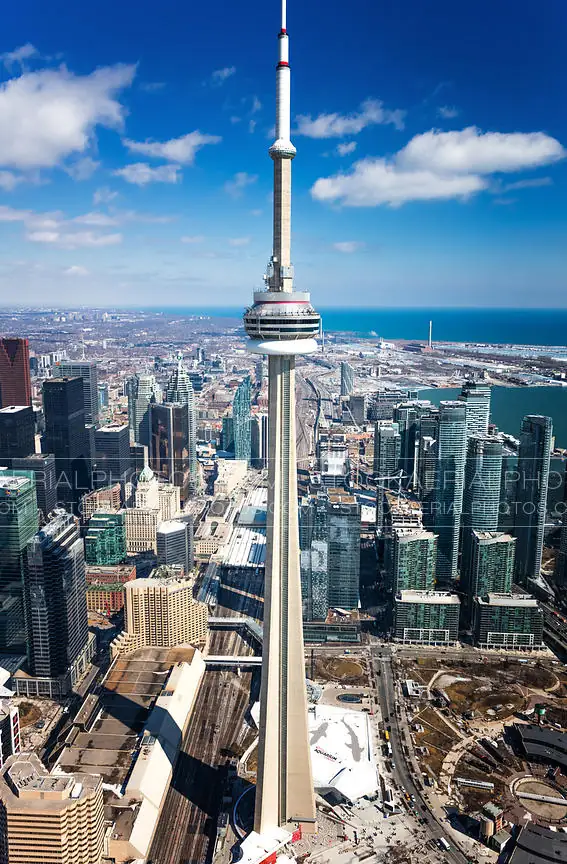
Navigating to the tower is a simple matter of following the horizon from almost anywhere in the city. It sits in central the Entertainment District, connected to Union Station via the SkyWalk, a climate-controlled glass tunnel that spares you from the biting wind of a Toronto winter. Pedestrians can easily reach the entrance from Front Street or Bremner Boulevard. For those arriving from the airport, the Union Pearson Express drops you mere minutes away from the base, making it an easy pilgrimage even for travelers on a long layover.
“Navigating to the tower is a simple matter of following the horizon from almost anywhere in the city.”
CN Tower, Canada
CN Tower, Canada
CN Tower, Canada
The Experience
The sound inside the observation deck is a muted, pressurized silence, occasionally broken by the excited gasps of travelers stepping onto the glass floor. Something like a strange sense of detachment from the world below, as if the cars and commuters belong to a different timeline entirely. Immediately, the wind whistling through the steel lattice of the upper antenna when you venture onto the outdoor terrace, a raw, cold breeze that carries the scent of the Great Lakes. Most visitors overlook the way the tower's lighting system changes; the 1,330 LED lights can produce millions of colors, often programmed to mark local triumphs or global tragedies. A remnant of the sheer density of the city as you trace the veins of the 401 highway stretching toward the horizon like a river of white and red light. The bit that stays with you is usually the transition back to ground level, where the sudden return of city noise and the immense verticality of the tower looming over you makes the world feel small again.
Why It Matters
The CN Tower is the definitive marker of Toronto’s maturity from a regional hub to a global metropolis. It matters because it represents a triumph of 1970s brutalist engineering that managed to be both functional and beautiful. Humanly, it serves as a North Star for residents, a constant geographic reference point that tethers the diverse neighborhoods of the city to a single, soaring center.
Why Visit
No other vantage point in North America offers this specific blend of urban density and glacial-scale water. You go to experience the unsettling thrill of the Glass Floor, but you stay because the tower provides the only possible way to truly comprehend the sheer, sprawling geography of the Golden Horseshoe in a single glance.
Insider Tips
- 1
Book a reservation at the 360 Restaurant to bypass the standard elevator lines and see the entire city rotate beneath your table in seventy-two minutes.
- 2
Check the local weather for 'visibility' rather than just sunshine; a bright day with high humidity can often result in a haze that obscures the distant shoreline.
- 3
Visit during a night with a home game at the Rogers Centre to watch the roof open from a literal bird's-eye view.
- 4
Look for the EdgeWalkers on the outside rim of the main pod; their orange jumpsuits are often the only splash of color against the grey concrete.
- 5
Arrive right at opening or during the dinner hour to avoid the heavy mid-day school groups and tour bus crowds.