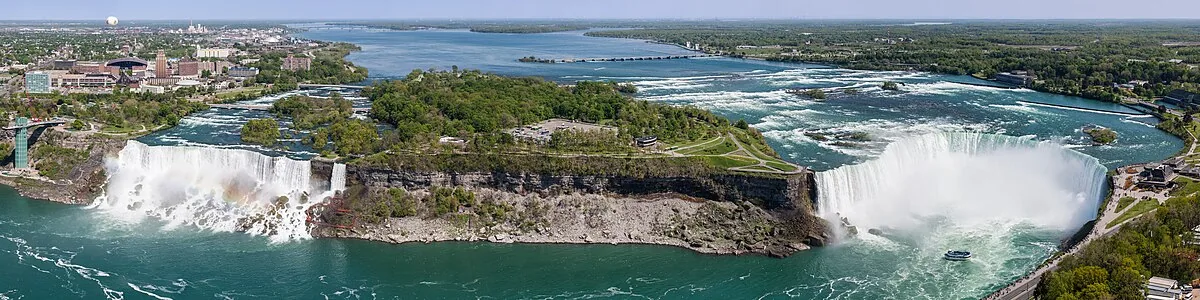
Six million cubic feet of emerald water collapse into the abyss every minute, generating a roar so deep it resonates in your bone marrow before you even glimpse the mist.
About Niagara Falls
The cataract was born from the retreat of the Wisconsin glacier, which left behind a massive drainage system that forced the Great Lakes to spill over the Niagara Escarpment. In the 1800s, the area became a draw for daredevils and 'stunt' tourism, with figures like Sam Patch leaping from ladders and Annie Edson Taylor famously surviving a tumble over the edge in a wooden barrel in 1901. Beyond the spectacles, the falls were the site of a revolutionary technological leap when Nikola Tesla and George Westinghouse harnessed the current to create the world's first large-scale alternating current power plant in 1895. This shift turned Niagara into a symbol of the modern age, proving that the planet's wildest forces could be converted into the electricity that fueled the industrialization of two nations.
About Niagara Falls
Six million cubic feet of water plummet over the limestone crest every sixty seconds, creating a thunderous vibration that in your chest long before seeing the river. Niagara Falls remains a colossal geological theater, a place where the sheer weight of the Great Lakes pours through a narrow bottleneck with terrifying grace. While the surrounding town hums with neon and tourism, the cataract itself exists in a state of prehistoric roar, shrouded in a permanent cloud of mist that creates its own microclimate. Near the edge of the Horseshoe Falls, the boundary between the solid earth and the liquid chaos of the abyss feels thin and exhilarating. Nearby, the stays perpetually damp, smelling of pulverized stone and ancient, cold freshwater.
Nature spent twelve thousand years carving this gorge as the glaciers retreated, but the human story is one of obsession and exploitation. Indigenous peoples had long revered the site as a spiritual epicenter before the French explorer Father Louis Hennepin first documented the sight for European ears in 1678. By the 19th century, the falls became the battlefield for the first great North American tug-of-war between industrial greed and environmental preservation. Visionaries like Frederick Law Olmsted fought to rescue the shoreline from a chaotic sprawl of gristmills and factories, eventually establishing the Niagara Parks Commission in 1885. This preservation effort ensured that the most dramatic curtain of water in the world remained accessible to the public rather than hidden behind a wall of private turbines. It echoes of our enduring desire to tame the wild while simultaneously being humbled by its power.
Walking toward the Table Rock Welcome Centre
Walking toward the Table Rock Welcome Centre, the soundscape transitions from the chirp of parkland birds to a low-frequency rumble that silences conversation. Right away you see how the sunlight catches the mist, fracturing into brilliant rainbows that dance across the emerald green water of the Niagara River. Looking over the railing, the scale of the drop is dizzying, with the water turning from a smooth glass-like sheet at the brink into a violent white spray at the bottom. The surface of the air changes as you get closer, growing heavy and cool even in the height of a Canadian summer. Taking the boat into the basin offers a more visceral perspective, where the roar becomes an all-encompassing wall of sound. A remnant of the spray stinging your face and hear the deep thud of the water hitting the rocks below, a sensation that makes the boat feel incredibly fragile. People typically overlook the quiet gardens of Queen Victoria Park just a few hundred yards from the brink, where the mist settles softly on the petals of seasonal blooms. The element that stays with you occurs at night when the falls are illuminated by multi-colored searchlights. The water transforms into a slow-motion cascade of liquid neon, making the prehistoric force look like something out of a dreamscape. Reaching the Canadian side of the falls is a straightforward journey from Toronto, usually involving a ninety-minute drive along the Queen Elizabeth Way or a scenic ride on the GO Train. The arrival into the city of Niagara Falls can feel jarringly commercial, but the transition into the Niagara Parks district immediately restores the sense of scale. Many visitors prefer the WEGO bus system, which connects the main hotels to the various lookout points along the Parkway. Along the manicured promenade remains the best way to soak in the shifting perspectives of the American and Horseshoe Falls at your own pace.
The Experience
The sound hits you first, a relentless, white-noise growl that seems to vibrate from the soles of your shoes upward. The mass of the cool kiss of the 'Niagara mist' on your skin even from the hotel balconies blocks away, a fine spray that carries the earthy tang of river silt. The part that hits is how the water at the very edge of the precipice turns a deep, translucent jade, a color so vivid it looks artificial against the white foam of the plunge. Most people miss the subtle geology of the gorge walls, where layers of shale and limestone tell a story of millions of years of erosion visible just behind the curtain of water. From the start, the frantic flight of gulls navigating the drafts created by the falling water, looking like small white sparks against the dark rock. What defines the trip is standing at the very corner of the Horseshoe Falls at dusk; as the crowds thin, the sheer, indifferent power of the planet feels intimate and terrifyingly close.
Why It Matters
Niagara represents the intersection of natural majesty and human engineering, serving as a global icon for the conservation movement. It matters as a rare place where the border between two nations is defined by a shared geological marvel rather than a political wall. Historically, it is the birthplace of the modern electrical grid and a enduring monument to the struggle between industrial utility and the intrinsic value of the wild.
Why Visit
The one thing a photograph can never capture: the vibration. You can see the images anywhere, but you must stand at the railing to feel the physical weight of the river shaking the earth. It is a rare opportunity to witness a landscape that is actively being destroyed and recreated by its own energy every single second.
✦ Photo Gallery
Best Season
🌤 Aim for late September or early October, when the humidity has cleared, the crowds have retreated, and the autumn colors of the Niagara Glen provide a fiery frame for the white water.
Quick Facts
Entry
Free to view the falls; attractions like the boat cruise are around 30+ CAD each.
Opening hours
The falls can be viewed at any time and are illuminated at night; individual attractions have seasonal hours.
Time needed
About half a day to a full day with attractions.
Best time to visit
Aim for late September or early October, when the humidity has cleared, the crowds have retreated, and the autumn colors of the Niagara Glen provide a fiery frame for the white water.
Getting there
On the Canada-US border; the Canadian side is at Niagara Falls, Ontario, reachable by car or train from Toronto in around 1.5 to 2 hours.
What's nearby
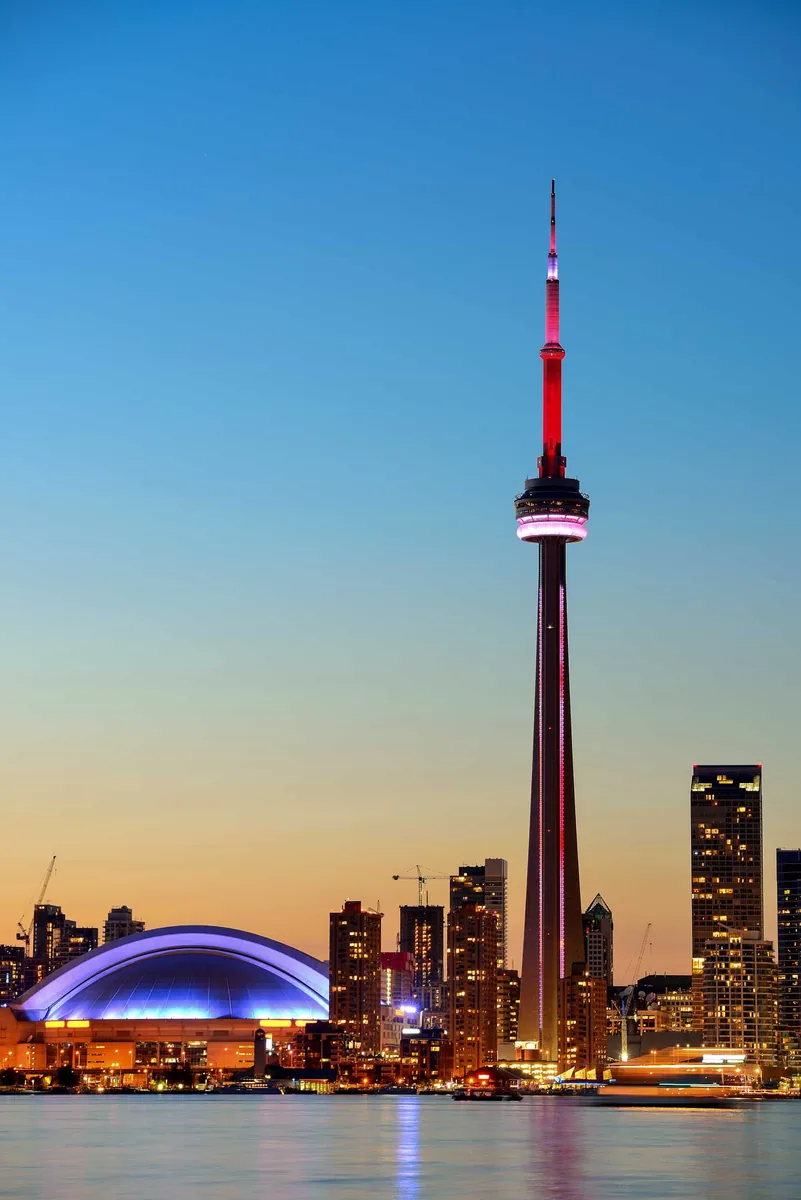
CN Tower is also close by.
Location
Niagara Falls, Canada
Type
attraction
Coordinates
43.0600°, -79.1067°
Insider Tips
- 1
Take the early morning 'Journey Behind the Falls' to stand on the lower observation deck before the mist becomes a complete white-out from the afternoon winds.
- 2
Walk the White Water Walk along the boardwalk in the lower gorge to see the Class 6 rapids, which are often more terrifying than the falls themselves.
- 3
Eat in the nearby town of Niagara-on-the-Lake instead of the immediate tourist district for better value and a more authentic local atmosphere.
- 4
Watch the evening illumination from the gardens near the Floral Showhouse to avoid the densest crowds at Table Rock.
- 5
Look for the 'Illumination Tower' across the street; it’s a former 1920s surge tower that now houses the massive searchlights used to color the falls.