A thunderous avalanche on a distant glacier once led a railway worker to discover a body of water so vivid he initially refused to believe the color was natural.
About Lake Louise
Named for Queen Victoria’s fourth daughter, the lake began its life as a tourist destination as a simple log cabin built by the Canadian Pacific Railway in 1890. It was the railway's vice president, William Cornelius Van Horne, who envisioned the site as a 'getaway for the outdoor adventurer,' eventually importing professional Swiss mountain guides in 1899 to ensure the safety of wealthy European guests. These guides constructed the high-altitude trails and the Lake Agnes Tea House, which still serves hikers over a century later. The current Fairmont Chateau Lake Louise, with its iconic arched windows and ballroom, was built in stages after a series of fires in the early 1900s. The site remains a protected centerpiece of Canada’s first national park, maintaining a delicate balance between luxury hospitality and strict environmental conservation of the surrounding grizzly bear corridors.
Lake Louise in Canada
Glacial flour suspended in the meltwater turns the surface of the lake into an opaque, impossible turquoise that seems to glow even under the heavy grey of a Rocky Mountain storm. Lake Louise sits cradled by a ring of high peaks, dominated by the massive, ice-scarred face of Mount Victoria at the far end of the valley. Here, A sharp, pine-scented chill that never quite leaves, even in the height of August. From the shore, the scale of the landscape feels humbling as the Victoria Glacier looms like a frozen wave about to break. It is the crown of Banff National Park, where Victorian elegance meets the raw, unyielding granite of the Canadian wilderness.
“Glacial flour suspended in the meltwater turns the surface of the lake into an opaque, impossible turquoise that seems to glow even under the heavy grey of a Rocky Mountain storm.”
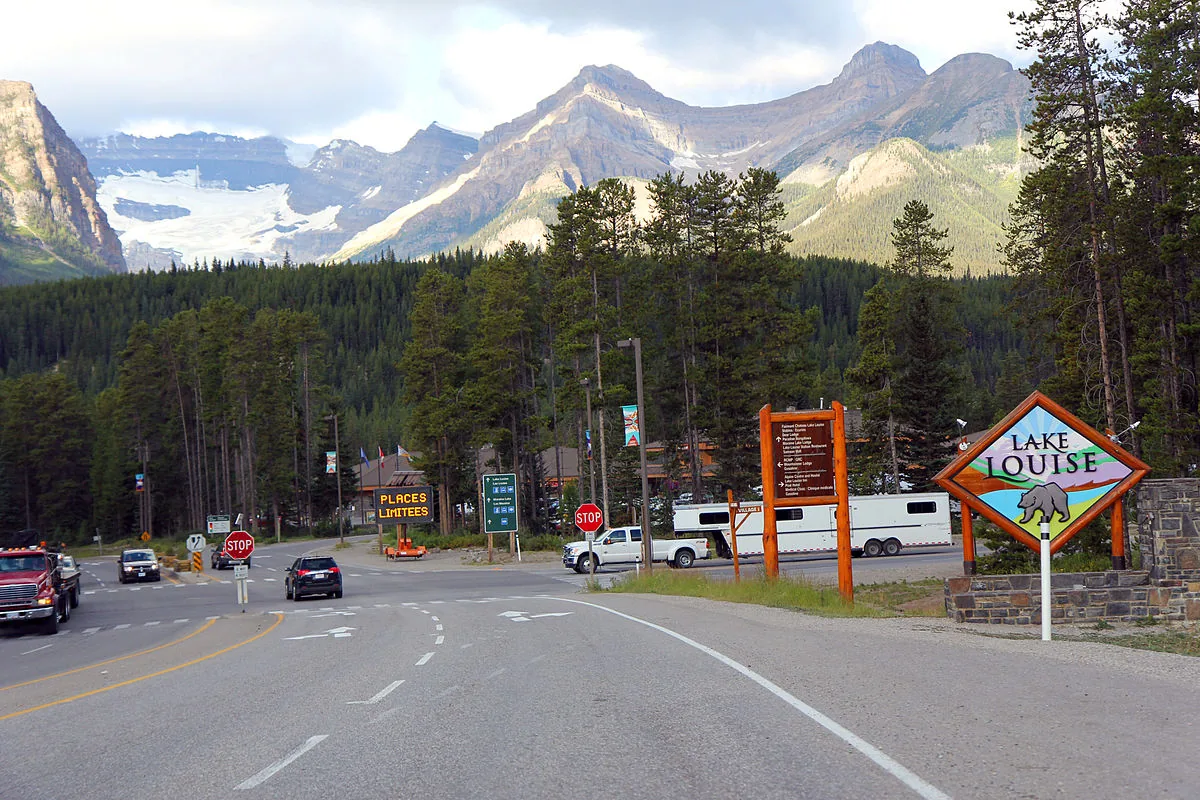
Lake Louise, Canada
of distant avalanches, 1882
Stoney Nakoda First Nations people knew this water as the 'Lake of Little Fishes' long before a Canadian Pacific Railway worker named Tom Wilson was guided here by the sound of distant avalanches in 1882. Wilson originally named it Emerald Lake, but the British Crown later renamed it to honor Princess Louise Caroline Alberta, the daughter of Queen Victoria. The early days of the landmark were defined by rugged mountain men and Swiss guides brought over to lead socialites into the high alpine. These pioneers built the first wooden shack that would eventually evolve into the sprawling, chateau-style grand hotel that stands today. Throughout the early 20th century, Lake Louise became the birthplace of Canadian mountaineering, attracting those who sought to test their mettle against the treacherous cracks of the Abbot Pass. This history is etched into the very stones of the lodges and the trails that wind upward into the clouds.
The crunch of fine gravel under your boots
The crunch of fine gravel under your boots provides the rhythmic soundtrack to your first walk along the shoreline. What emerges is the silence that settles over the water in the early morning, a stillness so profound that the reflection of the mountains looks more solid than the peaks themselves. As the sun rises, the light hits the glacier, turning the ice into a blinding white that bleeds into the deep blue of the sky. You come across a temperature drop significantly moving into the shadows of the larch trees, where the smell of damp earth and moss becomes heavy and intoxicating. Following the trail toward the Plain of Six Glaciers, the crowds of the hotel plaza begin to fade into the distance. At first, the sound of rushing meltwater as small streams weave through the rocks, and occasionally, the sharp crack of shifting ice echoes from high above. The majority overlook the subtle changes in the water's hue throughout the day, which shifts from a milky jade to a deep, jewel-like sapphire as the sun moves across the valley. What lingers with you is usually found at the Agnes Lake Tea House, holding a warm mug of tea while watching the mist roll over the 'Big Beehive.' It feels like a world caught between the civilized comfort of a grand estate and the ancient, indifferent power of the ice.
Reaching this alpine sanctuary involves a scenic drive
Reaching this alpine sanctuary involves a scenic drive along the Trans-Canada Highway from Banff, a journey that climbs steadily through some of the most dramatic mountain scenery in North America. Since parking at the lakeshore has become nearly impossible for personal vehicles during the peak months, most travelers rely on the Parks Canada shuttle service from the village or the overflow lot. The arrival at the lakefront is a sudden reveal, as the trees part to show the water framed perfectly by the valley walls. Walking remains the only way to explore, with a network of well-maintained trails fanning out from the Fairmont Chateau toward the high-altitude vistas and historic tea houses.
“Reaching this alpine sanctuary involves a scenic drive along the Trans-Canada Highway from Banff, a journey that climbs steadily through some of the most dramatic mountain scenery in North America.”
The Experience
The soundscape at Lake Louise is a curious mix of the gentle splash of red canoes in the water and the occasional, distant roar of falling ice from the Victoria Glacier. The thinness of the alpine air in your lungs as you ascend the switchbacks, a sensation accompanied by the resinous scent of Subalpine Fir. What hits is the way the water feels almost silken to the touch, a deceptive softness for a lake that rarely rises above four degrees Celsius. Most travelers miss the tiny pikas whistling from the rock slides near the upper tea house, busy collecting grasses for the long winter ahead. First, the quality of light at dusk, when the peaks turn a bruised purple and the lake settles into a ghostly, glowing turquoise. The detail that lingers is often the realization of how small you are beneath the sheer verticality of the surrounding rock faces, a feeling that is both terrifying and deeply peaceful.
Why It Matters
Lake Louise serves as the ultimate symbol of the Canadian wilderness, a place where the grandeur of the Rockies is concentrated into a single, perfect frame. It matters because it represents the birth of the North American conservation movement, proving that some landscapes possess a beauty so absolute that they demand federal protection. Humanly, it is a product of the explorers and guides who mapped the high alpine, turning a formidable obstacle into a place of profound inspiration.
Why Visit
Visit Lake Louise to see a color that shouldn't exist in nature. While other lakes in the Rockies are beautiful, none possess the cathedral-like symmetry of this valley or the dramatic backdrop of a hanging glacier. It is the only place where you can experience the elegance of a century-old grand hotel and be on a rugged mountain ridge within the same hour.
Insider Tips
- 1
Board the very first shuttle from the village at 6:30 AM to witness the lake before the reflective surface is broken by the wake of the rental canoes.
- 2
Hike past the crowded lakeshore trail to the Plain of Six Glaciers Tea House, where the sound of active glaciers replaces the noise of the tour groups.
- 3
Avoid the hotel's main dining rooms during lunch and instead grab a sandwich from the 24-hour deli to eat on the rocks of the far north shore.
- 4
Look for the mountain goats on the cliffs of the 'Big Beehive'; they often appear as tiny, moving white spections against the grey granite.
- 5
Pack a light down jacket even in July, as the wind coming off the glacier can drop the temperature by ten degrees in a matter of minutes.