“Thirty thousand people once scrambled across this frozen mudbank to find their fortune, leaving behind a city of leaning Victorian mansions that the permafrost is slowly trying to reclaim.”
About Dawson Historical Complex
The discovery of gold on Bonanza Creek in August 1896 ignited the largest mass migration of the era, turning a remote swamp into the largest Canadian city west of Winnipeg almost overnight. By 1898, Dawson City was a fully realized urban center with electricity, telephone service, and grand hotels, all built on ground that stayed frozen year-round. This geographical reality became the town's greatest challenge; as buildings heated the ground, the ice beneath melted, causing the structures to sink and tilt. When the secondary gold rush in Nome, Alaska, lured the crowds away in 1899, Dawson was left as a ghost of its former self. The historical complex was formally designated in 1959 to protect the core architecture, including the Robert Service Cabin and the old Territorial Administration Building, which now serves as a museum housing the archives of a frantic, fleeting era.
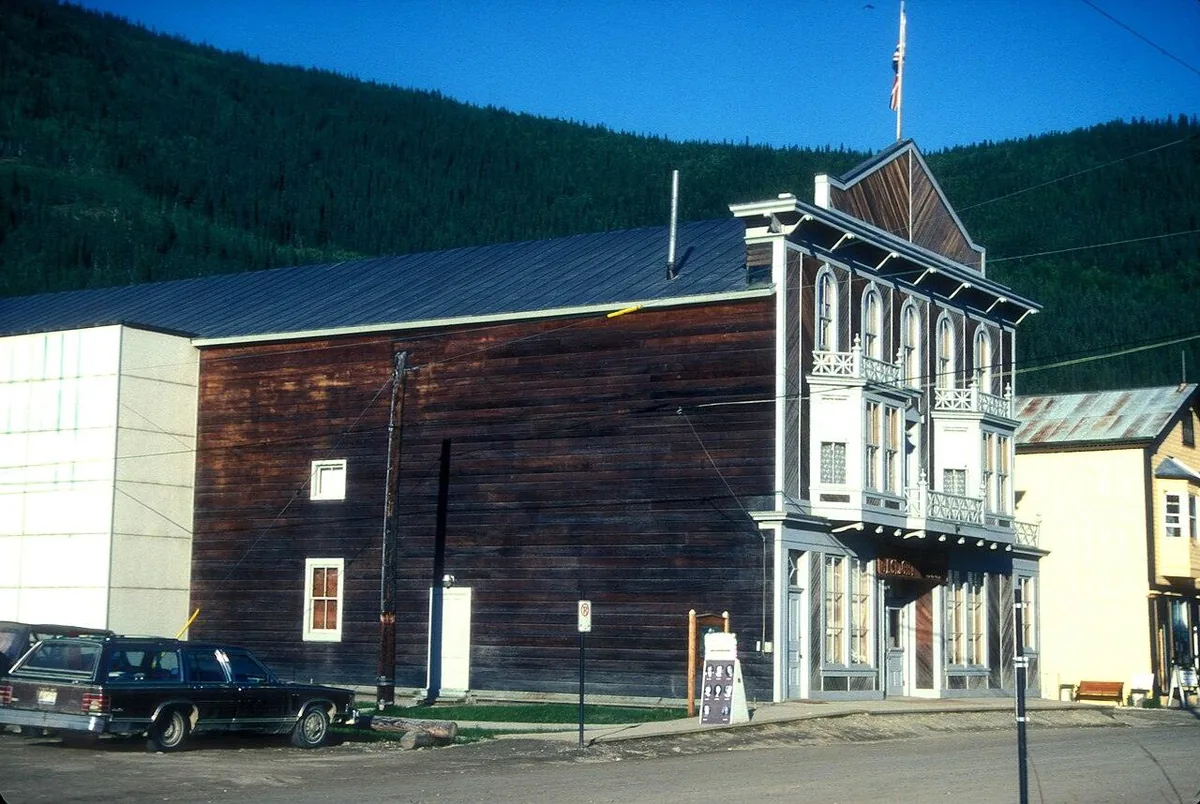
False-fronted wooden shops lean at precarious
False-fronted wooden shops lean at precarious angles along dusty streets where the permafrost refuses to let the architecture settle. Dawson City exists as a living anomaly on the banks of the Yukon River, a place where the fever of the 1898 Klondike Gold Rush has been preserved in amber and weathered cedar. The historical complex isn't a walled-off museum but a sprawling grid of seventeen distinct blocks where Victorian elegance clashes with the raw, northern wilderness. Walking these wooden boardwalks feels like navigating a theatrical set that forgot to close after the final curtain. Nearby, the smells of silt, river water, and the dry, sweet scent of aging timber, all carried on a subarctic breeze that reminds you how far you have traveled from the modern world.
False-fronted wooden shops lean at precarious angles along dusty streets where the permafrost refuses to let the architecture settle.
on the mudflats, 1896
Joseph Ladue founded this townsite on the mudflats in 1896, just as the first whispers of gold reached the outside world. Within two years, a desolate fish camp transformed into the 'Paris of the North,' a metropolis of 30,000 dreamers, gamblers, and entrepreneurs. The buildings were raised with frantic speed, often using lumber that was still green, which accounts for the beautiful, undulating silhouettes you see today. When the gold ran out and the population plummeted to nearly nothing, the dry northern air and the sheer isolation of the Yukon acted as a natural preservative. Parks Canada stepped in during the 1960s to stabilize the heart of the town, ensuring that the Commissioner’s Residence and the old Post Office didn't collapse into the muskeg.
The hollow thud of your boots
The hollow thud of your boots on the wooden sidewalks provides a steady rhythm passing the Palace Grand Theatre. The standout is the way the light in mid-summer never vanishes, casting a surreal, copper glow over the tin-sided warehouses at three in the morning. The silence of the Yukon night is deep, occasionally broken by the distant howl of a sled dog or the creak of a building shifting an inch further into the soil. Inside the old bank, the brass fixtures and dark mahogany counters remain as they were when miners weighed their dust against the price of a winter's survival. Walking toward the outskirts, The 'arrested decay' of the abandoned houses, where lace curtains still hang behind cracked glass panes. Almost all visitors stick to the packed saloons, but the real power of Dawson is felt in the quiet residential blocks where the wild roses are slowly swallowing the porches. A strange sense of temporal distortion, as if the gold seekers who left a century ago might return at any moment to reclaim their boots. What stays with you is standing on the riverbank as the paddlewheeler Keno looms in the twilight, its giant wooden wheel barely changed since while the silt-heavy Yukon River continues its relentless journey toward the Bering Sea.
Reaching this northern outpost is an odyssey
Reaching this northern outpost is an odyssey in itself, requiring a flight into the tiny Dawson City airport or a long, spectacular drive up the Klondike Highway from Whitehorse. The road winds through five hundred kilometers of boreal forest and river valleys, preparing you for the isolation of the destination. During the short summer months, a small ferry shuttles vehicles across the river to the Top of the World Highway, a route that keeps you high on the ridges with views that stretch toward Alaska. Once in town, the only way to explore the complex is on foot, embracing the dust of the unpaved streets as part of the authentic Klondike experience.
Reaching this northern outpost is an odyssey in itself, requiring a flight into the tiny Dawson City airport or a long, spectacular drive up the Klondike Highway from Whitehorse.
The Experience
The space in Dawson feels thinner and cleaner than anywhere else, carrying a hint of woodsmoke even in the height of July. You find the grit of the unpaved streets beneath your soles, a deliberate choice by the community to maintain the 19th-century atmosphere. What you catch first is the way the buildings seem to huddle together for warmth, their brightly painted false fronts concealing the modest log structures behind them. Most travelers overlook the small details, like the iron hitching posts still embedded in the ground or the way the sidewalk suddenly drops six inches where the permafrost has shifted. A weight of the winter when you look at the thickness of the cabin walls and the tiny windows designed to keep the heat in. The bit that lingers is often found at the Sourdough Saloon, watching the shadows of the old buildings stretch across the dirt road as the sun refuses to set, a surreal experience that makes the Klondike feel less like a place and more like a fever dream.
Why It Matters
The Dawson Historical Complex matters as a rare, large-scale example of a boomtown that survived its own obsolescence. It is a monument to human endurance and the frantic search for wealth in a landscape that was never meant to support an urban population. Humanly, it represents the grit of the 'Sourdough' pioneers who stayed when the gold was gone, creating a community in the most beautiful, unforgiving corner of the continent.
Why Visit
Visit Dawson City because it is the only place in the world where you can walk through a functional, modern town that looks exactly like a sepia-toned photograph from the 1890s. While other historical sites are replicas, this is the original stone and timber. You come for the gold rush stories, but you stay for the strange, magnetic energy of a place that feels like it exists outside of ordinary time.
✦ Insider Tips
- 1
Walk the Ninth Avenue trail at dawn to see the town's tilted rooflines silhouetted against the Yukon River without the distraction of modern vehicles.
- 2
Look for the 'Kissing Buildings' on Front Street, two structures that have leaned into each other over decades due to the shifting permafrost.
- 3
Visit the Commissioner’s Residence in the late afternoon when the low sun illuminates the vintage wallpaper and period furniture inside.
- 4
Avoid the main gravel roads and explore the back alleys behind the churches to find the authentic cabins where the miners actually lived.