“British planners designed this town on a flat piece of paper in London, but the settlers arrived to find a hillside so steep that the streets nearly verticalize into the Atlantic.”
About Old Town Lunenburg
The town began as a strategic pawn in the struggle for North America, settled by nearly 1,500 Europeans who were promised land and freedom in exchange for securing the territory for the British Crown. Unlike the surrounding Acadian settlements, Lunenburg was designed on a strict rectangular grid, a hallmark of the 'Model Town' plan used throughout the British Empire. By the mid-1800s, the community had mastered the art of the wooden schooner, launching hundreds of vessels that dominated the North Atlantic fishing banks. The 1995 UNESCO designation was earned not just for its architecture, but for the preservation of its original purpose; it remains a working port where the heritage of the sea is a modern industry rather than a museum exhibit.
What Old Town Lunenburg actually is
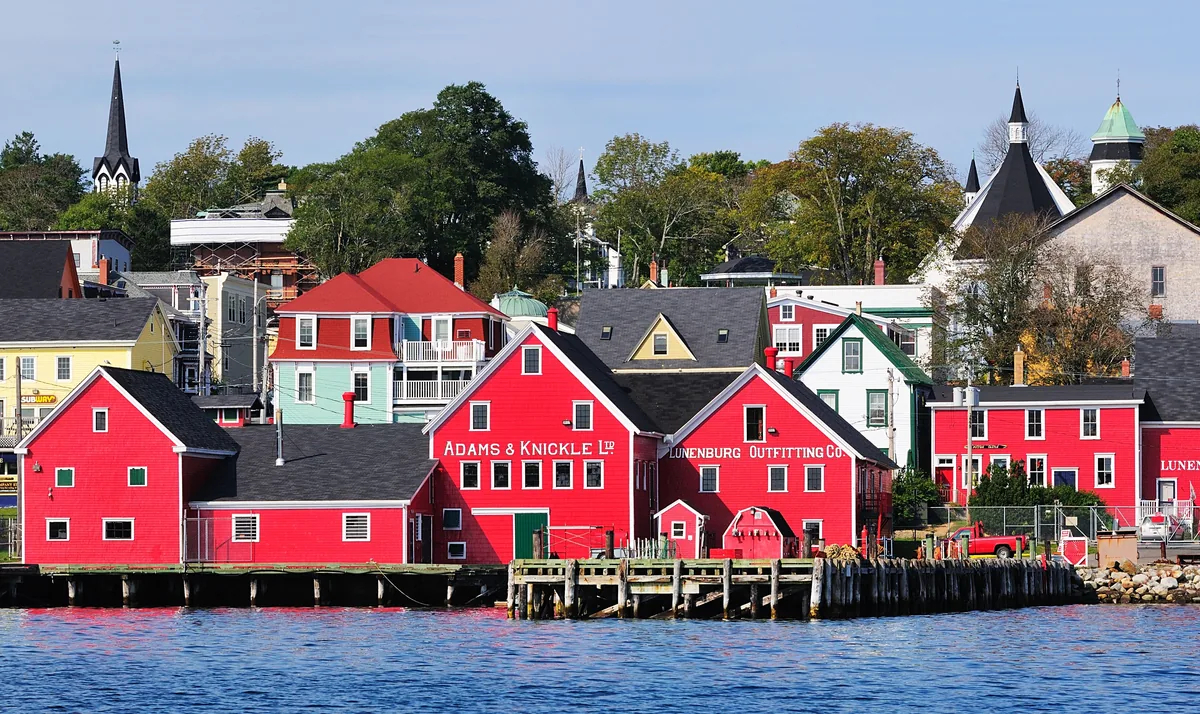
Brightly painted facades in shades of oxblood, mustard, and cerulean rise steeply from the dark waters of the Atlantic, creating a geometric jigsaw puzzle that has remained largely unchanged since the eighteenth century. Old Town Lunenburg is the finest surviving example of a British colonial model settlement, though its soul is decidedly more maritime than imperial. The surroundings here smells of drying salt, woodsmoke, and the cured timber of shipyards. Walking the rigid grid of streets, the incline in your calves moving from the crowded harbor to the stately wooden churches that crown the hill. This town was built by hands that understood the temperament of the sea, and that seafaring pragmatism is etched into every oversized dormer window and hand-hewn beam.
Old Town Lunenburg is the finest surviving example of a British colonial model settlement, though its soul is decidedly more maritime than imperial.
established this settlement, 1753
British authorities established this settlement in 1753 by recruiting 'Foreign Protestants' from Germany, Switzerland, and the Montbéliard region of France, hoping to create a loyal farming community in central Acadia. These settlers arrived with plowshares but quickly traded them for fishing nets and shipwright’s saws. They adapted the rigid London-designed town plan to a vertical landscape that was never meant for straight lines, resulting in the charmingly steep streets that define the town today. Over the following centuries, Lunenburg evolved into a global powerhouse of wooden shipbuilding, culminating in the birth of the Bluenose in 1921. This legendary racing schooner became a national symbol, and the shipyards that produced it still hum with activity, maintaining a continuous line of craftsmanship that stretches back over 270 years.
The harbor is a living stage where
The harbor is a living stage where the creak of rigging and the low throb of fishing boat engines provide a constant acoustic backdrop. What registers is how the fog can swallow the town in seconds, turning the vibrant houses into ghostly outlines before the sun burns through to reveal the brilliant white trim of the Lunenburg Academy. Along the waterfront, the texture of the town is found in the rough grain of weathered wharf planks and the smooth, cold iron of anchors resting on the grass. Climbing the hill toward St. John’s Anglican Church, the atmosphere shifts from maritime grit to ecclesiastical grandeur. The history of the place in the 'Lunenburg Bump,' those distinctive overhanging dormer windows that were built to allow homeowners to see who was knocking at the door without stepping out into the rain. People typically linger by the souvenir shops, but the real magic resides in the quiet residential alleys where the sound of a wood plane might still be heard from a backyard shed. The element that stays with you is standing on the opposite shore at dusk, watching the town’s reflection shimmer in the harbor like a sunken chest of multicolored jewels. Reaching this UNESCO World Heritage site requires a pleasant hour-long drive south from Halifax along the Lighthouse Route. The road winds past rocky inlets and stands of balsam fir, eventually revealing the iconic red buildings of the Fisheries Museum of the Atlantic. Many visitors prefer to arrive by sea, mirroring the entrance of the original settlers, though most now come via the Bluenose II when she is in port. Once you arrive, the town is best navigated on foot, though you should be prepared for the steep gradient that separates the water from the skyline.
The Experience
The smell of pine tar and sea salt clings to your clothes after just an hour on the waterfront. You register the rhythmic hammering from the nearby foundries, a sound that has echoed across this harbor for two centuries without pause. The resistance of the cobblestones underfoot, many of which arrived as ballast in the bellies of sailing ships from across the ocean. Most people miss the 'black magic' of the local architecture, the charred timber used in some foundations to repel rot and pests. What grabs you is the way the light hits the stained glass of the churches at mid-day, casting vibrant patterns across the old-growth wooden pews. The piece that stays with you is the sudden, deep silence of a Lunenburg fog, where the only thing you can see is the dim glow of a harbor light and the only thing you can hear is the distant, mournful low of a bell buoy.
The smell of pine tar and sea salt clings to your clothes after just an hour on the waterfront.
Why It Matters
Old Town Lunenburg matters as a rare, intact survivor of the colonial era that has resisted the urge to become a polished caricature of itself. It is a product of the ingenuity of the 'Foreign Protestants' who adapted a rigid imperial design to a rugged, maritime reality. Humanly, it represents a unbroken chain of wooden shipbuilding knowledge that is nearly extinct elsewhere in the Western world.
Why Visit
Visit Lunenburg to see a town that still looks and sounds like a 1753 master plan come to life, but with the vibrant energy of a modern fishing fleet. You go to see the red-walled Fisheries Museum, but you stay because the town offers a visceral connection to the age of sail that you can't find in the glass-and-steel harbors of the twenty-first century.
✦ Insider Tips
- 1
Walk to the golf course across the harbor at sunset to get the famous postcard view of the town's multicolored waterfront reflecting in the water.
- 2
Look for the 'Lunenburg Bump' on houses; it is a local architectural quirk where a second-story dormer is built directly over the front door.
- 3
Visit the iron foundry near the waterfront to see where the heavy metal hardware for traditional sailing ships is still manufactured using age-old techniques.
- 4
Check the schedule of the Bluenose II before you arrive; she is often out at sea, but standing on her deck when she is docked is the town's ultimate experience.
- 5
Try the local 'Lunenburg Pudding' or 'Solomon Gundy' at a dockside tavern for a taste of the German-settler culinary heritage that persists today.