Underneath the churning surface where a freshwater fjord meets a saltwater estuary, a permanent population of ivory-white belugas navigates a labyrinth of ancient, submerged granite canyons.
About Saguenay–St. Lawrence Marine Park
Indigenous peoples, including the Innu, have considered these waters a sacred larder for thousands of years, navigating the dangerous currents with an intimate knowledge of the tides. The arrival of European explorers in the 1500s turned the area into a frantic hub for the fur trade and commercial whaling, particularly at the mouth of the Saguenay. By the 1970s, the resident beluga population had plummeted to near extinction due to chemical runoff from upstream industries. Local advocacy and scientific alarm led to the 1998 legislation that created the marine park, a unique legal entity that manages the water column and the seabed rather than just the land. This shift in perspective has allowed the ecosystem to stabilize, making it one of the most successful examples of marine co-management in the world.
Deep, frigid currents from the Atlantic surge into the mouth of the Saguenay Fjord, colliding with the fresh drainage of the Canadian Shield to create a biological engine unlike any other on the continent. Saguenay–St. Lawrence Marine Park protects this invisible underwater architecture where gargantuan granite cliffs plunge into depths that remain perpetually shrouded in cold and salt. The surface of the water often wears a skin of thick, silver mist that tastes of brine and spruce needles. On the rocky shore at Baie-Sainte-Catherine, The raw power of the tides as they churn up nutrients, drawing some of the world's largest mammals into a narrow, dramatic corridor. This park proves that a landmark does not need to be a mountain or a building; it can be a specific, vibrant collision of two rivers that has sustained life for millennia.
“Lawrence Marine Park protects this invisible underwater architecture where gargantuan granite cliffs plunge into depths that remain perpetually shrouded in cold and salt.”
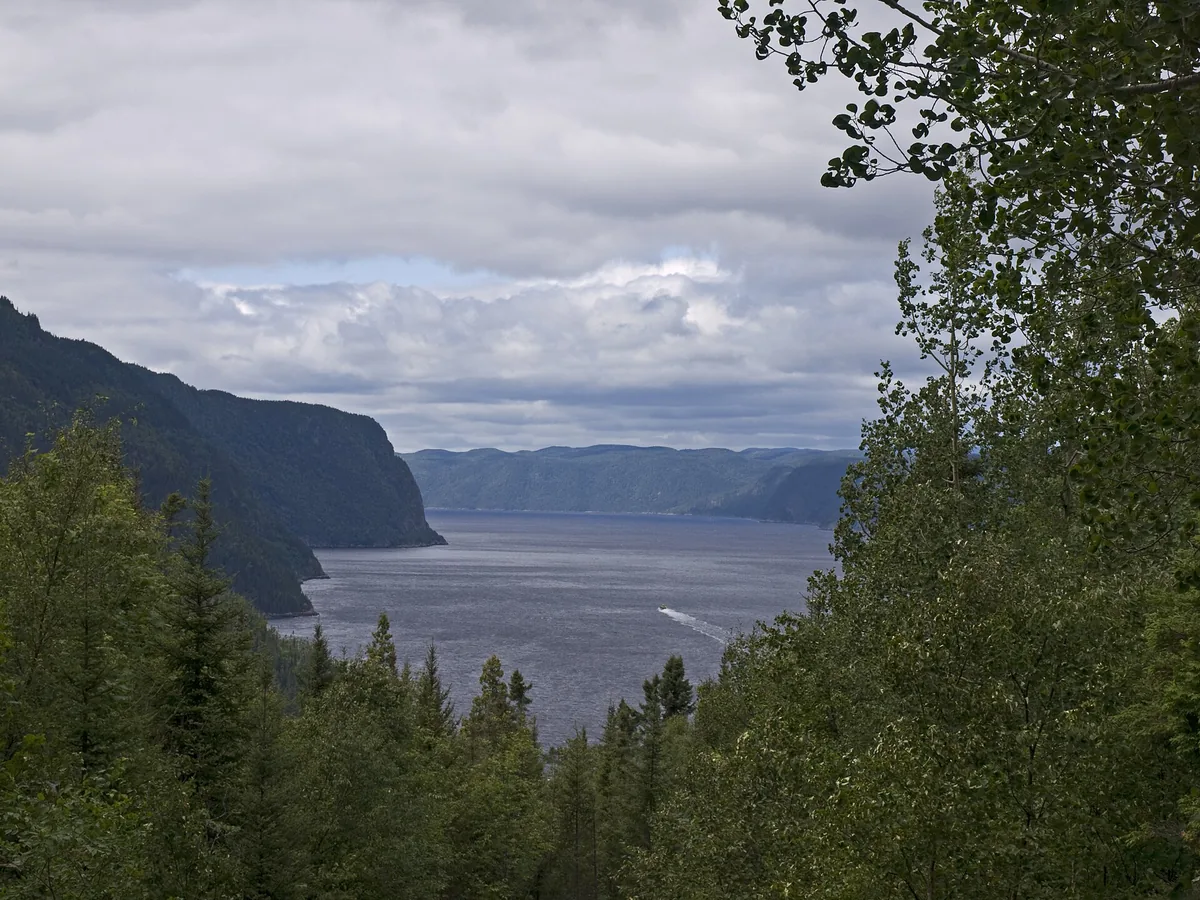
Saguenay–St. Lawrence Marine Park, Canada
Basque whalers were hunting these waters long before the official records of New France began, drawn by the same leviathans that bring travelers here today. Across centuries, the confluence of the Saguenay and the St. Lawrence was a vital trade artery, but by the mid-twentieth century, industrial pollution and unregulated shipping began to choke the delicate ecosystem. The park’s creation in 1998 marked a revolutionary moment in Canadian conservation, as it was the first park in the country established specifically to protect a marine environment through a partnership between federal and provincial governments. It was a response to the dire plight of the St. Lawrence beluga, a small, white whale that has become a symbol of the region's fragile beauty. Today, the park is a highly regulated sanctuary where shipping lanes are diverted and speed limits are enforced, prioritizing the acoustic and physical safety of the whales over the convenience of commerce.
Reaching this marine wilderness requires
Reaching this marine wilderness requires a journey to the Charlevoix or Côte-Nord regions of Quebec, following the scenic Route 138 as it hugs the northern shore of the St. Lawrence. The ferry crossing at Tadoussac is the gateway, a short but dramatic transit where the dark waters of the fjord first meet the blue of the estuary. Many travelers arrive by car from Quebec City, a three-hour drive through rolling farmland and jagged coastal hills. Once you arrive in the villages of Tadoussac or Les Bergeronnes, the park is best explored through a combination of shoreline hiking and guided boat excursions that respect the strict distance regulations designed to protect the resident whale populations.
Visiting Saguenay–St. Lawrence Marine Park
The sound of a whale’s blow, a sudden, percussive exhale that echoes off the fjord walls, is the definitive soundtrack of this landscape. The way the light catches the arc of a humpback’s tail, turning the falling water into a spray of liquid diamonds against the dark, iron-grey sea. Here, the air is surprisingly cold, even in the height of August. As you kayak along the edges of the Saguenay, the scale of the cliffs makes like a speck of driftwood, their surfaces scarred by glacial ice and topped with resilient, wind-stunted pines. Following the coastal trails at Cap de Bon-Désir, The rhythmic lap of the water against the flat, sun-warmed rocks where harbor seals often haul themselves out to rest. People generally stay on the large observation boats, but the most intimate moments happen from the shore, where you can sit in total silence and wait for a white beluga to break the surface. Part of the immense, heavy depth of the water beneath you, a collection of shadows and currents that remains largely invisible to the human eye. The moment that stays with you is the sight of a mother beluga and her grey calf gliding through the kelp forests, a quiet confirmation that this sanctuary is doing exactly what it was designed to do.
The Experience
The air carries a sharp, invigorating scent of decaying seaweed and cold Atlantic salt that clears your lungs instantly. The mass of the spray of the estuary on your face as the wind picks up, a trace of the massive scale of this inland sea. The opening note is the subtle color changes in the water, from the tea-colored tannins of the Saguenay to the deep, oceanic blue of the St. Lawrence. Most travelers overlook the tide pools at low tide, which are miniature universes of colorful anemones and sea urchins clinging to the granite. A sense of profound patience as you sit on the rocks, your ears straining for the soft 'pouf' of a whale's breath in the distance. The bit that stays with you is seeing the jagged silhouette of the fjord disappear into a bank of sea fog, leaving you alone with the sounds of the water and the invisible giants beneath it.
Why It Matters
Saguenay–St. Lawrence Marine Park matters as a global model for the protection of migratory and resident marine mammals within a busy shipping corridor. It is a rare place where the needs of the natural world have been legally prioritized over industrial growth. Culturally, it preserves the maritime heritage of Quebec’s coastal villages while fostering a modern ethic of environmental stewardship.
Why Visit
Check out this park because it offers a rare opportunity for terrestrial whale watching; you can literally sit on a rock with a coffee and watch a blue whale pass just meters away. It provides a visceral connection to the ocean's depth without ever leaving the shoreline. You go for the leviathans, but you stay for the haunting beauty of the fjord's dark, silent waters.
Insider Tips
- 1
Listen for the underwater sounds at the CIMM museum in Tadoussac before you go out; it helps you recognize the specific acoustic world of the whales.
- 2
Wear more layers than you think necessary; the temperature drop on the water can be twenty degrees lower than on the mainland.
- 3
Take the free ferry across the fjord mouth between Baie-Sainte-Catherine and Tadoussac at dawn for a chance to see minke whales in the early light.
- 4
Visit the Pointe-Noire Interpretation and Observation Centre for the best vantage point to see the distinct line where the two rivers collide.