“Pingyao was China's banking capital in the 19th century. When the piaohao remittance system collapsed after 1911, the city stagnated, and the Ming dynasty street plan, city walls, and courtyard houses survived intact because there was no money to replace them.”
About Ancient City of Pingyao
A Ming-era walled city that became the center of China's draft banking system (piaohao) during the Qing dynasty. The first Chinese bank, Rishengchang, was established here in 1823. Economic decline after 1911 preserved the built fabric that modernization erased elsewhere. UNESCO World Heritage Site since 1997.
What Ancient City of Pingyao actually is
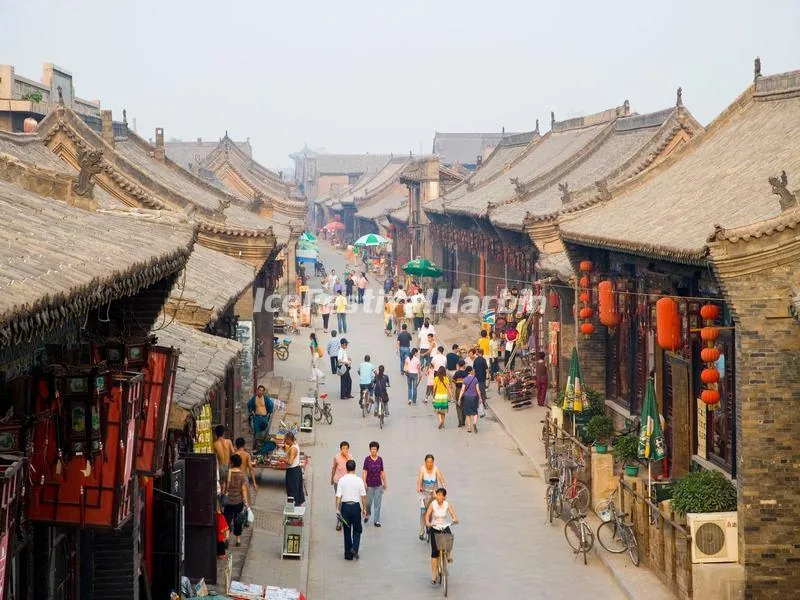
Pingyao in Shanxi Province is the best-preserved Ming dynasty walled city in China, a 2.25-square-kilometer urban core surrounded by a six-meter-high wall, where the street plan, courtyard houses, and commercial architecture from the fourteenth to the twentieth century survived largely intact because the city declined economically before modernization could replace them. It received UNESCO status it a World Heritage Site in 1997.
It received UNESCO status it a World Heritage Site in 1997.
Origins
Pingyao became wealthy during the Qing dynasty as the center of China's draft banking system, the piaohao, or remittance banks, that moved money across the empire before the modern banking system existed. The Rishengchang Exchange Shop, established in Pingyao in 1823, was the first institution of this type and effectively functioned as China's first bank. At the system's peak, Pingyao's banks held accounts in offices across China, Russia, Mongolia, and Japan. The collapse of the piaohao system in the early twentieth century, undermined by modern banking and the instability following the 1911 revolution, left Pingyao economically stagnant. The stagnation preserved the built fabric that would otherwise have been demolished in the development decades that followed.
The walled city is walkable in its entirety.
The main commercial street (Mingqing Street) runs east-west through the center with preserved shop fronts from the banking era. The City God Temple, the Confucian Temple, and multiple piaohao bank museums occupy the principal historic buildings. The city wall itself, accessible by staircase at multiple points, offers a full perimeter walk of 6.4 kilometers.
Pingyao is 90 kilometers south of Taiyuan, connected by high-speed rail from Taiyuan (30 minutes) and by regular train from Xi'an (3 hours) and Beijing (4 hours). The ancient city is walkable from Pingyao Ancient City station.
Pingyao is 90 kilometers south of Taiyuan, connected by high-speed rail from Taiyuan (30 minutes) and by regular train from Xi'an (3 hours) and Beijing (4 hours).
The Experience
A walkable walled city with a preserved Ming street plan, Qing dynasty bank museums, courtyard houses in active use as guesthouses, and a 6.4-kilometer perimeter wall walk.
Why It Matters
Pingyao is the most complete surviving Ming dynasty urban environment in China and documents both the architectural conventions of the period and the economic history of the piaohao banking system that preceded modern Chinese finance.
Why Visit
Walking inside a fully intact Ming city wall, among streets and buildings from five centuries ago that are still in daily use, is an experience available in very few places in the world. Pingyao's preservation is the direct result of its decline, which gives it an irony the place wears without self-consciousness.
✦ Insider Tips
- 1
Stay inside the walled city, the guesthouses in converted courtyard houses are the right way to experience the place.
- 2
Walk the city wall perimeter in the early morning before the day tours arrive.
- 3
The Rishengchang Exchange Shop museum tells the piaohao story clearly, prioritize it over the smaller bank museums.