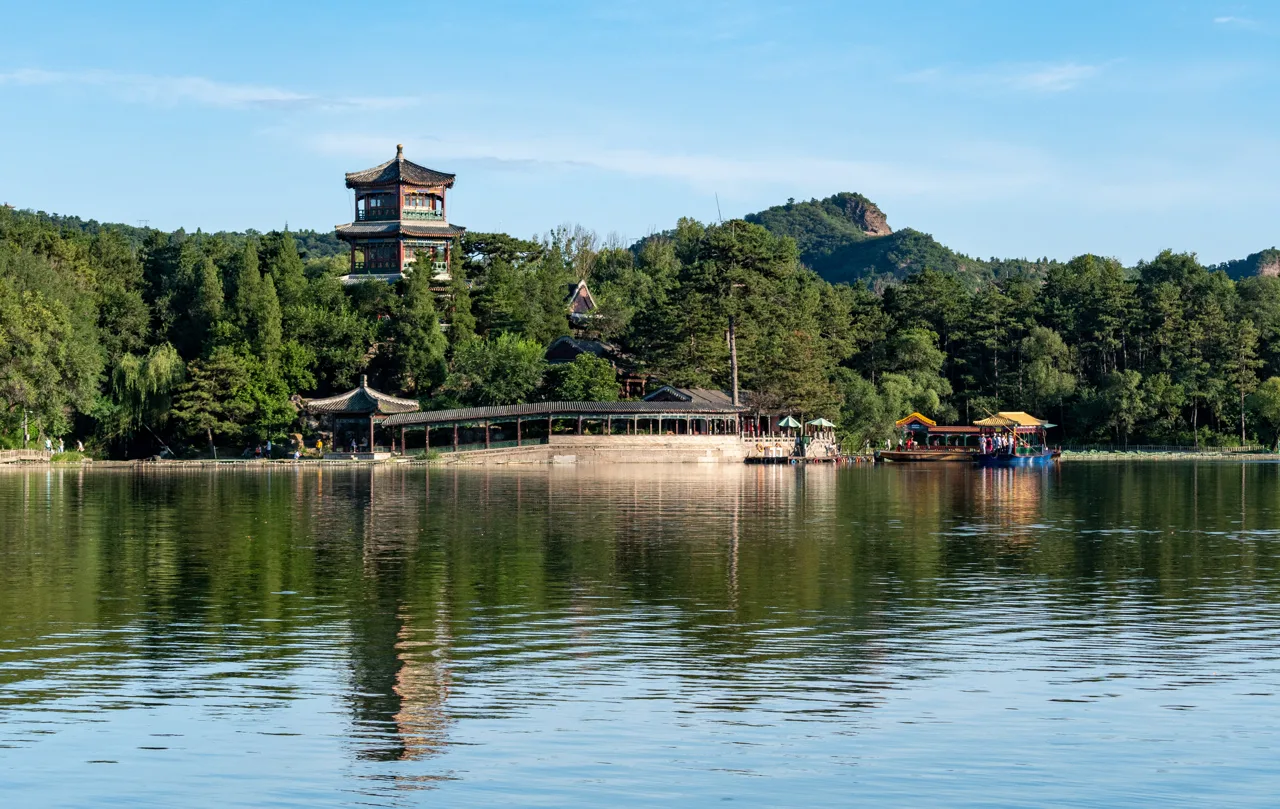
The Li River landscape has been the subject of Chinese ink-wash painting for a thousand years. The 20-yuan note uses a view from the water. The karst formations are exactly as dramatic as centuries of artistic attention suggest.
About Li River
The karst landscape formed over 300 million years of limestone dissolution. Tang and Song dynasty painters established the Li River as a canonical subject of Chinese landscape art. The Guilin-to-Yangshuo boat cruise was among China's first international tourism products, introduced in the 1970s.
What Li River is
The Li River flows 83 kilometers from Guilin to Yangshuo through a landscape of limestone karst peaks that have defined Chinese landscape painting for over a thousand years. The river journey, by boat, by bamboo raft, or on foot along the banks, passes formations with names attached over centuries: Nine Horse Fresco Hill, Elephant Trunk Hill, Yellow Cloth Shoal. The 20-yuan banknote's reverse image is a view from this river.
“The Li River flows 83 kilometers from Guilin to Yangshuo through a landscape of limestone karst peaks that have defined Chinese landscape painting for over a thousand years.”
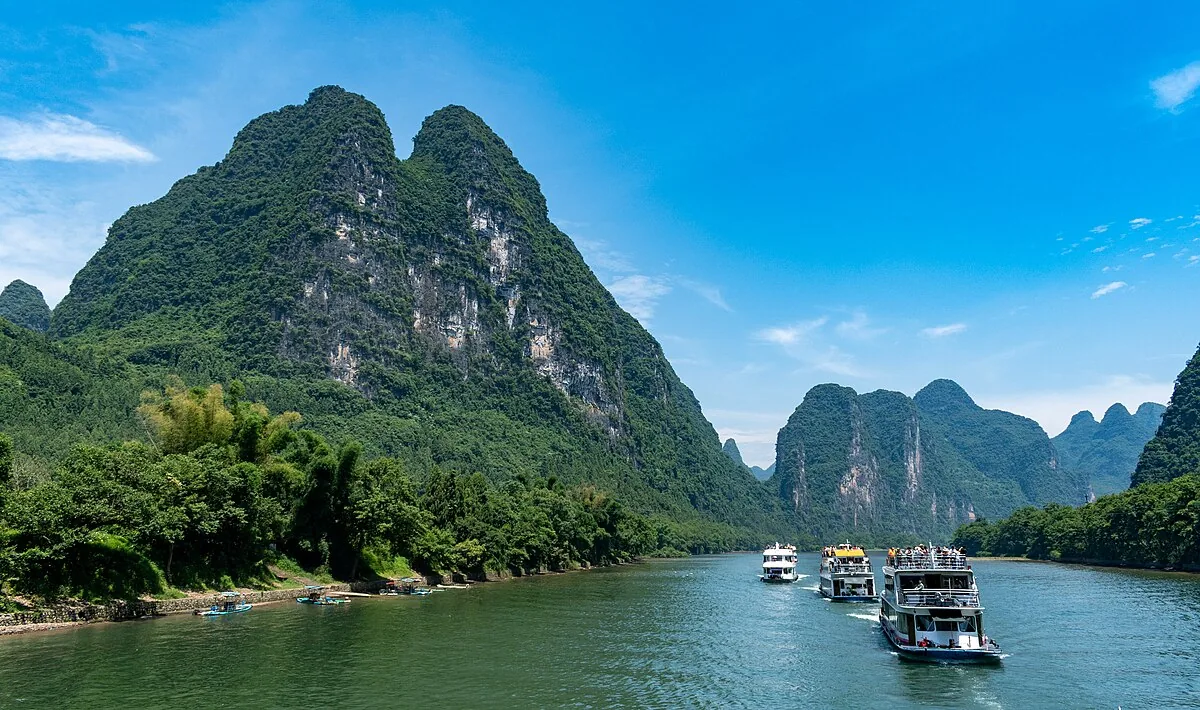
Li River, China
The karst formations along the Li
River developed over 300 million years as slightly acidic water dissolved soluble limestone into the vertical peaks that now rise from the river plain. The landscape entered Chinese visual culture through the Tang and Song dynasty painters who worked in Guilin, establishing conventions of ink-wash mountain painting that remained central to Chinese artistic tradition for a millennium. The area became a tourism destination in the twentieth century, initially for domestic visitors and subsequently for international travelers, the boat cruise from Guilin to Yangshuo was one of the first international tourism products offered after China opened in the 1970s.
The standard cruise from Guilin to Yangshuo takes approximately four hours by boat. The river narrows in places and widens at Yellow Cloth Shoal, where the reflections of the peaks in still water produce the scene reproduced on Chinese currency. Cormorant fishermen, a traditional practice using trained birds and now largely maintained for tourism, still pole bamboo rafts on the lower sections. Yangshuo at the journey's end has developed into a significant small town with cycling, rock climbing, and kayaking infrastructure.
Guided boat cruises depart from the Guilin Zhujiang
Pier. The return journey from Yangshuo is by bus. Yangshuo is also directly reachable from Guilin by bus (1.5 hours) or by booking only the Yangshuo section by bamboo raft from Xingping.
“5 hours) or by booking only the Yangshuo section by bamboo raft from Xingping.”
The Experience
A four-hour boat cruise through named limestone formations, with cormorant fishermen on bamboo rafts, ending at Yangshuo, which has grown its own cycling, rock climbing, and kayaking infrastructure around the river access.
Why It Matters
The Li River karst landscape is the visual source of a major tradition in Chinese art and one of the defining images of China in the international imagination, a case where tourism has reinforced rather than diluted genuine geographic distinction.
Why Visit
The landscape delivers what the paintings and photographs promise, which is rarer than it sounds. The slow pace of the boat journey lets the formations accumulate in a way that driving past them would not.
Insider Tips
- 1
Book the Xingping section by bamboo raft rather than the full Guilin cruise for a more direct encounter with the best formations.
- 2
The 20-yuan banknote view is at Yellow Cloth Shoal, ask the boat operator to point it out.
- 3
Yangshuo is worth a full day after the river, rent a bicycle and explore the surrounding karst villages.