“Portugal operated a trading post here from 1557 until 1999, 442 years, and the calcada-paved square at the center of what they built is still the most functional public space in Macau.”
About Senado Square
Macau was established as a Portuguese trading base in 1557 and served as Asia's primary European entrepôt for three centuries. Senado Square formed the center of Portuguese civic administration. UNESCO World Heritage designation for Macau's historic center in 2005; sovereignty transferred to China in 1999.
What Senado Square actually is
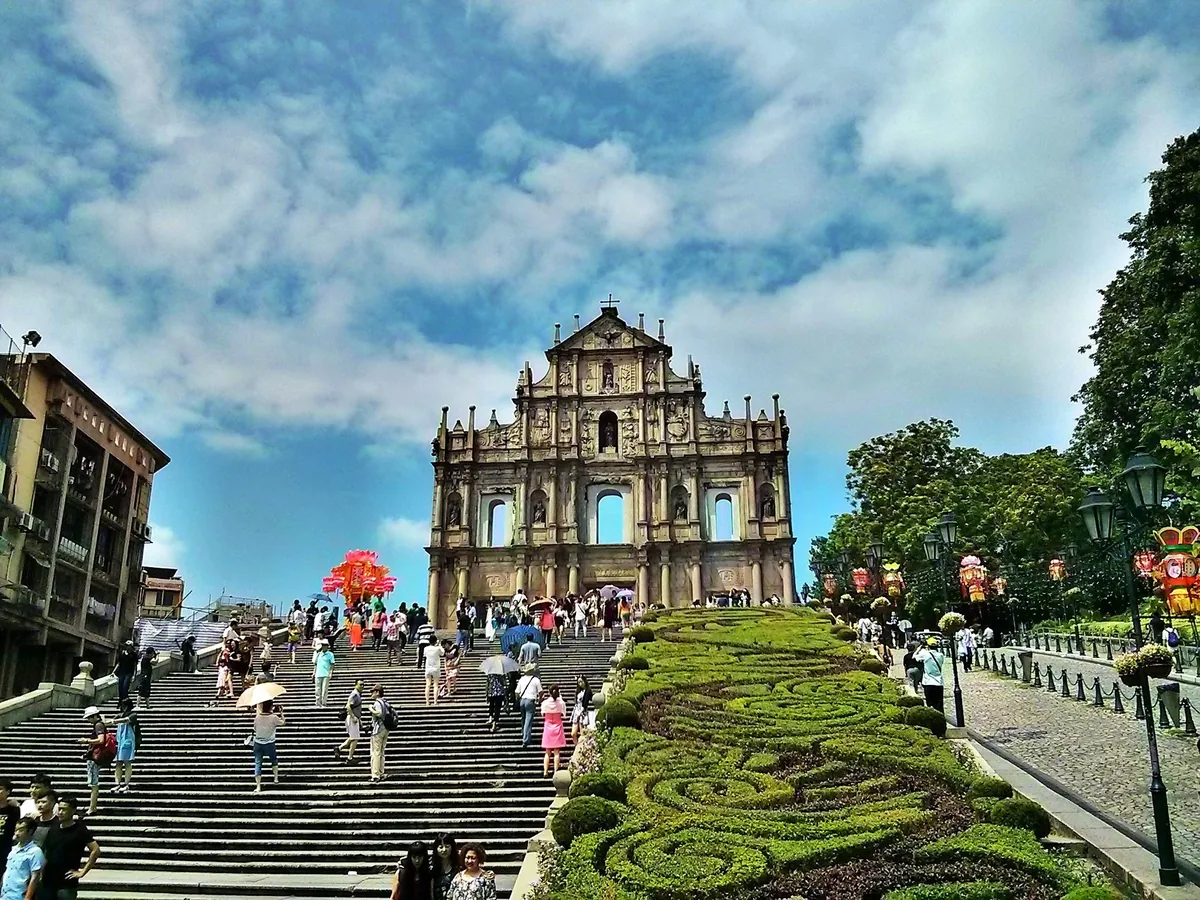
Senado Square in Macau's historic center is the social and architectural heart of what remains of a Portuguese colonial city that operated as a trading post from 1557 until sovereignty transferred to China in 1999. The square, paved with undulating black and white Portuguese calcada stone, is surrounded by pastel-colored neoclassical buildings and connects the pedestrian lanes of the historic district with the churches, museums, and civic buildings of the Portuguese colonial government. It received UNESCO status Macau's historic center, including the square, a World Heritage Site in 2005.
It received UNESCO status Macau's historic center, including the square, a World Heritage Site in 2005.
a trading base, 1557
Portugal established Macau as a trading base in 1557, making it the oldest continuous European settlement in Asia. For three centuries, Macau was the primary entrepôt between China and European maritime trade, the port through which silks, ceramics, spices, and silver moved between the South China Sea and Lisbon. The city developed around the Praia Grande bay, with the Senado (Senate) building at the square's northern end functioning as the center of Portuguese civic administration. The decline of Macau's trade position as other ports opened, followed by the rise of gambling concessions in the twentieth century, created the specific preserved quality of the historic district, buildings maintained for heritage status while the city's economic center shifted to the casino strip.
The square is pedestrianized and functions as a genuine gathering space, morning tai chi, evening family promenades, and the tourist flow coexist without obvious friction. The calcada paving pattern draws the eye downward in a way that distinguishes the experience from any other Chinese public square. The surrounding lanes connect to the ruins of St. Paul's, the Dom Pedro V Theatre, and multiple baroque churches within a ten-minute walk. Macau is accessible from Hong Kong by high-speed ferry (1 hour) or by the Hong Kong-Zhuhai-Macau Bridge. From the ferry terminal, free casino shuttle buses serve the historic center area. Senado Square is walkable from most historic district hotels.
The Experience
A pedestrianized square with undulating black-and-white calcada paving, surrounded by pastel neoclassical buildings, connecting to St. Paul's ruins, baroque churches, and colonial civic buildings within a ten-minute walk.
A pedestrianized square with undulating black-and-white calcada paving, surrounded by pastel neoclassical buildings, connecting to St.
Why It Matters
Senado Square sits at the center of the oldest continuous European settlement in Asia, a colonial city whose 442-year tenure left a physical fabric that has no equivalent in mainland China.
Why Visit
The combination of Portuguese urban design, active civic life, and the specific quality of walking calcada stone in the South China heat creates an experience that is genuinely unlike anything else in China or Southeast Asia.
✦ Insider Tips
- 1
Walk north from the square through the lane network to reach the St. Paul's ruins, the intervening streets are as interesting as the destination.
- 2
Evening is when the square is most socially alive; morning is quieter for the architecture.
- 3
Try Macanese cuisine at one of the Portuguese restaurants on the lanes off the square, the culinary fusion is the edible equivalent of the architectural one.