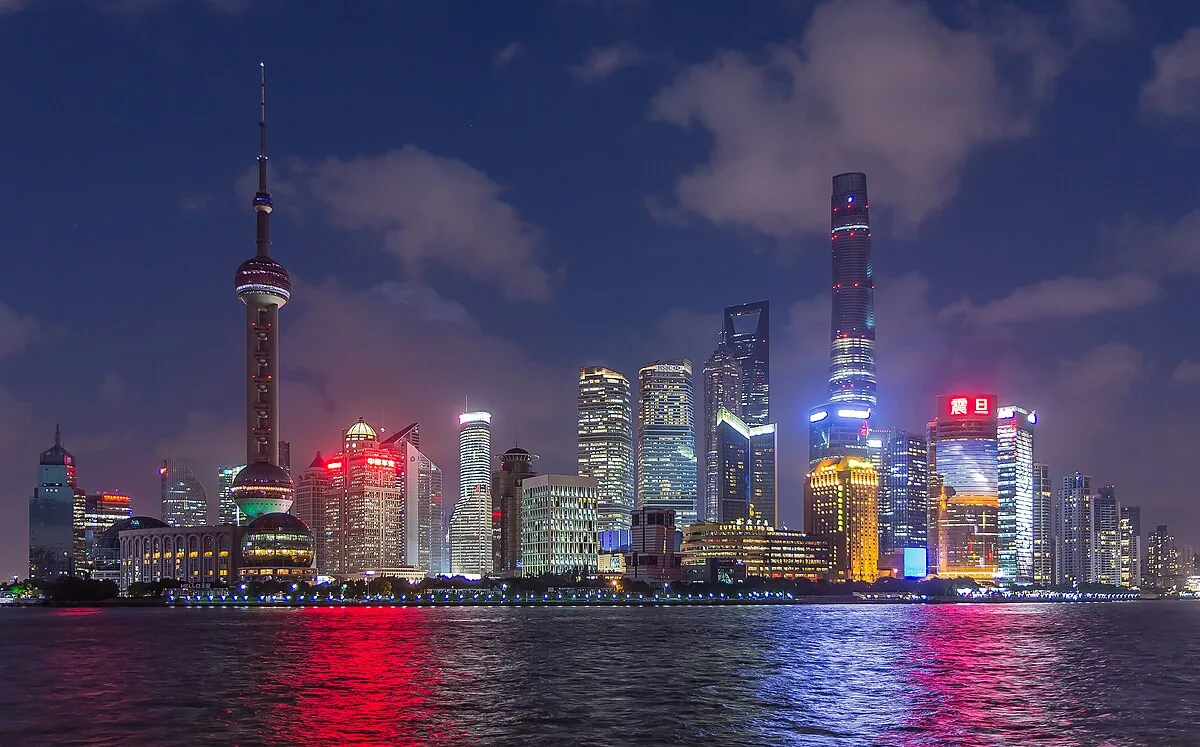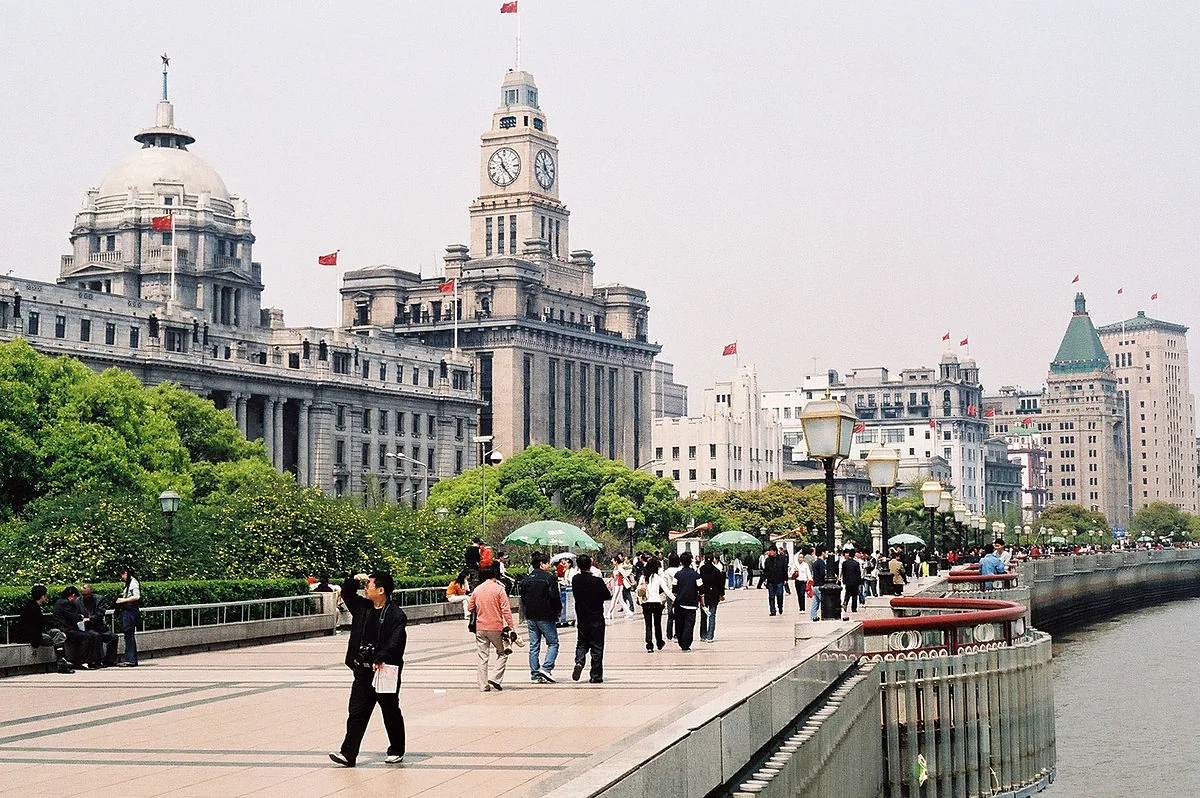
Fifty-two buildings from the treaty port era line one bank of the Huangpu River. Across the water, some of the world's tallest towers completed in the last thirty years create the skyline that frames them.
About The Bund
Developed after the 1842 Treaty of Nanking opened Shanghai to foreign settlement, the Bund's buildings were constructed by British, American, French, and other foreign institutions between the 1860s and 1930s. The treaty port era ended with the 1949 Communist victory; the Pudong skyline across the river was developed from the 1990s onward.
The Bund is Shanghai's waterfront promenade along the western bank of the Huangpu River, where 52 buildings in neoclassical, Art Deco, Baroque, and Gothic styles stand as the physical record of the treaty port era that made Shanghai one of the world's most cosmopolitan cities between 1843 and 1943. Across the river, the towers of Pudong's financial district, including the Oriental Pearl Tower, Shanghai Tower, and the Shanghai World Financial Center, create one of the world's most photographed urban contrasts.
The word bund derives from the Anglo-Indian term for an embankment. After the First Opium War (1842), the Treaty of Nanking opened Shanghai to foreign settlement, and the British established the International Settlement along the river. Banks, trading houses, clubs, and consulates followed, each competing to project institutional permanence through architectural scale. The Hongkong and Shanghai Banking Corporation, Customs House, Peace Hotel, and Chartered Bank buildings, all visible today, were among the most prominent addresses in Asia during the early twentieth century. The Japanese occupation of 1937 and the Communist victory of 1949 ended the treaty port era, and many buildings were repurposed as government offices. The 1990s Pudong development created the skyline across the river that now frames the Bund from the east.
The promenade runs 1.5 kilometers from Suzhou Creek to Yan'an Road, with the river on one side and the façades on the other. Walking north to south in late afternoon, with the Pudong skyline catching the light across the water, delivers the most famous view. Many of the buildings now contain luxury hotels, restaurants, and galleries, the Peace Hotel bar and the HSBC lobby are both accessible and worth the detour.
Metro Line 2 to East Nanjing
Road station, then a short walk east to the waterfront. The Bund is accessible on foot from the Old City and from the French Concession.
The Experience
A 1.5-kilometer promenade between 52 heritage façades and the Huangpu River, with Pudong's financial towers creating a continuous contrast. The Peace Hotel bar and HSBC building lobby add interior dimensions to the exterior walk.
Why It Matters
The Bund is the physical archive of Shanghai's treaty port century, a period when the city functioned as a nexus of global capital, colonial power, and Chinese commercial energy that shaped modern China's relationship with the outside world.
Why Visit
The architectural quality on the Bund is genuinely high, not just historically interesting but physically beautiful. The contrast with Pudong across the water makes it one of the few places where a century of urban development is visible in a single glance.
✦ Photo Gallery
Best Season
🌤 March–May and September–November for mild weather.
Quick Facts
Best time to visit
March–May and September–November for mild weather.
Getting there
In Shanghai, China; reach Shanghai first, then continue to the site.
What's nearby
Humble Administrator's Garden is also close by.
Location
Shanghai, China
Type
attraction
Coordinates
31.2380°, 121.4861°
Insider Tips
- 1
Walk north to south in late afternoon for the best light on the Pudong skyline.
- 2
The Peace Hotel bar (former Cathay Hotel, opened 1929) serves drinks in the Art Deco interior, worth a stop.
- 3
Cross the river to Pudong on the tourist ferry for the reverse view of the Bund façades from the water.