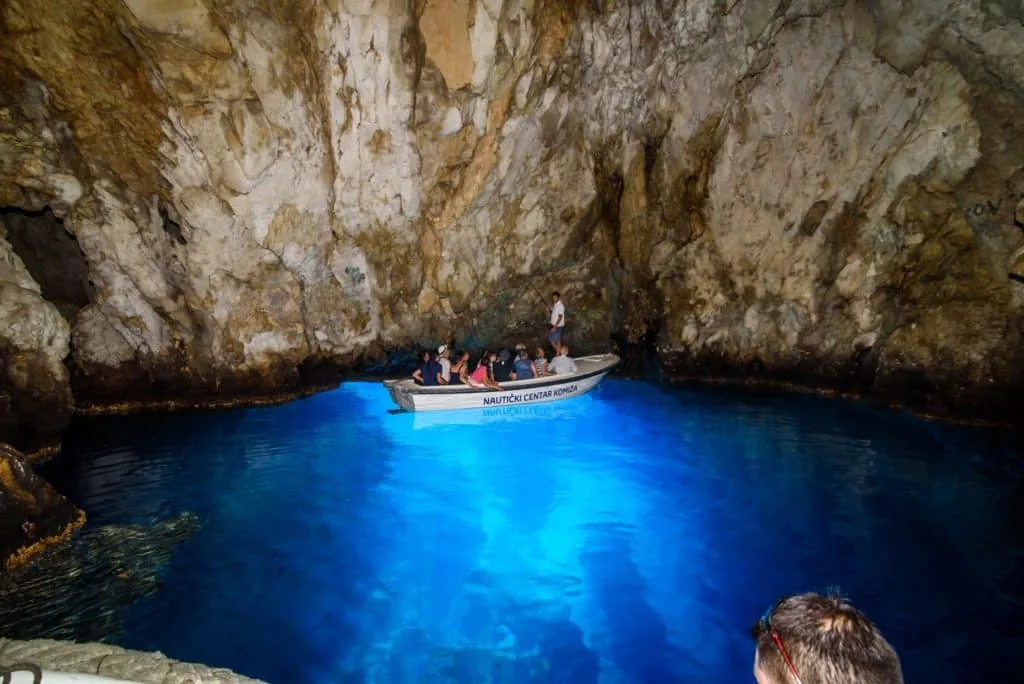
The sun enters this cavern from below the waterline, turning the sea into a glowing sapphire floor that looks more like a digital illusion than a limestone cave.
About Blue Cave
Ransonnet’s discovery in the late 19th century changed the fate of the tiny island of Biševo forever. Before the artificial entrance was created, only divers could witness the phenomenon of sunlight refracting off the limestone seabed. The cave is part of a larger network of volcanic and limestone formations in the Vis archipelago, an area that remained a closed military zone during the Yugoslav era, which ironically helped preserve the pristine nature of these waters. Today, strict regulations limit the time each boat can spend inside to ensure the cave's delicate atmosphere isn't spoiled by overcrowding.
What Blue Cave is
Nature operates a secret theater on the limestone island of Biševo, where the sun must dive beneath the sea before it can illuminate the land. Modra Špilja, the Blue Cave, exists as a limestone cathedral flooded by the Adriatic, accessible only through a narrow breach barely wide enough for a small wooden boat. Within these stone walls, the light behaves in ways that defy logic. It does not fall from the ceiling; it rises from the depths, turning the water into a glowing, neon-blue liquid that seems to hold its own internal flame. The cave remains a quiet masterpiece of physics and geology, a place where the air tastes of salt and the silence is punctuated only by the rhythmic slap of water against the limestone vault.
Fishermen from the nearby port of Komiža knew of this cavern for centuries, though they originally saw it only as a dark hole where the sea disappeared. The original entrance was underwater, meaning the ethereal blue glow was a secret held by the fish and the bravest divers. In 1884, the Austrian painter Baron Eugen von Ransonnet suggested blasting a small hole at sea level to allow small skiffs to enter. This controlled explosion opened the cave to the world, transforming a local curiosity into an international phenomenon. Since then, the cave has remained largely unchanged, protected by its remote location and the very specific solar conditions required to wake its colors. It recalls that the most profound spectacles in the Mediterranean often require a boat, a calm sea, and a bit of luck.
Visiting Blue Cave
Lying flat on the bottom of a small wooden boat, The cool breath of the cave as the skipper guides you through the jagged entrance with a practiced shove against the rock. The transition is instantaneous. One moment you are in the blinding glare of the Adriatic; the next, you are suspended in a collection of sapphire twilight. The way the light catches the underside of the boat, turning the wood into a ghostly silver. The water is so clear that you can see white sand shimmering twenty meters below, appearing close enough to touch. The sound of the ocean breathing through the stone, a low, resonant thrumming that echoes in your chest. What registers is that your own skin takes on a pale, iridescent glow in the reflected light. Almost all visitors spend their time trying to capture the blue on their phones, but you should notice the silver bubbles clinging to the rock walls, created by the movement of the boat. You get a strange sense of weightlessness, as if the boat is floating in the sky rather than on the sea. The setting is cool and damp, a sharp contrast to the baking sun waiting just outside the stone arch. The way the blue deepens moving toward the back of the cavern, turning from a bright electric turquoise to a rich, royal indigo.
Most journeys begin in the town of Komiža
Most journeys begin in the town of Komiža on Vis island. Local skippers run shuttles to Biševo, but you must transfer to the official, smaller park boats at Mezuporat cove to navigate the cave’s tiny entrance.
The Experience
What you hear is the oars dripping into the water is the only thing that breaks the heavy silence. A sudden drop in temperature as the stone ceiling closes over you, smelling the sharp, mineral scent of the cave walls. The silvering effect on anything submerged in the water, an optical trick caused by the reflection of light through the water’s surface. What sticks with you is looking back at the entrance and seeing the 'ordinary' world as a tiny, distant white spark, while you sit in an array of liquid blue.
Why It Matters
The Blue Cave is a global benchmark for sea-cave refraction phenomena. Culturally, it represents the maritime identity of the Vis archipelago, a place where the sea provides both the livelihood and the mythology for the local people. It is a rare example of how a small intervention, the opening of an entrance, can create a profound human connection with a geological wonder.
Why Visit
Visit Biševo because this is the purest light show on earth. While other caves offer stalactites or history, this one offers a visceral encounter with color. It is a sensory reset that proves nature is still capable of outperforming any modern art installation with nothing more than a hole in a rock and a few rays of light.
✦ Photo Gallery
Best Season
🌤 June through August provides the highest sun, ensuring the light hits the underwater entrance at the perfect angle between 11:00 AM and 1:00 PM for the brightest glow.
Quick Facts
Best time to visit
June through August provides the highest sun, ensuring the light hits the underwater entrance at the perfect angle between 11:00 AM and 1:00 PM for the brightest glow.
Getting there
In Vis Island, Croatia; reach Vis Island first, then continue to the site.
Location
Vis Island, Croatia
Type
attraction
Insider Tips
- 1
Arrive at the ticket office before 10:00 AM to beat the massive day-trip flotillas coming from Split and Hvar.
- 2
Wear a hat and sunscreen for the wait at the Mezuporat cove, as there is very little shade while you wait for your boat number to be called.
- 3
Check the wind forecast; if the 'Jugo' is blowing from the south, the cave entrance is often too dangerous to enter and the site will close.
- 4
Keep your hands inside the boat at all times; the entrance is extremely narrow and the stone is sharp and unforgiving.
- 5
Don't bother with a flash on your camera; it will wash out the natural blue light and leave you with a flat, grey photo.