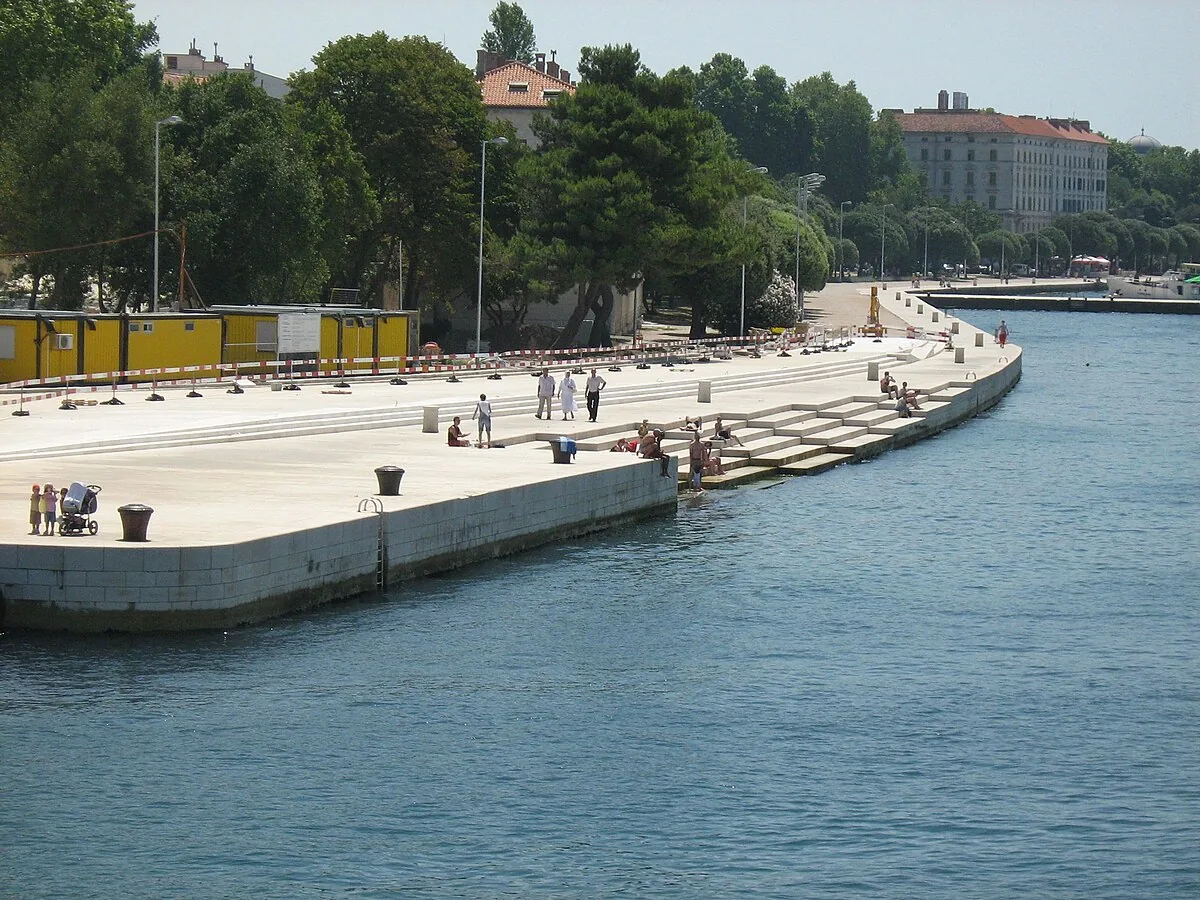
“An aging Roman Emperor built a retirement home so massive that seventeen hundred years later, three thousand people still live inside his bedroom and hallways.”
About Diocletian's Palace
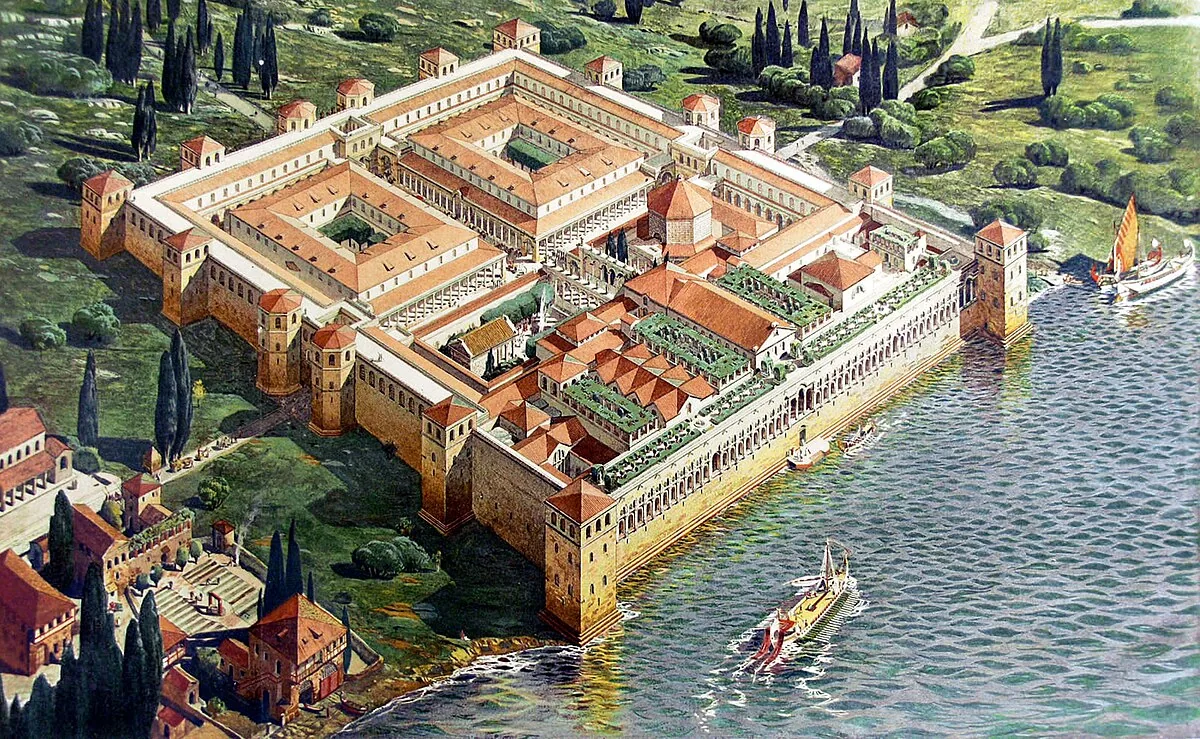
Completed in 305 AD, the palace was designed to be a self-sufficient world, divided by two main streets into residential and military quarters. Diocletian spent his final years here growing cabbages and ignoring pleas to return to power. By the 7th century, the abandoned halls became a refugee camp for those fleeing the Avars. As the centuries turned, the residents built houses against the Roman walls, used the ancient sewers, and turned the palace into a medieval city. It was 'rediscovered' by Western architects in the 18th century, sparking the Neoclassical movement across Europe.
What Diocletian's Palace actually is
Life in Split does not happen around the Roman ruins; it happens inside them. Diocletian’s Palace is a living organ of the city, a massive military fortress turned neighborhood where thousands of people sleep, shop, and drink coffee within walls built for an emperor. The structure is a hybrid of a lavish villa and a fortified camp, carved from Brač marble that has weathered to a soft, bone-white color. Moving through the Bronze Gate feels like entering a time-warped bazaar where laundry hangs from Roman arches and ancient basements serve as art galleries. The palace lacks the sterile silence of most archaeological sites; it is loud, chaotic, and smells of grilled fish and expensive perfume.
Life in Split does not happen around the Roman ruins; it happens inside them.
massive retirement home, 295
Emperor Diocletian, the only Roman leader to voluntarily retire, commissioned this massive retirement home around 295 AD. He chose this specific bay for its proximity to his birthplace and the local sulfur springs which he hoped would soothe his aging joints. After the fall of the empire, the nearby residents of Salona fled the barbarian invasions and moved into the palace, transforming the imperial apartments into apartments for the poor. Over the centuries, the Peristyle became a town square, and the Emperor’s mausoleum was ironically converted into the Cathedral of Saint Domnius. This layers-upon-layers growth means that a single wall might contain Roman brickwork, Venetian Gothic windows, and 20th-century wiring all in one vertical line.
Descending into the substructures, the sudden damp chill of the massive vaulted ceilings that once supported the imperial living quarters. On all sides, the smells of stone dust and history. The way the sound of a klapa group (traditional Dalmatian a cappella) echoes through the circular vestibule, the voices rising toward the open dome. What hits is the texture of the Egyptian sphinxes brought here by Diocletian, their black granite bodies worn smooth by centuries of curious hands. The sense is the shift in energy when you emerge into the Peristyle, where the sun hits the red granite columns and the city’s heart beats loudest. The sound of clinking glasses from the cafes tucked into the temple ruins, a strange juxtaposition of the sacred and the social. People generally walk the main thoroughfares, but you should notice the tiny, dark alleys barely wide enough for one person, where the stone is perpetually damp. A trace of the history not as a textbook, but as a living weight, realizing that these walls have seen every era of human struggle and triumph.
The palace forms the core
The palace forms the core of Split’s Old Town and is unavoidable if you are anywhere near the Riva promenade. It is a five-minute walk from the main ferry terminal and train station, making it the most accessible Roman ruin in the world.
The palace forms the core of Split’s Old Town and is unavoidable if you are anywhere near the Riva promenade.
The Experience
The early morning light turns the Peristyle into a golden theater before the first tourists arrive. The mass of the coolness of the marble steps as you sit to watch the city wake up. You register the way the local Split accent bounces off the high stone walls, sounding more like a song than a conversation. The opening note is the smell of fresh bread from a bakery hidden behind a Corinthian column. The detail that stays with you is wandering into the 'Ghetto' area at night, where the walls are so close you can hear a television playing in a room that was once a Roman guardhouse.
Why It Matters
Diocletian’s Palace is arguably the most important Roman structure in existence because it was never truly abandoned. It is the missing link between the monumental architecture of the ancients and the organic development of the medieval city. It proves that ruins don't have to be museums to be preserved.
Why Visit
Visit Split because this is the only place on earth where you can eat a pizza in a 4th-century temple or shop for socks in an imperial corridor. It offers a visceral, messy, and deeply human connection to the Roman world that the Forum in Rome simply cannot match.
✦ Insider Tips
- 1
The entrance to the cathedral and the bell tower requires a ticket, but the Peristyle and the main gates are free to explore 24/7.
- 2
Climb the bell tower of St. Domnius for the best view of the palace's rectangular layout and the surrounding islands.
- 3
The basement halls are cooler than the surface; use them as a shortcut to escape the midday heat when walking from the Riva to the center.
- 4
Look for the 'Let Me Pass' street (Pusti me da prođem), which is so narrow that two people cannot pass each other without a polite negotiation.
- 5
Visit the palace cellars at dusk when the craft stalls pack up and the raw, cavernous architecture becomes more visible.