Fifteen centuries ago, a defiant bishop broke the rules of humility to immortalize himself in gold, creating the most luminous Byzantine treasure on the Adriatic coast.
About Euphrasian Basilica
The site has been a place of worship since the late 3rd century, beginning as a private house used for illegal Christian gatherings. Bishop Euphrasius demolished the existing 4th-century church to build his vision, importing master mosaicists from Constantinople to ensure the quality matched the splendor of the Imperial capital. The mosaics are famous for their realism, particularly the depictions of the local martyrs and the bishop himself holding a model of the church. Despite being an active site of worship for over 1,500 years, the structural integrity of the complex remains a marvel of late-antique engineering.
What Euphrasian Basilica actually is
Deep within the salt-stained alleys of Poreč, a 6th-century masterpiece of gold and glass glitter remains remarkably untouched by the passage of fifteen hundred years. The Euphrasian Basilica is the most complete surviving example of early Byzantine architecture in the Mediterranean, a complex of buildings like a piece of Ravenna transplanted to the Istrian coast. The central apse is a riot of mosaics, where a golden-robed Virgin Mary sits surrounded by saints and the very bishop who commissioned the work. Unlike the dark, heavy stone of later Romanesque churches, the Basilica feels airy and bright, the light reflecting off the tesserae in a way that suggests the divine. On all sides, the air is cool and smells of ancient dust and the faint, sweet scent of sea air drifting through the open atrium.
“Deep within the salt-stained alleys of Poreč, a 6th-century masterpiece of gold and glass glitter remains remarkably untouched by the passage of fifteen hundred years.”
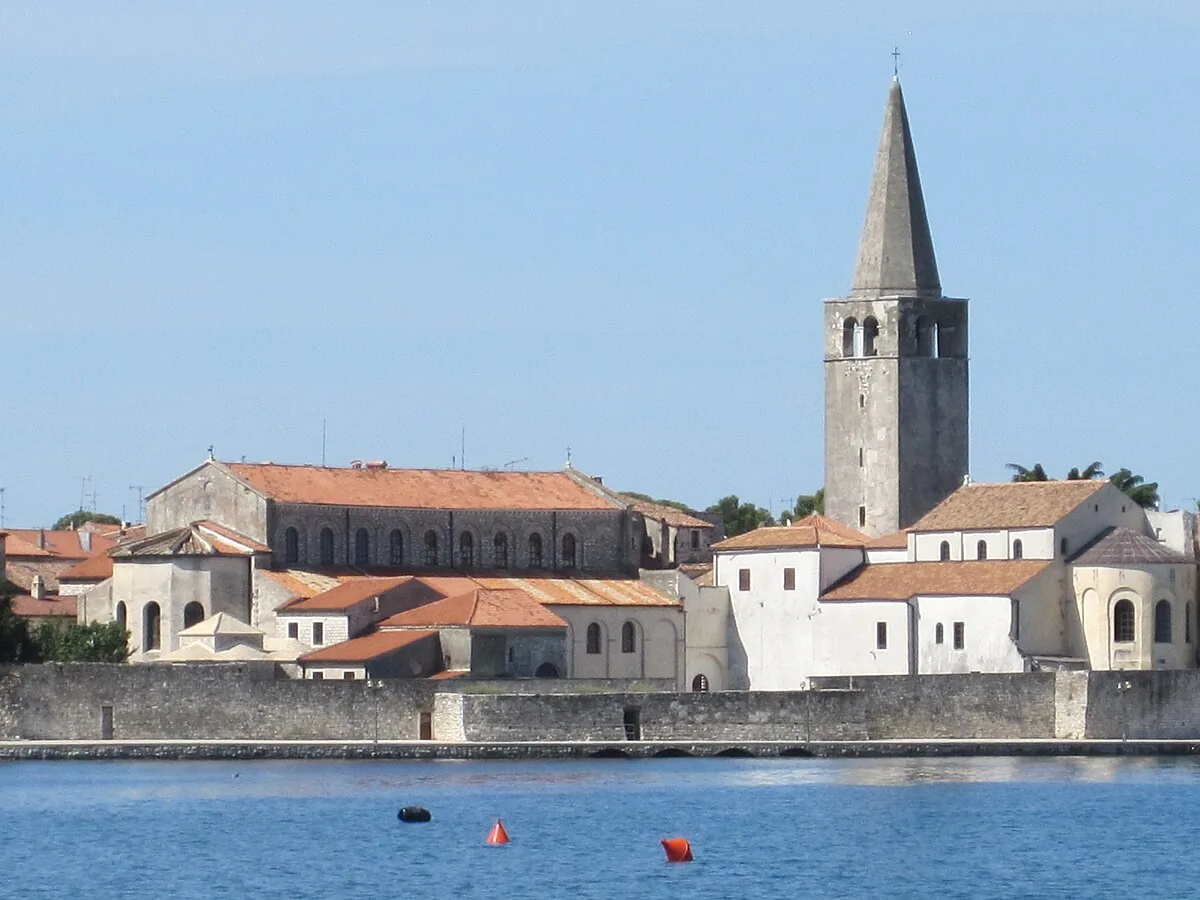
Euphrasian Basilica, Croatia
Bishop Euphrasius
Bishop Euphrasius was a man of immense ambition and questionable modesty, commissioning this grand project in the mid-5th century over the ruins of an even older secret oratory where early Christians worshipped in hiding. He was so proud of his creation that he had his own image and name prominently featured in the central mosaic, a bold move that some contemporary critics viewed as borderline heretical. The site survived the rise and fall of the Byzantine Empire, the Venetian Republic, and even the allied bombings of World War II. It was designated a UNESCO World Heritage site in 1997, recognized not just for the mosaics but for the entire episcopal complex, including the baptistery, the bell tower, and the remains of 4th-century floor mosaics that reveal the site's deepest layers.
Walking through the columned atrium,
The sound of dripping water from a nearby fountain and the cooing of pigeons perched on the Corinthian capitals. The transition from the bright Istrian sun to the dim interior is a slow reveal of color. The detail that registers is the way the gold leaf in the mosaics seems to pulse with its own internal light, even on a cloudy day. The mother-of-pearl and precious stones embedded in the walls, their surfaces worn smooth by the touches of medieval pilgrims. An echo of the grit of the ancient floor mosaics under your shoes, realizing you are standing on a surface that was laid while the Roman Empire was still a living memory. What registers is the smell of damp stone and the faint metallic tang of old bronze approaching the altar. The majority look straight up at the dome, but you should notice the fish and bird motifs in the floor mosaics, symbols used by the earliest Christians to identify one another. A sense of absolute stillness climbing the wooden stairs of the bell tower, where the view opens up over the red roofs of Poreč and the shimmering Adriatic. The way the sea breeze suddenly hits you at the top. The Basilica is located in the historic core of Poreč, at the end of the Decumanus Maximus, the city's main Roman thoroughfare. It is a five-minute walk from the waterfront where the ferries from Venice arrive.
The Experience
The light at 4:00 PM is transformative, hitting the apse at an angle that makes the saints look like they are stepping out of the wall. The first thing you register is the way the silence of the church feels solid, a physical barrier against the tourist chatter of the street outside. The temperature drop significantly as you enter the baptistery, where the hexagonal font suggests the ancient rituals of rebirth. Instantly, the intricate carvings of birds and vines on the marble columns, each one unique. What lingers with you is standing in the ruins of the first oratory, looking at the fish mosaic and realizing that people have been seeking sanctuary in this exact spot for eighteen hundred years.
Why It Matters
The Euphrasian Basilica is a unique bridge between the classical Roman world and the medieval Byzantine era. It is one of the few places on earth where you can see an entire ecclesiastical complex exactly as it was designed in the 6th century. It is born from the enduring power of faith and the incredible technical skill of the mosaic artists who worked without modern tools.
Why Visit
See this basilica to see color that hasn't faded in a millennium. While the cathedrals in Split and Dubrovnik are grand, they lack the ethereal, golden glow of Poreč. It is the only place in Croatia where you can feel the direct influence of the East in a setting that remains intimately connected to the Mediterranean landscape.
Insider Tips
- 1
Climb the bell tower for a panoramic view that helps you understand the Roman 'grid' layout of Poreč's old town.
- 2
Look for the 'Bishop's Palace' on the northern side; the upstairs rooms contain incredible fragments of original 4th-century wall paintings.
- 3
Bring a pair of binoculars if you are a detail-oriented traveler; the faces in the highest mosaics are worth a closer look.
- 4
The floor mosaics in the courtyard are often covered with thin layers of water after rain, which actually makes the colors pop and the patterns clearer.
- 5
Entrance is free for the main nave during mass, but you must pay the small fee to see the mosaics and climb the tower during museum hours.