In this shifting wilderness of the Danube, the land disappears every spring, turning a vast forest into an underwater world ruled by eagles and ancient fish.
About Kopački Rit Nature Park
The name 'Kopački Rit' comes from the Hungarian words for 'digging' and 'marsh,' reflecting the long history of the local people who lived in harmony with the flood cycles. Over the centuries, the villages on the edge of the park survived on fishing and reed cutting, traditions that are still alive in the architecture of the local houses. The Tikveš Castle, located within the park, was used as a summer residence by the Yugoslav leader Tito, who hosted world leaders here for secret hunting trips. Since the end of the war in the 1990s, the park has become a center for eco-tourism and scientific research, focusing on the restoration of the natural flood regimes that keep the marsh alive.
What Kopački Rit in Croatia is
Where the Drava River meets the Danube, a vast, emerald labyrinth of marshes and forests creates one of Europe’s most vital wetlands. Kopački Rit is a world in constant flux, a landscape that is reshaped every year by the rising and falling of the great rivers. This is the 'Amazon of Europe,' a place where white-tailed eagles soar over silent backwaters and thousands of cormorants nest in the skeletal branches of drowned willows. The park is a mix of natural sounds, the rhythmic croaking of frogs, the splash of pike in the reeds, and the haunting cry of the black stork. The room is humid and smells of wet earth and wild mint, and the light filters through the dense canopy in a way that makes the water appear like liquid jade.
“Where the Drava River meets the Danube, a vast, emerald labyrinth of marshes and forests creates one of Europe’s most vital wetlands.”
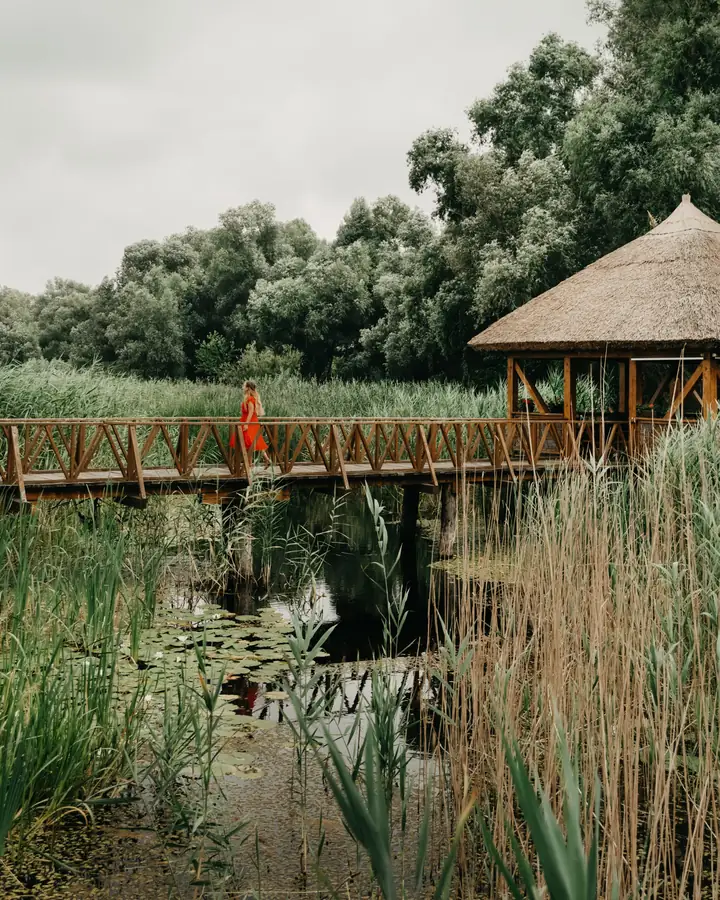
Kopački Rit Nature Park, Croatia
The geography of Kopački Rit
The geography of Kopački Rit is a geological accident caused by the clash of two massive river systems, creating an internal delta that has been a sanctuary for wildlife for millennia. Historically, it was a royal hunting ground for the Habsburgs, with the Tikveš castle complex serving as a secluded retreat for the elite. The park was officially established in 1967, and despite the heavy fighting in the region during the 1990s, the wetlands remained largely untouched, acting as a natural buffer zone. Today, it is a UNESCO-recognized biosphere reserve, serving as a critical nursery for the fish of the Danube and a vital stopover for millions of migratory birds on their way between Africa and Northern Europe.
Gliding through the narrow channels on a small electric boat, The way the water is so still it becomes a perfect mirror for the leaning willow trees. The surroundings are cool and smelling of water lilies. What grabs you is the sudden, sharp silence when an eagle appears overhead, its massive wingspan casting a shadow that makes the smaller birds vanish into the reeds. First, the texture of the lotus leaves, which look like velvet discs floating on the surface of the Sakadaš lake. What emerges is the sound of the wind through the tall sedges, a soft, papery rustling that never stops. A sense of absolute isolation from the modern world as the boat moves deeper into the maze of channels. Visitors generally stay on the wooden boardwalks near the entrance, but you should notice the small, hidden ponds where the water is covered in a thick carpet of emerald duckweed. A trace of the vibration of the boat's engine stop, allowing the raw, unfiltered noise of the marsh to take over. First, the way the light turns the mudflats into shimmering, golden plates at sunset, attracting hundreds of herons who wait in the shallows. The experience is one of profound peace and a mark of what the European continent looked like before the arrival of the plow and the dam. The park entrance is located in the village of Kopačevo, about a 15-minute drive from the city of Osijek. Regular buses run from Osijek to Kopačevo, but a car or a bicycle is the best way to explore the surrounding Baranja region.
The Experience
The boardwalks at Kopački Rit allow you to walk over the marsh without disturbing the life below. You register the way the light catches the metallic blue of the dragonflies that hover near the water's edge. A heat of the Pannonian sun on your back, a warmth that is tempered by the moisture of the wetlands. The opening note is the smell of the blooming acacias in the spring and the dry, smoky scent of the reeds in the autumn. The piece that stays with you is seeing a herd of red deer crossing a shallow channel, their antlers rising above the tall grass like floating branches.
Why It Matters
Kopački Rit is one of the best-preserved floodplains in the world. It is a critical component of the Danube river system, acting as a natural filter for the water and a vital habitat for endangered species. Culturally, it is the soul of the Baranja region, influencing the local cuisine, folklore, and the very pace of life for the people who live on its borders.
Why Visit
Visit Kopački Rit to see the 'wild side' of Croatia that most tourists miss. It is a place for the slow traveler, the birdwatcher, and the soul in search of quiet. It offers a connection to the prehistoric landscape of Europe, providing a scale of nature that is both humbling and deeply restorative.
Insider Tips
- 1
Bring a powerful pair of binoculars; the white-tailed eagles are often perched at the very tops of the trees and are hard to see with the naked eye.
- 2
Wear long sleeves and carry high-quality insect repellent; the mosquitoes in the marsh are legendary and very persistent.
- 3
Visit the Tikveš Castle complex after the marsh; it offers a fascinating look at the luxury and secrecy of the region’s former rulers.
- 4
Eat at a local konoba in Kopačevo after your visit; the fish stew (Fiš-paprikaš) is made with the very species that breed in the park.