Twenty-seven turns of a winding mountain road lead to a fortress where the clouds often sit below the doorsteps and the local currency is the aromatic black truffle.
About Motovun Old Town
The Venetian period defined Motovun’s aesthetic, leaving behind the crenelated walls and the 13th-century municipal palace that dominates the square. During the 15th and 16th centuries, the town served as a vital administrative center, managing the vast forests that provided oak for the foundation piles of Venice. The architecture reflects a mix of defensive grit and Mediterranean elegance, with every stone head and crest telling a story of maritime power. It was only after the internal regions of Istria were re-evaluated in the 1970s that the town began its transition from a fading military relic to a world-class cultural destination.
About Motovun Old Town
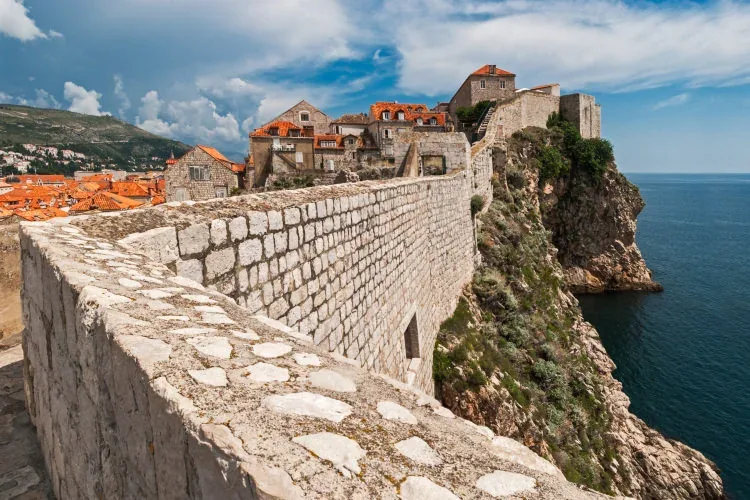
High above the Mirna River valley, the medieval crown of Motovun pierces the morning fog like a stone ship sailing through a sea of white mist. This hilltop citadel represents the romantic soul of inland Istria, a place where the salt air of the coast gives way to the deep, earthy perfume of damp forests and black truffles. The town rises in a tight spiral of Venetian colonial architecture, its limestone walls bleached by centuries of sun and buffeted by the cool winds of the Pannonian plains. Walking the perimeter of the 14th-century ramparts, the horizon stretches across patchwork vineyards and olive groves that have remained largely unchanged since the days of the Roman Empire. The atmosphere here is thick with a sense of quietude, punctuated only by the distant chime of the bell tower or the scrape of a truffle hunter’s shovel in the valley below.
“High above the Mirna River valley, the medieval crown of Motovun pierces the morning fog like a stone ship sailing through a sea of white mist.”
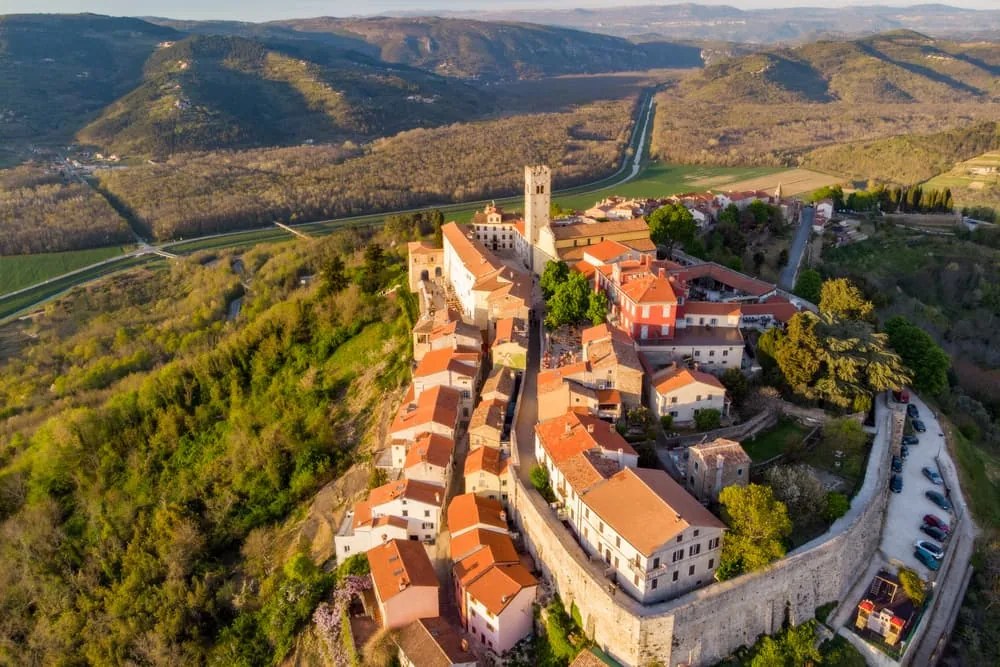
Motovun Old Town, Croatia
Ancient Celts and Illyrians first recognized the strategic genius of this peak, but the Motovun we touch today is a masterpiece of Venetian frontier engineering. The Republic of Venice seized the town in 1278, viewing it as a vital timber source for their naval fleet and a defensive bastion against the Habsburgs. Under the winged lion of St. Mark, the town developed its sophisticated double walls and the Gothic-Romanesque gates that still bear the marks of feudal nobility. Across centuries, Motovun was a world unto itself, a self-contained fortress where the wealthy elite controlled the valley's agricultural bounty. Along the fall of Venice and a period of Austrian neglect, the town faced a slow decline until the late 20th century, when it was rediscovered by artists and gourmands who recognized that its isolation had perfectly preserved its medieval character.
Climbing the steep, cobblestone path toward the central square, The way the light catches the uneven surfaces of the stone, casting long, rhythmic shadows across the narrow alleys. Here, the smells of woodsmoke and the pungent, unmistakable aroma of shaved truffles drifting from open kitchen windows. What emerges is the heavy, iron-studded doors of the old granary, their wood silvered by time and resilience. From the western battlements at dusk, the landscape dissolves into shades of indigo and violet, making the distant lights of neighboring hill towns look like fallen stars. You get a grit of the ancient stone under your palms as you lean over the edge to see the valley floor. People generally focus on the valley views, but you should notice the intricate carvings above the residential doorways, each representing the lineage of a family long gone. Something like a strange sense of suspension, as if the modern world has been held at bay by the sheer verticality of the terrain. The sound of the wind through the tall cypress trees, a low-pitched whistle that acts as a natural soundtrack to the silence of the square.
The most evocative approach
The most evocative approach is by car from the coastal cities of Poreč or Rovinj, followed by a mandatory park-and-ride shuttle or a vigorous twenty-minute hike from the lower slopes to the upper gate.
The Experience
The morning mist often lingers until nearly noon, creating an ethereal isolation that makes the town feel like it’s floating. The opening note is the way the light filters through the haze, turning the limestone into a soft, glowing ivory. The vibration of the bells in the central square, a deep, resonant sound that physically rattles your chest. What remains with you is sitting on the terrace of a local konoba with a glass of Teran wine, watching the sun disappear behind the Učka mountains while the smell of the forest rises to meet the cooling stone.
Why It Matters
Motovun is the premier example of a medieval hilltop settlement in the Mediterranean. It serves as a living museum of Venetian urban planning and an agricultural heartland for the world’s most prized truffles. Culturally, it acts as the bridge between the Italianate history of the coast and the Slavic traditions of the Istrian interior.
Why Visit
Visit Motovun to understand that Croatia is more than just beaches and turquoise water. This is the place for the contemplative traveler, offering a landscape that feels like a Renaissance painting and a culinary tradition that is literally dug from the earth beneath your feet. It provides a perspective on the passage of time that the busy coastal resorts simply cannot match.
Insider Tips
- 1
Walk the ramparts just before sunset to see the 'blue hour' light settle over the Mirna Valley.
- 2
Seek out the small family-run shops in the lower town for truffle oil rather than the large tourist boutiques on the main square.
- 3
The shuttle bus can get crowded; if you are physically able, the forest path up the hill offers much better views and a chance to spot local wildlife.
- 4
Check the schedule for the Motovun Film Festival in July if you want a vibrant, youthful atmosphere, or avoid that week if you prefer silence.
- 5
Bring a light jacket even in August; the hilltop position means the temperature drops significantly as soon as the sun goes down.