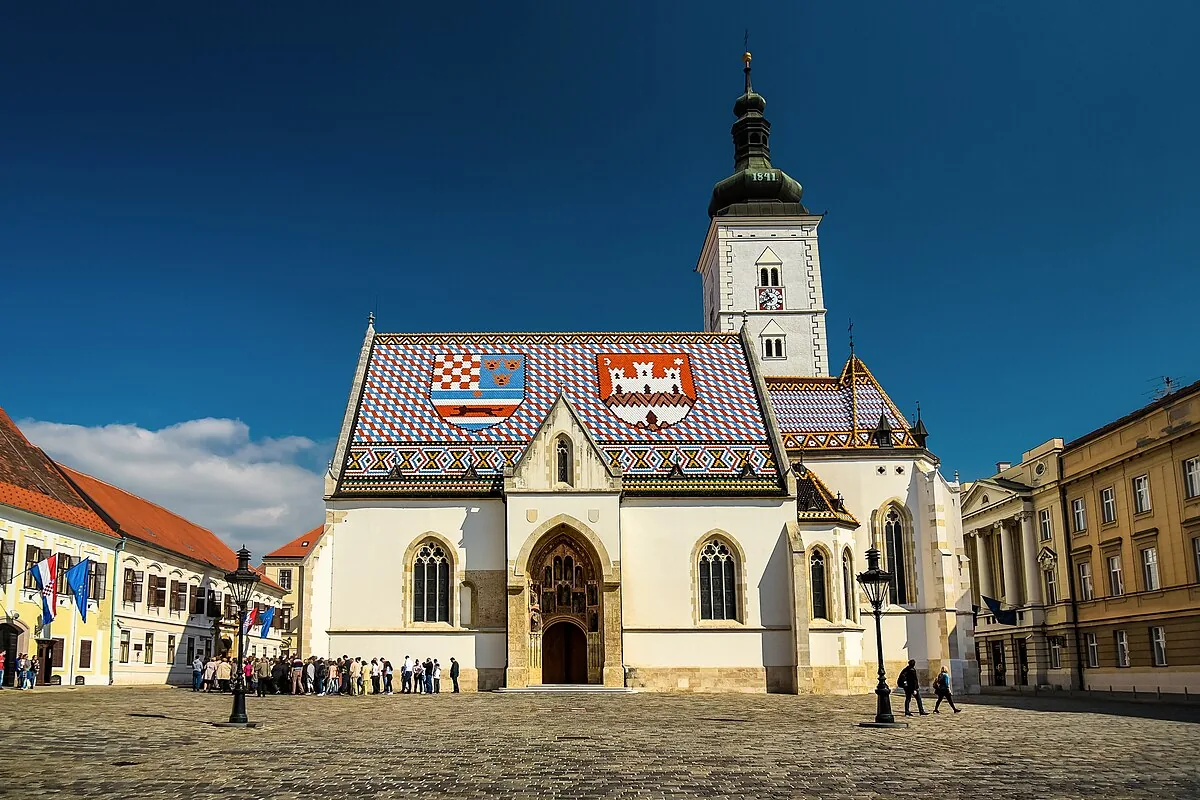
The roof of this church looks like it was woven from silk rather than fired in a kiln, wearing the crests of a nation like a permanent, colorful stone armor.
About St. Mark's Church
It started as a parish church for the residents of the Gradec fortress, but its importance grew as the city unified. After a devastating earthquake in 1880, the church became a primary focus of the city's reconstruction. Schmidt and Bollé chose the tile design as a way to celebrate Croatian identity at a time when the region was still under Austro-Hungarian rule. Inside, the 20th-century renovations added a layer of modern Croatian art, creating a space that feels both ancient and remarkably contemporary. It remains one of the few places in the city where high politics and high art share a single square.
What St. Mark's Church actually is
High atop the medieval Gradec hill, the roof of St. Mark’s Church shines like a vibrant, pixelated weave against the Zagreb sky. The tiles, glazed in bold reds, whites, and blues, depict the coats of arms of the Triune Kingdom of Croatia and the city of Zagreb, creating a heraldic landmark that defines the Upper Town. While the building's core dates back to the 13th century, its famous roof is a product of 19th-century stylistic restoration, a move that gave the city its most enduring visual symbol. The church sits at the center of St. Mark’s Square, flanked by the offices of the government and parliament, making it the quiet, colorful heart of Croatian political life. The setting here is often filled with the distant tolls of the Lotrščak Tower bell and the rhythmic footsteps of the palace guards.
Architectural layers tell the story
Architectural layers tell the story of Zagreb's survival through earthquakes, fires, and wars. The Romanesque windows on the south facade are the oldest surviving elements, while the Gothic portal, featuring fifteen individual stone statues of the Apostles and the Virgin Mary, was the work of the Parlar family workshop in the 14th century. The roof was added in 1880 by Friedrich Schmidt and Hermann Bollé during a period of national romanticism, designed to literally 'wear' the country's history on its back. The interior underwent a major transformation in the 1930s, featuring dramatic frescoes by Jozo Kljaković and sculptures by the famous Ivan Meštrović. The church has witnessed centuries of royal decrees and modern democratic oaths, standing as a constant witness to the city's evolution from a medieval hilltop to a European capital.
Visiting St. Mark's Church
Standing in the center of the square, The way the sunlight bounces off the glazed tiles, making the colors appear saturated even on an overcast afternoon. The feel is dignified and surprisingly quiet, given its central role in the state. The intricate details of the South Portal, where the stone faces of the saints have been smoothed by centuries of wind and soft rain. Immediately, the sharp, clean lines of the surrounding government buildings, which make the church’s playful roof look even more like a folk art masterpiece. Something like a sense of ceremony when the guard change occurs, the heavy clatter of boots echoing off the cobblestones. You register the smell of roasted chestnuts in the winter or blooming linden trees in the spring drifting up from the lower streets. Most who visit take a quick selfie with the roof and move on, but you should notice the Romanesque lion head carved near the corner, a relic of an even older version of this holy site. You get a weight of history when you look at the Parliament building next door, realizing how much of the nation's destiny was debated within earshot of these bells. The way the light from the gas lamps in the evening turns the square into a scene from the 1800s, the shadows of the church stretching long across the stone. The church is the focal point of the Upper Town (Gornji Grad). Walk up the scenic Strossmayer Promenade or take the historic funicular from Ilica Street to the Lotrščak Tower, then follow the narrow street for two minutes to reach the square.
The Experience
The silence inside the church is heavy and cool, dominated by the massive Meštrović crucifix that seems to hang in the shadows. The vibrant colors of the frescoes, which depict scenes from the Bible alongside figures in traditional Croatian dress. Something like a sense of absolute stillness that contrasts with the busy traffic of the Lower Town. What remains with you is seeing the church at night, when the spotlights make the tiled roof appear to float in the darkness like a discarded crown.
Why It Matters
St. Mark’s is the spiritual and heraldic center of Zagreb. It bridges the gap between the city’s medieval foundations and its 19th-century national awakening. Culturally, it is the most recognizable silhouette in the country, representing the union of Croatia’s historic regions through the symbols on its roof. It is a masterpiece of the 'Gothic Revival' that successfully captured the soul of a city.
Why Visit
Visit St. Mark’s because it is the most honest piece of art in Zagreb. While other cathedrals aim for intimidation, this church feels like a celebration. It is a rare chance to see a building that is simultaneously a place of worship, a political center, and a vibrant work of graphic design that has survived for over a century.
✦ Photo Gallery
Best Season
🌤 Of the autumn months, October is the most atmospheric time, as the autumn light brings out the deep reds in the roof tiles and the morning mist often settles over the square, giving it a mysterious, old-world feel.
Quick Facts
Best time to visit
Of the autumn months, October is the most atmospheric time, as the autumn light brings out the deep reds in the roof tiles and the morning mist often settles over the square, giving it a mysterious, old-world feel.
Getting there
In Zagreb, Croatia; reach Zagreb first, then continue to the site.
What's nearby
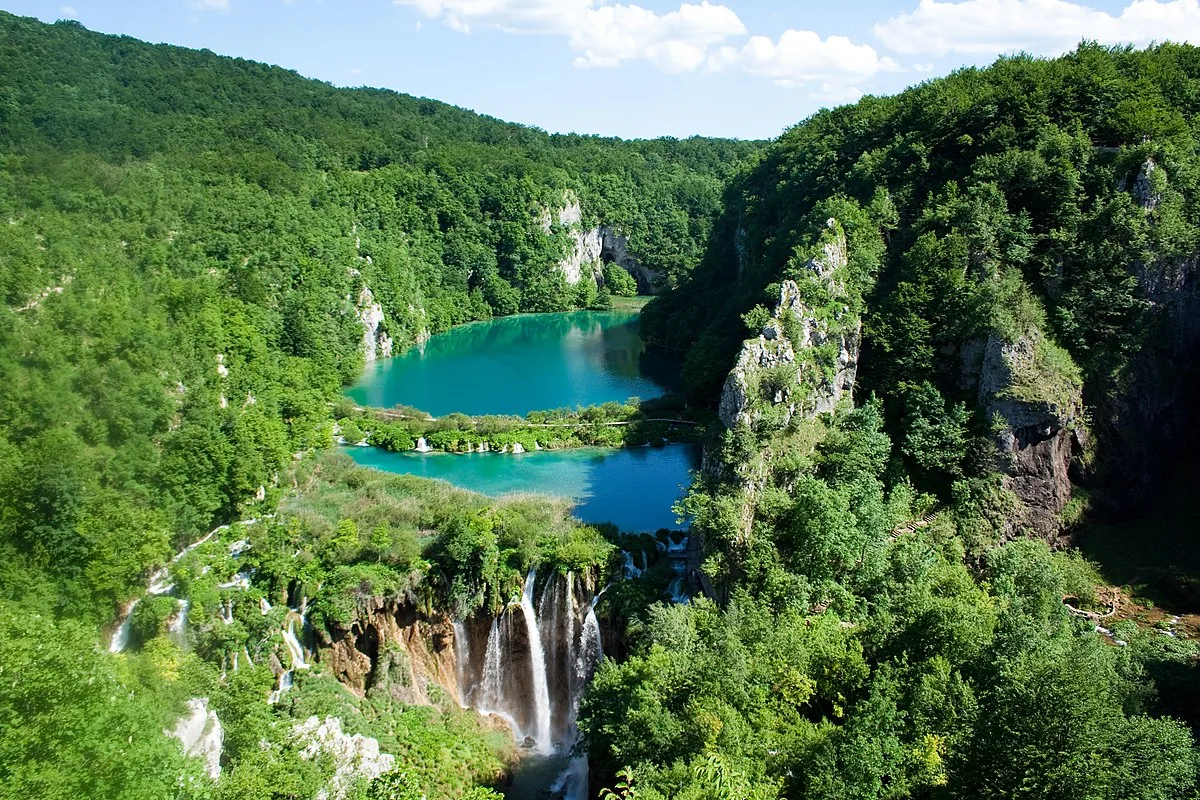
Mirogoj Cemetery and Plitvice Lakes National Park are also in the area.
Location
Zagreb, Croatia
Type
attraction
Coordinates
45.8164°, 15.9739°
Insider Tips
- 1
Visit at noon on a Saturday or Sunday between April and October to see the Cravat Regiment perform the changing of the guard in period uniforms.
- 2
The church interior is often closed to tourists outside of mass times, so check the schedule if you want to see the Meštrović sculptures.
- 3
Look for the small statue of St. George on the corner of the square; it is a hidden favorite of local residents.
- 4
The square is a high-security zone during government sessions, so keep your ID handy and expect some areas to be cordoned off.
- 5
Walk to the nearby 'Gradec' viewpoint after your visit for a stunning panoramic shot of the church roof with the city below.