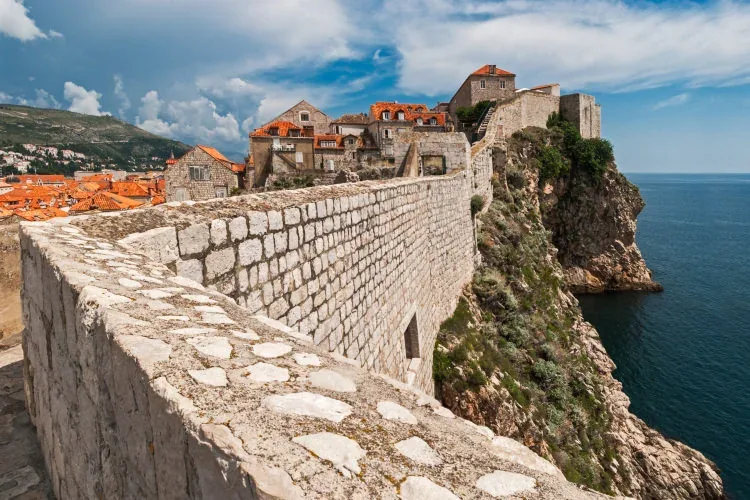
“These five kilometers of limestone battlements were built to protect salt, a commodity so precious in the 14th century that it required the longest walls in Europe to keep it safe.”
About Walls of Ston
The Republic of Ragusa invested more in these walls than in almost any other project outside of Dubrovnik itself. The salt produced here was responsible for one-third of the city's total revenue, making Ston the Republic’s most vital colony. Architects from all over Europe were consulted on the design, ensuring that every angle of the ridge was covered by a defensive tower. The walls were part of a massive urban planning project that included the building of two new towns from scratch, both designed with sanitation and defense as primary goals. They remain one of the few medieval fortifications of this scale that can still be walked from end to end.
What Walls of Ston actually is
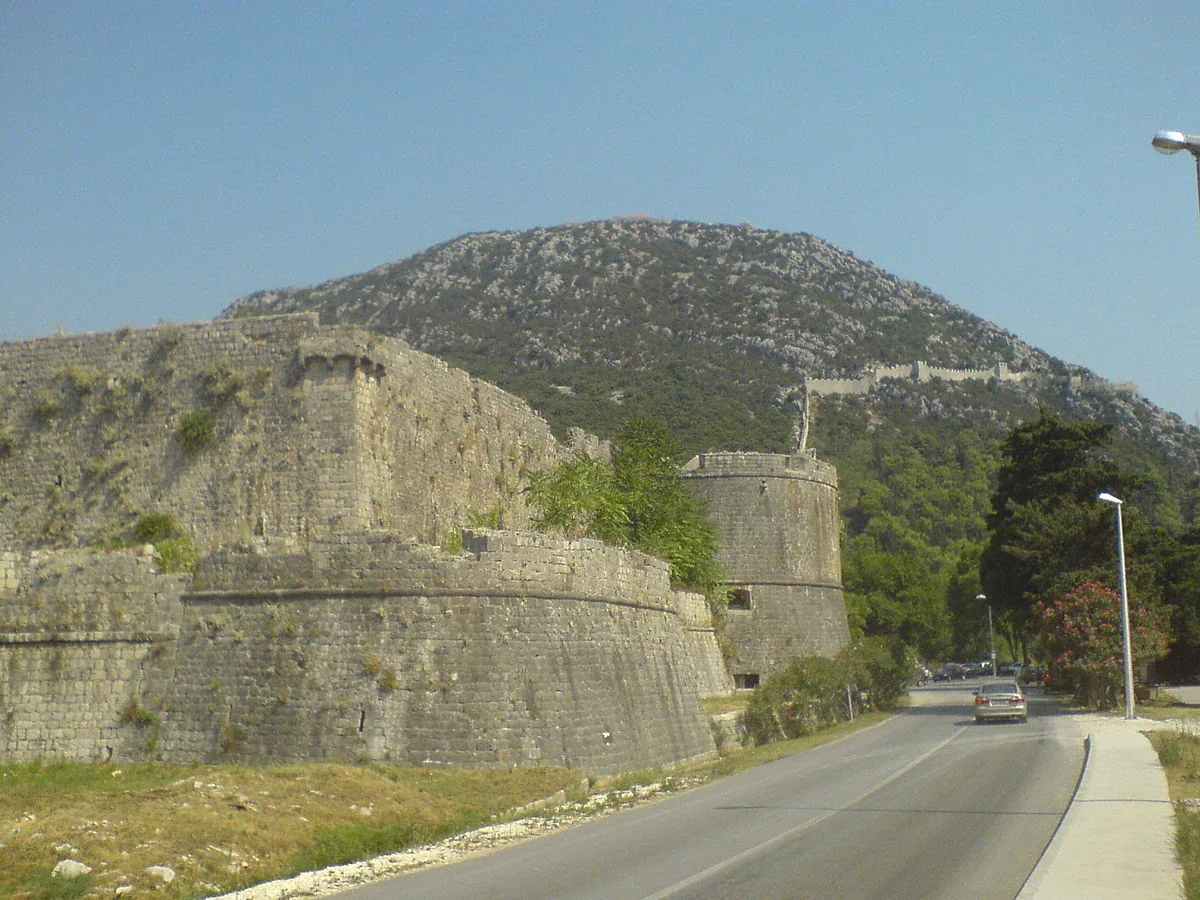
Stretching like a jagged limestone serpent across the Pelješac Peninsula, the Walls of Ston comprise the longest defensive system in Europe. This five-kilometer fortification connects the salt-producing village of Ston to the smaller outpost of Mali Ston, scaling a steep, scrub-covered ridge that seems impossible to navigate on foot. The walls were built not to protect gold or jewels, but to guard the 'white gold' of the Adriatic: salt. From the highest point, the view looks down over the geometric salt pans that have been in continuous use for over four thousand years. The place smells of wild sage and the sharp tang of the nearby oyster beds, and the sound of the wind through the battlements is a constant, lonely whistle.
Stretching like a jagged limestone serpent across the Pelješac Peninsula, the Walls of Ston comprise the longest defensive system in Europe.
When the Republic of Ragusa (Dubrovnik) purchased the Pelješac Peninsula in 1333, their first priority was securing the lucrative salt pans. Salt was the foundation of the city's immense wealth, and these walls were the insurance policy. Construction took centuries, evolving into a complex system of forty towers and five fortresses. The walls were so well-engineered that they survived several major earthquakes, including the catastrophic tremor of 1667. Along the fall of the Republic, the walls fell into disrepair and were even used as a quarry for building materials in the 19th century. A massive restoration effort in the late 20th century saved the structure, and today it is evidence of to the sheer physical effort of medieval masons who hauled limestone up vertical slopes in the blistering Dalmatian heat.
Climbing the narrow, uneven steps of the wall, The heat radiating off the white stone, a warmth that lingers long after the sun has moved. The incline is punishing, forcing you to stop and catch your breath, which gives you the chance to notice the silence of the hillside. Pay attention to the way the limestone has been weathered into sharp, porous textures by centuries of salt air. What you catch first is the deep blue of the Mali Ston bay, where the rows of oyster and mussel rafts look like a floating musical score. What comes through is the sound of cicadas, a deafening rhythmic buzz that seems to pulse with the heat of the day. The wind pick up as you reach the 'Pozvizd' fortress at the summit, a breeze that carries the briny smell of the salt pans. Just about everyone walk only a small section, but you should notice the intricate masonry of the 'Bartolomija' tower, where the stones fit together with a precision that defies their age. A sense of vertigo when looking down into the narrow streets of Ston, which were laid out in a perfect grid to prevent fires from spreading. Straight off, the way the light turns the salt pans into shimmering mirrors at dusk, reflecting the purple and gold of the Balkan sky.
Ston is located at the beginning
Ston is located at the beginning of the Pelješac Peninsula, about an hour’s drive north of Dubrovnik. Buses run regularly from Dubrovnik and Korčula, and the entrance to the walls is easily found just off the main town square.
Ston is located at the beginning of the Pelješac Peninsula, about an hour’s drive north of Dubrovnik.
The Experience
The climb is a physical dialogue with the mountain. The mass of the grit of the stone under your palms and the vibration of the ground as the wind hits the high battlements. What hits is the way the light makes the limestone appear to glow, a stark contrast to the dark green scrub of the hillside. The element that stays with you is reaching the midpoint of the ridge, where the view of both bays opens up simultaneously, offering a panoramic sense of the peninsula's narrowness. Initially, the smell of the sea mixing with the dry, herbal scent of the mountainside.
Why It Matters
The Walls of Ston are a masterpiece of medieval and Renaissance military engineering. They represent the economic foresight of the Dubrovnik Republic and its ability to execute massive infrastructure projects in difficult terrain. Culturally, they are a symbol of the region’s long-standing connection to the sea and the earth, bridging the gap between the salt trade of the past and the oyster farming of today.
Why Visit
Visit Ston for the 'Great Wall of Europe' experience without the global crowds. It offers a raw, physical connection to history and a view of the Adriatic that is completely different from the coastal towns. It is the perfect destination for those who want a challenging hike rewarded by some of the best seafood in the Mediterranean at the finish line.
✦ Insider Tips
- 1
Start the climb in Mali Ston and walk toward Ston for a slightly less punishing ascent and a dramatic reveal of the salt pans at the end.
- 2
Carry more water than you think you need; there is absolutely no shade on the walls once you leave the entrance towers.
- 3
Reward yourself with a plate of fresh Mali Ston oysters at a local konoba after you finish the descent; they are world-famous for a reason.
- 4
If you are short on time, the 'Great Wall' section connecting the two towns takes about 45 minutes of steady walking.