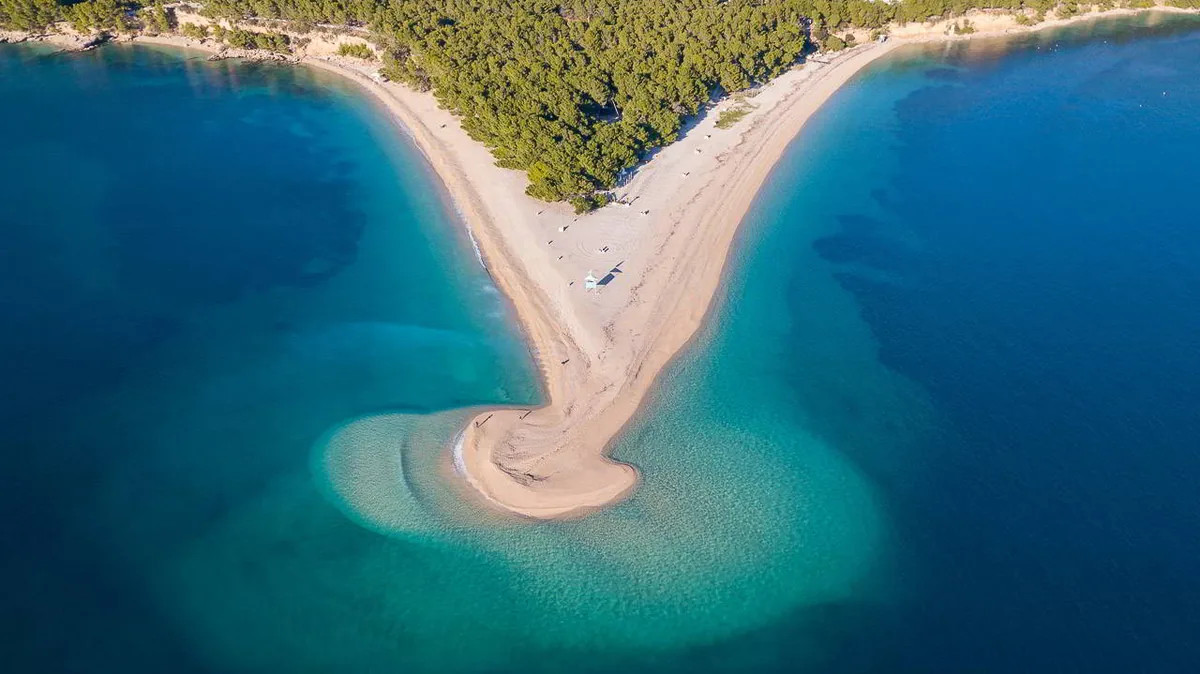
This pale limestone spit changes its shape every morning, a liquid sculpture of white pebbles that bows to the wind and the currents of the Adriatic.
About Zlatni Rat
The formation of Zlatni Rat is a slow-motion geological dance, with the pebbles being deposited and reshaped by the sea over centuries. While the beach has been a local landmark for as long as Bol has existed, it only gained global fame with the rise of modern tourism in the 1960s. The pine forest that borders the beach was planted in the early 20th century to prevent soil erosion and provide a park for the local community. It has since become one of the most photographed spots in the world, appearing on almost every Croatian travel poster, yet it remains remarkably unspoiled due to its protected status.
On the southern shore of Brač island
On the southern shore of Brač island, a finger of white pebbles known as Zlatni Rat, the Golden Horn, reaches out into the Hvar Channel like a shifting, liquid sculpture. This is a beach that refuses to stay still; the tip of the v-shaped spit curves to the left or right depending on the whims of the Adriatic winds and the morning currents. The surface is composed not of sand, but of smooth, pale pebbles that have been rounded by the sea over thousands of years. The water surrounding the horn transitions from a pale, translucent turquoise near the shore to a deep, royal indigo as the seafloor drops away. The air is a constant mix of hot sun and the cooling 'Maestral' wind, scented with the salt of the sea and the sweet resin of the dense pine forest that acts as the beach’s green spine.
Zlatni Rat is a geomorphological
Zlatni Rat is a geomorphological phenomenon, a natural formation created by the unique collision of currents and wind patterns in the narrow channel between Brač and Hvar. Unlike many of the world's famous beaches, it was not 'built' or planned; it is an organic result of the sea’s labor over millennia. Over the centuries, the locals in the nearby town of Bol used the area for fishing and agriculture, with the pine forest providing essential shade for their livestock. It was only in the mid-20th century that the site was recognized as an international landmark. Today, it is a protected landscape, where strict environmental laws prevent any permanent construction on the spit itself, ensuring that the only thing that changes about the Golden Horn is its shape.
Walking along the edge of the horn, you
Walking along the edge of the horn, The way the sound of the waves changes; on the windward side, the water crashes with a rhythmic thud, while the leeward side remains as still and silent as a swimming pool. The surface of the pebbles under your feet, a smooth, clattering surface that is surprisingly comfortable to walk on. The place is cool and refreshing even at midday, thanks to the Maestral wind that reliably blows through the channel. What registers is the way the sunlight penetrates the water, making the white seabed appear to glow from within. A sense of absolute openness as you reach the tip, with the horizon of the Adriatic stretching out in all directions. Almost all visitors stay near the forest for shade, but you should notice the small, deep pools that form in the pebbles near the tip, where the water is incredibly clear. The temperature shift as you swim a few meters out, the warm surface water giving way to the invigorating cold of the deep channel. Straight off, the sound of the wind through the pines behind you, a soft hissing that provides a natural counterpoint to the sea. The experience is one of raw, natural elegance, where the land and the water are in a constant, graceful negotiation.
The beach is located about two kilometers
The beach is located about two kilometers from the town of Bol. The most scenic way to arrive is via the paved promenade that winds through the pine forest, a pleasant twenty-minute walk, or you can take the small 'tourist train' or a taxi boat from the Bol harbor.
The Experience
The morning light turns the white pebbles into a field of diamonds before the first visitors arrive. The way the water color shifts in the changing light, from a delicate mint green to a deep, dark sapphire. A sense of energy on the windward side, where windsurfers and kiteboarders use the Maestral to skip across the waves. The detail that stays with you is standing at the very tip of the horn and feeling the water from two different currents meet at your feet, a physical sensation of the sea’s power.
Why It Matters
Zlatni Rat is the premier geomorphological landmark of the Adriatic. It represents the unique natural beauty of the Croatian coast, where the mountains, the sea, and the forest meet in a perfect, shifting balance. Culturally, it is the symbol of Bol and Brač, driving the local economy while remaining a source of immense pride for the islanders.
Why Visit
Visit Zlatni Rat to see a beach that is literally alive. It is a rare chance to experience a world-famous site that still feels like a force of nature rather than a commercial product. The combination of the smooth pebbles, the cooling wind, and the deep, clean water makes it one of the most comfortable and visually spectacular places to spend a day in the Mediterranean.
✦ Photo Gallery
Best Season
🌤 June and September are the best months, as the weather is warm and the winds are reliable, but the massive summer crowds haven't yet taken over the spit.
Quick Facts
Best time to visit
June and September are the best months, as the weather is warm and the winds are reliable, but the massive summer crowds haven't yet taken over the spit.
Getting there
In Bol, Croatia; reach Bol first, then continue to the site.
What's nearby
Diocletian's Palace and Ivan Meštrović Gallery are also in the area.
Location
Bol, Croatia
Type
attraction
Coordinates
43.2558°, 16.6338°
Insider Tips
- 1
The 'Maestral' wind usually picks up in the afternoon; visit in the morning for the calmest water, or after 3 PM for the best windsurfing conditions.
- 2
Walk through the pine forest path from Bol rather than taking the boat to find the best-hidden spots for a quick dip away from the main crowds.
- 3
The water gets deep very quickly near the tip; be mindful of the currents if you are not a strong swimmer.
- 4
Look for the 'Lucky Stone', a small pebble with a natural hole through it; local legend says finding one brings good fortune.
- 5
There are several beach bars tucked into the pine forest that offer great shade and a slightly more secluded atmosphere than the open spit.