Founded in 970 CE, Al-Azhar Mosque has been continuously functioning for over a thousand years, and the university built around it remains the most influential center of Sunni Islamic scholarship in the world.
About Al-Azhar Mosque
Built by the Fatimid dynasty shortly after Cairo's founding, Al-Azhar shifted from Shia to Sunni orientation after Saladin's conquest in the twelfth century. Each subsequent dynasty, Mamluk, Ottoman, added architectural layers visible in the complex today.
Al-Azhar Mosque in short
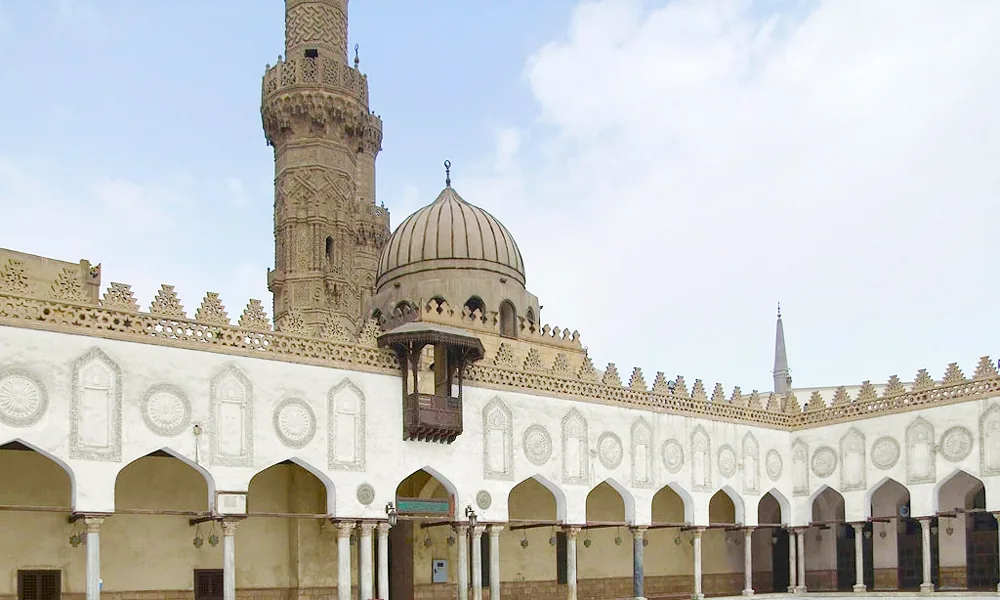
Al-Azhar Mosque in Islamic Cairo is among the oldest continuously functioning mosques in the world and the physical center of an institution, Al-Azhar University, that has shaped Islamic scholarship for over a thousand years. The mosque was founded in 970 CE by the Fatimid general Jawhar al-Siqilli, shortly after the founding of Cairo itself, and it has been expanded and modified by successive dynasties ever since. The layers of architectural additions across ten centuries are visible in the complex today.
“The mosque was founded in 970 CE by the Fatimid general Jawhar al-Siqilli, shortly after the founding of Cairo itself, and it has been expanded and modified by successive dynasties ever since.”
Al-Azhar Mosque, Egypt
The Fatimid dynasty that built
Al-Azhar was Shia Muslim, and the mosque was originally intended as a center for Ismaili Shia teaching. When Saladin took control of Egypt in the twelfth century and brought the country back to Sunni orthodoxy, Al-Azhar's theological orientation shifted accordingly. The university that grew alongside the mosque became the most influential center of Sunni Islamic learning in the world, a status it has maintained for centuries. Fatwas issued by Al-Azhar's scholars carry weight across the Muslim world that few other institutions can claim.
The mosque's main courtyard is one of the most peaceful public spaces in Cairo, a city that offers very few of them. The multiple minarets visible from the courtyard represent different dynasties: Mamluk, Ottoman, and Fatimid architectural styles coexist in the same complex. The prayer hall, which non-Muslim visitors can enter outside prayer times, is dim and cool with ornately carved stucco and old stone. The adjacent Al-Azhar Park, built on a former rubble heap, offers a green elevation above the surrounding streets and good views back toward the mosque's minarets.
Al-Azhar Mosque is at the core of Islamic
Cairo, a short walk from Khan el-Khalili bazaar. The nearest metro station is Al-Sayeda Zeinab; from there, a taxi or walk of about twenty minutes reaches the mosque.
“The nearest metro station is Al-Sayeda Zeinab; from there, a taxi or walk of about twenty minutes reaches the mosque.”
The Experience
Walk the layered courtyard where minarets from multiple dynasties are simultaneously visible, enter the cool prayer hall with its carved stucco, and continue to Al-Azhar Park for elevated views over Islamic Cairo.
Why It Matters
One of the oldest continuously operating mosques in the world and the seat of Al-Azhar University, whose scholars' religious rulings carry authority across the global Muslim community.
Why Visit
The mosque's courtyard provides a rare stillness in one of the world's busiest cities. The thousand-year layering of architectural additions makes the complex a physical record of Islamic Cairo's history.
Insider Tips
- 1
Dress conservatively, shoulders and knees covered is the minimum; robes are available at the entrance for visitors who need them.
- 2
Visit outside the five daily prayer times for access to the prayer hall interior.
- 3
Pair with Khan el-Khalili, which is immediately adjacent, for a half-day in Islamic Cairo.
- 4
The shoe custodians at the entrance require a small tip, agree on the amount before handing over shoes.