“Saladin built this hilltop fortress in 1176 to keep the Crusaders out of Cairo, and it remained the seat of Egyptian government for nearly seven hundred years.”
About Cairo Citadel
Begun by Saladin in 1176 on a Muqattam Hills spur, the citadel was expanded by Mamluk sultans over centuries. Muhammad Ali, who came to power in 1805, built his Ottoman-style mosque here as a dynastic statement and used the citadel as his government headquarters.
Cairo Citadel
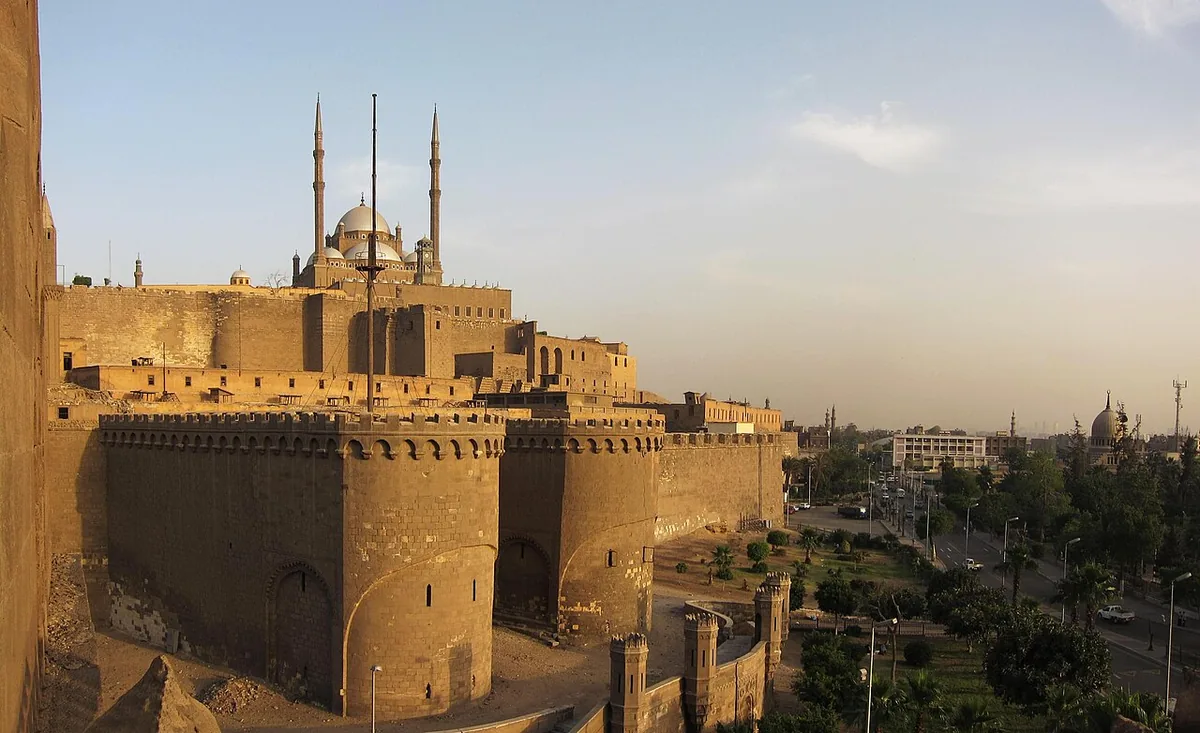
The Cairo Citadel stands on a spur of the Muqattam Hills above the city, visible from wide areas of Cairo as a silhouette of domes and minarets. Saladin began its construction in 1176 CE as a military fortification to protect Cairo and Fustat from the Crusaders, and it was the seat of Egyptian government for nearly seven hundred years, from the twelfth century until the nineteenth, when Khedive Ismail moved the government to Abdin Palace. The mosque of Muhammad Ali, built in the nineteenth century in Ottoman style, dominates the citadel's skyline.
The Cairo Citadel stands on a spur of the Muqattam Hills above the city, visible from wide areas of Cairo as a silhouette of domes and minarets.
Saladin's choice of the Muqattam spur was deliberate: the elevation gave defenders a commanding view over the approaches to Cairo, and the position between the city and the desert was militarily defensible. The Mamluk sultans who ruled Egypt after Saladin expanded the citadel repeatedly, adding palaces, mosques, and administrative buildings. Napoleon's forces occupied it briefly during the French expedition to Egypt (1798-1801), and Muhammad Ali used it as his power base after coming to power in 1805. His mosque, begun in 1830 and modeled on the Blue Mosque in Istanbul, was intended as a dynastic statement that reconfigured the citadel's skyline.
The Experience
Visit the Muhammad Ali Mosque's ornate interior and alabaster courtyard, view Cairo's full extent from the northern terrace, explore the Military Museum in the Harim Palace, and walk the Mamluk-era fortifications along the outer walls.
Why It Matters
The seat of Egyptian government for almost seven centuries and a layered record of Islamic Cairo's military, political, and religious history from Saladin to the nineteenth century.
The seat of Egyptian government for almost seven centuries and a layered record of Islamic Cairo's military, political, and religious history from Saladin to the nineteenth century.
Why Visit
The view from the citadel's northern terrace, Cairo spread below with the Giza pyramids visible on clear days, provides essential geographic orientation for understanding the city. The citadel itself is undervisited relative to its historical importance.
✦ Insider Tips
- 1
The Muhammad Ali Mosque's alabaster-lined courtyard is the architectural highlight, spend time in it rather than rushing to the view terrace.
- 2
The Military Museum in the Harim Palace is large and worth one to two hours for anyone interested in Egyptian military history.
- 3
The northern terrace view is best in the morning before haze builds, arrive early.
- 4
Combine with a walk down to the medieval gates of Bab Zuweila in Islamic Cairo, about fifteen minutes' walk from the citadel base.