“A Mamluk fortress built from the ruins of the ancient Lighthouse of Alexandria stands where one of the Seven Wonders of the World once rose over the harbor.”
About Citadel of Qaitbay
The Lighthouse of Alexandria, built around 280 BCE and one of the world's tallest structures for centuries, was progressively destroyed by earthquakes. Sultan Qaitbay used its stone to build this fortress in 1477 CE; lighthouse blocks still lie on the harbor floor.
What Citadel of Qaitbay is
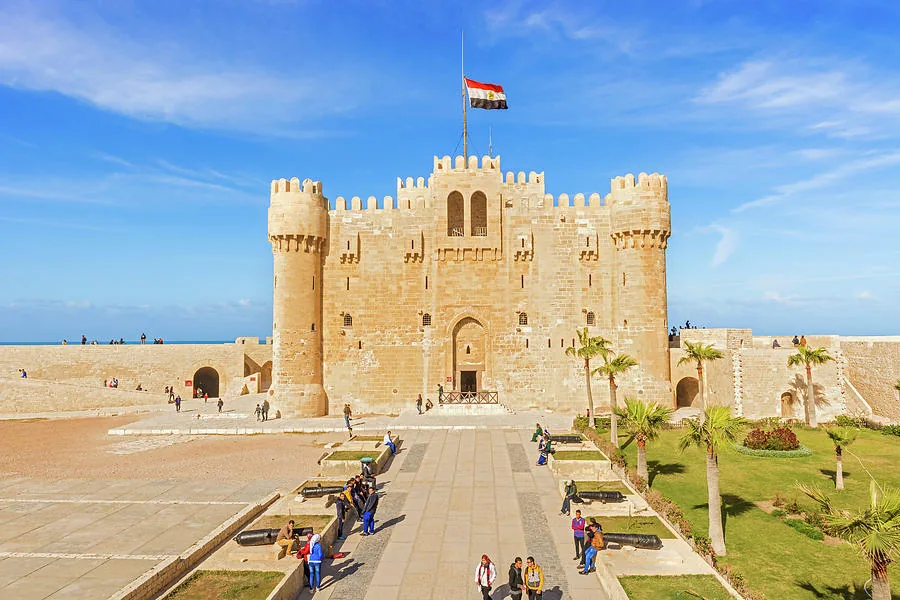
The Citadel of Qaitbay occupies the tip of a peninsula projecting into Alexandria's eastern harbor, where the ancient Lighthouse of Alexandria, one of the Seven Wonders of the Ancient World, once stood. The Mamluk Sultan Qaitbay built the citadel in 1477 CE using stone from the lighthouse ruins, which had collapsed in the fourteenth century after successive earthquakes. The fortress that replaced one Wonder of the Ancient World is itself one of Alexandria's most striking buildings.
The Mamluk Sultan Qaitbay built the citadel in 1477 CE using stone from the lighthouse ruins, which had collapsed in the fourteenth century after successive earthquakes.
Origins
The Lighthouse of Alexandria was built around 280 BCE under Ptolemy II and stood at approximately 100 to 130 meters, the tallest man-made structure in the world for much of its existence. Earthquakes damaged it progressively from the ninth century CE onward, and by the fourteenth century it was sufficiently ruined to be used as a stone quarry. Sultan Qaitbay's decision to fortify the promontory was driven by Ottoman naval pressure, the fortress was designed to protect Alexandria's harbor from sea attack. Archaeological surveys of the eastern harbor floor have confirmed that limestone blocks from the lighthouse lie in the shallow water surrounding the fortress, visible to divers.
The citadel's exterior, with its crenellated towers and the central keep rising above the harbor, is most dramatic from the waterfront or from a boat. The interior includes a mosque within the keep that retains some original decoration, and military museum displays that cover the fortress's history. The rooftop battlements offer views over both the eastern harbor, where ancient Alexandria's harbor infrastructure once stood, and the Mediterranean beyond. The lighthouse ruins on the harbor floor are visible on clear-water diving excursions organized from the site. The citadel is at the eastern end of Alexandria's corniche in the Anfushi neighborhood. From Alexandria's central area, a twenty-minute tram ride on Line 2 or a short taxi reaches the fortress entrance.
The Experience
View the citadel from the waterfront for the most dramatic perspective, visit the mosque and military museum in the interior, stand on the battlements for views over the ancient harbor footprint, and optionally dive the harbor floor to see sunken lighthouse blocks.
Why It Matters
A Mamluk fortress built directly on the site of one of the Seven Wonders of the Ancient World, using that wonder's own stone, and with the ruins still visible underwater.
Why Visit
The layering of the ancient lighthouse beneath the medieval fortress, with original lighthouse blocks on the harbor floor within sight of the walls above, makes Qaitbay one of the most historically dense sites in the Mediterranean.
✦ Insider Tips
- 1
The best exterior view is from the western corniche looking back toward the fortress, approach from the city side first.
- 2
Harbor floor diving to see the lighthouse ruins requires advance arrangement through Alexandria dive operators.
- 3
Combine with the Bibliotheca Alexandrina and the Roman amphitheater for a full day of Alexandria's layered history.